
supplier

Your Most Reliable Supplier Relationship May Be Costing You

The supplier you’ve worked with for a decade shows up on time, hits the mark, and has never given you a reason to look elsewhere. That consistency is genuinely valuable. It may also be your most under-appreciated business risk.

Long-term, reliable supplier relationships feel like assets, so they get treated like assets. Then something happens that exposes what that comfort actually costs. Supply chain disruptions are growing more frequent. McKinsey Global Institute research found that companies across major industries can expect disruptions lasting a month or longer once every 3.7 years on average, with expected losses modeled at roughly 45% of one year’s EBITDA over a decade. Resilinc’s 2024 monitoring data documented more than 10,600 supply chain disruptions in the first half of that year alone, a 30% increase over the same period in 2023. Tariff volatility through 2025 and 2026 has added further unpredictability to supplier relationships that many businesses assumed were safe and stable.

What determines whether a disruption becomes a brief inconvenience or a serious threat to your business is the supplier concentration you’ve built over time, and what you’ve done to address it.

supplier

What Got You Here

Single-supplier dependence rarely develops through carelessness. It develops through a series of reasonable decisions made over time.

A supplier proved reliable, so you gave them more volume. The higher volume unlocked better pricing, which made splitting orders between two vendors economically unattractive. Over years, proprietary tooling, custom specifications, or co-developed processes raised the cost of switching suppliers. The relationship itself became a strategic business asset: a vendor who knows your quality standards, your timelines, and your team is worth something.

None of that logic is wrong. The risk accumulates in the background, visible only when something goes wrong. In early 2022, a ransomware attack crippled Kojima Industries, a small but integral supplier of plastic interior parts to Toyota. The loss of that key supplier forced Toyota to suspend 28 production lines across 14 plants. Bloomberg estimated the cost at roughly $375 million, and Kojima spent months returning to normal operations.

Toyota is a massive, global operation that can weather storms like that. A custom manufacturer dependent on a single component source, a staffing agency running payroll through one processor, or a distributor whose entire catalog flows through one brand partner cannot.

The pattern holds across industries. Manufacturing businesses face six-to-24-week qualification timelines for regulated or proprietary components. Trucking operations concentrated around a single fuel supplier or parts vendor have no fallback when that vendor’s pricing shifts or supply tightens. Supplier concentration risk is a factor in all industries that has the power to take out the small businesses that operate in them.

The Nail in the Road

Consider two businesses that share the same suppliers, serve the same customers, and operate in the same market. On a given Tuesday, both learn that their primary supplier has been hit by a cyberattack (a regulatory shutdown, a factory fire, etc.). One has a second source ready to absorb the volume quickly. The other starts making calls to vendors it has never worked with, places emergency orders at premium prices, and calls customers to explain delays it cannot accurately forecast.

Both businesses drove over the same figurative nail. One had a spare tire.

Supply chain disruptions are like nails in the road: every business encounters them, and no single business can reliably prevent them. What determines the outcome is whether you’re carrying a spare. 

Resilinc found that 58% of the disruptions tracked in 2024 were severe enough to trigger emergency response protocols among affected customers. The practical timeline makes the math clear: in manufacturing, qualifying a replacement supplier for a regulated component typically takes six weeks to six months. No business operating on 30-to-90-day receivables can absorb a gap that wide by improvising.

Two Costs Worth Examining

Overreliance on one vendor can cost you in two ways: The occasional supply chain emergency (unpredictable, but costly when it happens) and your loss of negotiating power.

The obvious cost of supplier concentration risk is the crisis scenario: emergency sourcing at premium prices, production gaps, missed delivery commitments, and the customer-relationship damage that follows. A 2022 CFIB survey found 30% of Canadian small business owners saw costs rise more than 20% due to supply chain disruptions, with that figure reaching 42 to 45% in transportation, construction, and wholesale sectors.

The less obvious cost operates every day, whether anything goes wrong or not.

A supplier who knows they are your only viable source negotiates accordingly. Pricing discussions, payment terms, and contract renewals all shift in their favor when the cost of replacing them clearly outweighs the cost of accepting their terms. Procurement research consistently documents that introducing a qualified second source, even one receiving a minority share of volume, improves a buyer’s position in all three areas. The mechanism is straightforward: you don’t need to move significant volume to change the dynamic. The credible option to do so is what changes it.

Counting the Cost of Diversification

Most businesses wait until there’s a problem to act, usually because of the cost of adding a second supplier.

Qualifying a second supplier requires upfront spending: sample and pilot orders (often prepaid in full), third-party facility audits, first-article inspection fees, and the inventory buffer a business needs to carry while a new relationship ramps to full capability. For a manufacturer, that transition period may involve running dual supply chains simultaneously. For a distributor adding a new brand partner, it means purchasing opening inventory before any of it has moved.

Those costs arrive at the worst possible moment for businesses already operating on 30-to-90-day payment cycles. Receivables are in the pipeline, not yet collected. The cash needed to fund the transition is sitting in unpaid invoices.

Invoice factoring addresses that gap directly. It advances 60 to 90% of outstanding receivables within 24 to 48 hours, putting working capital in hand before customers pay. A business can use those funds to cover qualification costs, sample orders, and the inventory buffer a new supplier relationship requires during ramp-up. The strategy was sound from the start. The obstacle was cash flow timing, and invoice factoring resolves it.

Build the Spare (Before You Hit the Nail)

This may not be as difficult as you think. Supplier diversification doesn’t require a wholesale overhaul of procurement strategy. It requires identifying the relationships where concentration has become risk, and addressing them deliberately.

A useful starting point: M&A advisors and business lenders commonly flag supplier concentration as a concern when a single source accounts for more than 15 to 20% of cost of goods sold. It is also the threshold at which a disruption becomes large enough to threaten operational continuity rather than create a manageable inconvenience. If qualifying a credible replacement would take more than 60 days, the case for financing the transition rather than waiting for organic cash flow becomes hard to argue against. The carrying cost of a forced supplier crisis, measured in emergency premiums, lost revenue, and customer attrition, typically exceeds the cost of the financing that would have prevented it.

The supplier relationship you have protected most carefully may be the one most overdue for a second source alongside it. Building that redundancy is not disloyalty to a partner who has earned your trust. It is the condition that allows the partnership to continue, regardless of what happens on their end.

To learn more about how invoice factoring can help your business respond to emergencies and prepare for growth, visit our Learning Hub site for a library of helpful articles and handbooks.


invoice factoring paperwork

How to Avoid Becoming an Invoice Factoring Horror Story

Bills are coming due. Payroll is two weeks away. A new contract just landed that your cash on hand can’t deliver. These are the moments that motivate business owners to look for financing solutions they had never considered before, including invoice factoring.

That same urgency often motivates those same business owners to sign financing agreements they later regret. The fees buried on page six, the auto-renewal clause tucked into the termination section, the credit limit that looks manageable today but will stall your growth next quarter. These details are easy to miss when the pressure to get funded feels more urgent than the patience to read a contract. For some business owners, a factoring agreement intended to solve a cash flow problem ends up making an already difficult situation worse.

This article covers the five invoice factoring contract terms most likely to cause problems, the warning signs to watch for during the sales process, and the options available if you are already in a difficult relationship. Factoring is the right tool for many businesses. The goal here is to help you find the right partner.

When the Contract Becomes the Problem

Each of the following cases is a real invoice factoring deal that caused more problems than it solved.

Case 1: Minimum Volume Misery

A manufacturer signed a one-year agreement that included a minimum volume requirement: a minimum dollar amount of invoices to sell each month. Business slowed and the company could not hit the minimum. The exit fee, calculated on the shortfall between what they had factored and what the contract required, came to $160,000.

Case 2: Costly Escape

A second company had a $1 million factoring facility. When they tried to switch to a different factor, they discovered their contract included a facility termination fee of 10% of the total facility amount. That meant that the cost to exit early totaled $100,000.

Case 3: Inflexible and Inadequate

A third company’s factor set customer credit limits too low to cover the invoices those customers were actually generating. The company could not factor the invoices coming in, could not grow within the facility, and could not afford to exit. Hands tied.

Each situation traces back to specific contract terms the business owner did not fully understand at signing. Those terms are worth knowing before you need them.

Five Invoice Factoring Contract Terms You Need to Know

1. Customer Credit Limits

Invoice factoring works by having a factor (a financial services firm that purchases your unpaid invoices) advance you most of their value, then collect payment from your customers directly. 

Within that arrangement, factors set a credit limit on each customer, capping how much of that customer’s invoices they will buy at any given time. A limit of $75,000 on a customer generating $100,000 in invoices means $25,000 of that business cannot be factored. 

More critically, a limit set today may not grow with your business. Before signing, ask: what is the credit limit on each of my key customers, and what does it take to increase it?

2. Contract Term and Auto-Renewal

Most factoring agreements run for an initial term of 6 to 12 months and auto-renew for another full term unless written cancellation notice is provided within a specific window, often 30 to 90 days before the renewal date. Missing that window (even by a day) can lock a business into another year. 

Set a calendar reminder 90 days before your renewal date, confirm your intentions in writing, and look for agreements that convert to month-to-month terms after the initial period, with no added penalty for leaving.

3. Early Termination Fees

Early termination fees vary widely. Some factors charge a flat fee of a few hundred dollars or a small percentage of recent volume. Others charge a percentage of the total facility amount, charge fees based on how far short of a minimum volume requirement you fell, or charge fees for every month left on the contract. The $100,000 and $160,000 exits described above came from the latter category. 

Before signing, ask the factor to walk through exactly how the exit fee would be calculated if you needed to leave after three months.

4. Default Penalties

Every factoring agreement specifies what happens if the client violates facility terms. Missing a reporting deadline, failing to redirect a customer payment that came to you instead of the factor, or allowing invoices to become disputed can all trigger default. The associated fees are typically steep and often listed separately from the standard fee schedule. 

Ask the factor to explain their firm’s penalty fees and charges as well as what triggers them.

5. UCC Lien Scope

When entering a factoring agreement, the factor files a UCC-1 financing statement, a public notice that establishes its legal claim on your collateral. In Canada, this is called a PPSA registration. The filing may cover only accounts receivable or, in many cases, all business assets.

An all-asset lien is common in factoring, especially in full-recourse agreements. The more important question is how the factor handles other financing needs. A broad lien can make it harder to add another lender, such as a bank, equipment finance company, or SBA lender, unless the factor is willing to cooperate.

Before signing, ask how the factor works with other lenders and whether it will subordinate its lien when appropriate, such as when you need equipment financing or other growth capital. Also ask how quickly it will file a UCC-3 termination, the document that formally releases its claim, when the relationship ends.

Red Flags in the Sales Process

Contract terms are the formal record of a factoring relationship. How a factor conducts the sales process is often the early signal of what that record will look like. These three patterns are “buyer beware” warning signs.

  • A transactional tone and pressure to sign quickly. A factor focused on closing rather than understanding your business may not be a thoughtful partner when problems arise. The first conversation should include questions about your industry, your customers, and whether factoring actually fits your situation. If those questions do not come up, that is worth noting.
  • Reluctance to share the contract. You should receive the full purchase and sale agreement before you are asked to sign anything. A factor who resists providing it in advance, discourages legal review, or summarizes terms verbally rather than in writing is not operating in your interest.
  • Evasive answers to direct questions. Ask what happens if you default. Ask how the early termination fee is calculated. Ask what it takes to increase a customer credit limit. A reputable factor answers these questions directly, including the parts that are not favorable to you. Vague or redirected responses are danger signals.

invoice factoring paperwork

If You Are Already in a Difficult Factoring Relationship

If you recognize your situation in any of the cases above, you are not alone and you are not out of options. The path forward depends on your specific contract terms, but there are three routes worth considering.

Option 1: Negotiate a Buyout

A new factor may be willing to pay off the outstanding balance owed to your current factor, including any early termination fee, and open a new facility. Whether a buyout makes financial sense depends on the exit cost relative to the savings the new arrangement offers. Some factors will also explore bridge options to help cover the exit cost over time, paid down through the new facility. Not every situation qualifies, but it is worth the conversation.

Option 2: Document Problems and Negotiate

If your factor has not performed as agreed, such as failing to credit debtor payments, funding late, or setting limits so low the facility cannot be used, document every instance with dates, amounts, and written communications. Factors generally prefer a negotiated exit to a formal dispute. Present your documentation and request a reduced termination fee or structured exit. If failures have been significant or ongoing, a commercial attorney can advise whether the factor’s conduct provides grounds to challenge the exit fee. Stopping payments without a formal exit is the one approach that reliably makes the situation worse.

Option 3: Wait and Prepare

If the exit cost is prohibitive today but the contract has a defined end date, serve out the remaining term. Submit your termination notice within the required window, confirm it in writing, and begin evaluating new factors now. Use the remaining time to clean up your accounts receivable aging (the record of which invoices are outstanding and how long they have been unpaid) and gather the financial information a new factor will want to review. A well-prepared transition moves faster and causes less disruption.

Write Your Own Factoring Success Story

The urgency that brings most business owners to factoring does not go away when the agreement is signed. Bills still need paying. Payroll still comes due. The difference between a good factoring relationship and a damaging one is often a single conversation that happened, or did not happen, before the ink dried.

The right factor asks hard questions before approving you. They want to know whether factoring is the right fit, whether the facility amount will meet your actual needs, and what happens if things do not go as planned. They answer your questions about default and exit directly, including the parts that are not in their favor. That transparency is the foundation of a partnership that solves today’s cash flow problem and helps build toward a more stable financial position tomorrow.

Before signing any factoring agreement, request the full contract, read the termination and default sections carefully, ask direct questions about credit limits and auto-renewal, and note whether the factor is asking questions about your business rather than simply moving toward a signature. That preparation is a small investment compared to the cost of discovering the details later.

Visit the Liquid Capital Learning Center for a library of helpful articles and resources on factoring, working capital, and business finance.

Chess board

Cash Flow Problem? Invoice Factoring Could Be Your Answer

Liquid Capital’s Solution to Working Capital Can Get You Fast Cash Flow Access

Managing cash flow is the lifeblood of your business operations. Bank loans or lines of credit can often fail to provide for the gap in your working capital. That’s where Liquid Capital’s invoice factoring services step in.

Does this sound like your situation? Your clients take 30-60 days to pay their invoices, leaving you scrambling to cover payroll and other essential expenses, leaving you chasing payments, draining your energy and resources. There has to be a better way to manage your cash flow.

Enter Invoice Factoring: The Fastest Solution

Invoice factoring gives you cash for your invoices. It lets businesses sell outstanding invoices to a third-party provider, like Liquid Capital, in exchange for immediate cash. This means your company can access the working capital it needs to cover expenses, invest in growth, and take advantage of new opportunities.

Liquid Capital’s invoice factoring solution offers access to up to 80% of the value of your unpaid invoices within a short amount of time, typically within 24 hours, providing you with an immediate influx of working capital. This can help your business keep bills paid on time, upgrade or replace your equipment, and even expand.

Unlike traditional financing methods, invoice factoring doesn’t rely on your personal credit score or require you to put up collateral. Instead, Liquid Capital evaluates your customers’ creditworthiness, allowing you to tap into the value of your outstanding invoices without adding additional debt to your balance sheet.

Why Invoice Factoring Works

1. Access Cash the Next Day:

Invoice factoring capitalizes on outstanding invoices for instant cash flow. This can close the gaps in your current cash flow caused by delayed customer payments.

2. Control Cash Flow:

If you’re not having to worry about payments on outstanding invoices, you can better manage your everyday expenses, like payroll, supplier payments, and operational costs, ultimately reducing your stress levels.

3. Adapt to Change:

Your goal is for your business to grow. When it does, your financing needs will grow, too. Invoice factoring, with the right partner company, can evolve along with your cash flow needs.

4. Reduce Reliance on Debt:

Invoice factoring does not add to your company’s debt load, so don’t think of it like a bank loan or a line of credit. No extra debt means you can access the working capital you need without putting your personal assets at risk.

5. Grow Creditworthiness:

In addition, invoice factoring can help improve your creditworthiness. Having an immediate cash flow to pay your bills on time, all the time, will positively impact your credit score and increase your credibility in the eyes of potential lenders, suppliers, and other stakeholders. This benefit can open up new opportunities for growth and expansion.

Unlocked lock

Flexible Financing Without the Lock-In

Unlike rigid loan agreements, Liquid Capital’s invoice factoring service offers flexibility to adjust to the ebb and flow of your cash flow. You’re not locked in, so you don’t have to worry about costly prepayment penalties or long-term commitments that may not align with your business’s trajectory.

Affordable Financing to Help Your Business Grow

Compared to traditional financing options, Liquid Capital’s invoice factoring services provide a more cost-effective solution for businesses.

By converting the value of your outstanding invoices, you can avoid the high interest rates and inflexible credit requirements of bank loans or lines of credit. This releases your capital, so you can reinvest in your business, take advantage of new opportunities, and start to see your business grow.

A Partnership That Delivers

Liquid Capital has spent years understanding the needs of business owners. They aren’t just a transactional service provider; they invest the time to get to know your business, your objectives, and the unique hurdles you have to jump over.

Their commitment to tailored service built around your business needs shows their investment in your success. This personalized approach sets Liquid Capital apart from the «one-size-fits-all» mentality of traditional lenders, and they become more than just a finance partner—they become an integral part of your business growth.

Addressing Common Concerns About Invoice Factoring

While invoice factoring can be a powerful financing tool, we know some business owners might have some reservations. Let’s tackle a few of the usual concerns:

1. «Invoice factoring is too expensive»

Liquid Capital offers transparent and competitively priced invoice factoring fees, often lower than traditional financing options. The cost is typically a percentage of the invoice value, making it a scalable and affordable solution.

2. «I’ll lose control of my accounts receivable»

Partnering with Liquid Capital means you maintain control over your accounts receivable. We integrate with your existing systems and processes, so you can focus on your core business activities.

3. «My customers might not like it»

Liquid Capital’s approach to invoice factoring is discreet and professional. We handle all communication with your customers in a manner that respects your existing relationships and preserves your brand reputation.

Take Your Business Further 

In today’s business landscape, access to flexible and responsive financing is vital. Liquid Capital’s invoice factoring services offer a customized alternative to generic-approach financing options. Your business can optimize its cash flow, go after growth opportunities, and succeed in the face of market demands.

By partnering with Liquid Capital, you can take control of your cash flow and take your business further. To learn more about how Liquid Capital can support your business, contact us today. Our team of experts is ready to guide you through the process and help you open up new paths to success. Connect with us.

Will my business qualify for accounts receivable factoring?

Will my business qualify for accounts receivable factoring?

Using these quick checklists will help to make sure your company, sales and invoices are the right fit for accounts receivable factoring.

Will my business qualify for accounts receivable factoring?

When the bank denies your loan, you have options. If you need extra working capital and your bank loan application has been denied, you still have options. Invoice factoring (also called “accounts receivable factoring” or just “factoring”) could give you the funds you need in a very short time – sometimes as quick as within one day. But first, make sure this option is right for your business.

If you fit into this list of criteria, you could be approved for invoice factoring.


Your Company

You’re a B2B company, whether you are a small business or startup, a growing operation or an established enterprise.

Your company provides a service or sells a product to other businesses rather than private individuals.

Your company doesn’t meet the standard qualifications for a bank loan or traditional funding options.

Your company’s credit rating may not be very high, but your customers’ credit is,

You operate in an industry that has reliable customers that pay on invoicing. See a list of common industries below.

  • Agriculture
  • Apparel & Textile
  • Chemicals & Plastics
  • Computer Hardware
  • Consulting
  • Cosmetics
  • Electronics
  • Entertainment
  • Energy
  • Food & Beverage Distribution
  • Furniture & Housewares
  • Freight & Trucking
  • Government Contractors
  • Healthcare Centers
  • High-rise Window Cleaning
  • Import/Export
  • Janitorial & Building Maintenance
  • Landscaping
  • Limousine Services
  • Logistics
  • Machine Shops
  • Manufacturing
  • Media & Communication
  • Metals & Mining
  • Modeling Agencies
  • Oil & Gas
  • Personal Protective Equipment (PPE)

Your Sales

You have sales on the books with dependable customers who are credit-worthy.

You invoice your clients on credit terms.

You have strong sales opportunities in the pipeline.

You have credit-worthy accounts receivable that are very likely to be paid on their due date.

Qualify for Invoice Factoring - Financials


Related: Need a bank loan? 16 ways factoring is better.


Your Invoices

Your customer invoices tend to have longer terms such as 30 or 60 days from the invoice date.

Your invoices are free of liens and encumbrances.

Your invoices are within credit terms and credit limits.


Getting approved for invoice factoring

There are plenty of advantages to using invoice factoring, aside from the obvious need for working capital.


Liquid-Capital-Ultimate-Factoring-Encyclopedia-eBook

Ready to learn more? Get a headstart and learn all the factoring terminology in our free Ultimate Factoring Encyclopedia

Access the complete eBook.


Your factoring company can provide back-office support and take care of collections for those accounts receivable, freeing up time to focus on your company. You’ll also obtain more working capital that can be used to purchase additional supplies and fulfill new orders, helping grow your business at a faster pace. You can even save money by replacing early payment discounts with factoring to keep your cash flowing.


“Liquid Capital allows me to operate without stress. If a company is offering early payment discounts, factoring is a cheaper option to gain access to money.”
Dave Kip, CEO of Best Broadcast


By working with the right company, you’ll gain a business partner that can provide broader financial analysis and support – so the process can continue at a scalable pace to meet your business needs.


Read more: Should your business use invoice factoring services?


Want to learn more about how invoice factoring and alternative funding solutions from Liquid Capital can help? Contact one of our Principals today.

creating cash flow with Liquid Capital

Is my money running out? Create a cash flow budget to find out.

Your company’s financial health is top priority, so create a cash flow budget to get immediate insights and reveal details about future success.

create a cash flow budget

Every entrepreneur and business professional would love to have a crystal ball to look into the future of their business. However, if you’re short on future-telling devices around the office, you still have a tool at your disposal that can help — your cash flow budget.

When you create a cash flow budget, you can uncover a lot about the financial health of the company. It can also help you evaluate your goals, opportunities and potential roadblocks. Since the market is constantly changing and cash flow issues can arise at any moment, ensuring you have enough capital to handle whatever comes your way is critical. This is where having an updated cash flow budget can help.

If you’re not currently looking at this type of report, here’s why you need to prepare one and what it can tell you about the future of your business (or your client’s).

Why create a cash flow budget?

A cash flow budget is quite simply a report showing how much money is entering and exiting the business. It shows how much cash you’ll have on hand at any given period of time.

Who should you create a cash flow budget for?

First and foremost, business owners and management will refer to it to understand their cash position and how that aligns with their business health and objectives.

Second, and just as important, a cash flow budget is usually required by any lending partner, since it shows how your suppliers will be paid, how quickly your company can grow and the financial viability of the business. 

It can also reveal the potential to declare dividends and increase owner equity, which may be an important aspect for business owners and shareholders.

The ultimate goal is to be cash flow positive: bringing in more cash than is going out.


lender friendly cash flow

Follow all six steps to becoming «lender friendly» and get prepared to access funding from any lender.

Access the complete eBook.


What does a cash flow budget tell me?

create a cash flow budget — financial analysis

A cash flow budget will estimate your future business income and expenditures, and will help you predict if and when you’ll fall short so you can take proactive measures to avoid those situations.

Once complete, the forecast will give you information on at least seven important points:

cash flow budget steps What months you might run short on cash.

If you have enough cash flow to pay your bills at the end of every month.
If longer payment terms are potentially putting you in a cash flow crunch.

Whether or not you have the right minimum beginning balance for each month.

If there are seasonal fluctuations in cash flow.

If you can take advantage of unexpected supplier discounts.

If you need to raise capital.

 

“I used to hate doing invoicing because I would send off all my invoices and just cross my fingers that they’d get paid. Now, my invoices get paid the day I issue them—I’m in control of my cash flow and able to focus more on growing my business.”
Brett Haskill, President, Performance Repair Services


When you create your cash flow budget, if you notice issues that could be resolved by an increase in working capital, explore invoice factoring and other alternative funding solutions that could help you.


Next: How do you complete the ever-important cash flow budget? Learn the 7 steps to create your cash flow budget.

5 tips for accelerating business growth

5 tips for accelerating business growth

Accelerating business growth doesn’t need to remain out of reach. With these top tips, you or your clients can get the boost needed to reach the next level.  tips for accelerating business growth As the world rapidly changes, customer behavior is influenced by and can lead to new expectations placed on your business. If you can meet those expectations (maybe even before the customer starts searching), you’ll beat your competition to the punch. Satisfying this consumer desire is the name of the game. Today’s customer wants a personalized experience instead of irrelevant ads and offers. They want products and services designed specifically for them. Fortunately, companies can create personalized experiences through effective targeting and audience segmentation.  Here are some ways to keep things personal and start accelerating business growth:

Stay in touch…with the times

Customers will continue to change as the world changes, and staying out-of-touch with reality can deteriorate your market share over time. Just as Kodak refused to adapt to digital photography, not wanting to take a short-term hit in exchange for long-term sustainability, today’s businesses will also fail if they refuse to adapt. Trends will force change in every industry, so your organization will need to stay up-to-date with the latest innovations and customer demands. Look for these trends in industry publications, research reports and competitive activities — then adjust your strategy as needed. If your business needs extra funds to hire people, run new campaigns, increase manufacturing levels, change inventory or perform other essential functions to adjust, your cash flow will be critical. Leaders and CFOs will need to keep an eye on this working capital and ensure they have enough ready to make those changes. accelerating business growth

Create systems

Internal systems can improve any part of your business. For example, you can increase employee productivity with time tracking and project management tools, just as you can improve profits with suitable financial systems in place. Establish workflows for your team and ask them for suggestions. Everyone in the organization should have valuable input, since even some front-line workers know more about the day-to-day operations than executives who might be more focused on higher-level strategy. These employees can tell you about glaring problems and present systems or ideas to tackle issues. Systems ensure operations run smoother in your business so that everyone knows when to perform specific tasks and how to do them. This synergy will lead to strong teams.

Analyze customer data to fuel business growth 

Customers remain the focal point of accelerating business growth, and data helps us track how they engage with our brands and offers. It’s no wonder every scaling business analyzes data to make better decisions. You can analyze traffic growth and trends, but nothing beats customer data. Check your conversion rates across ads, landing pages and other assets. An opt-in page with a 20% conversion rate does more for your business than one with just 10%, since you’ll be building more business contacts and a larger funnel of opportunity. If the data tells you to spend more time promoting the most successful page, then do it. The data is almost always right. Overall, providing customers with more of what they want will make them loyal and lead to higher conversion rates. customer data to fuel business growth

Study your competition

Your competitors also want to grow, and they will implement strategies they believe will lead to more growth. Since your growth initiatives will have some overlap with competitors, learn from what they’re doing. For example, you might both use Facebook Ads or actively seek out specific skills, but each business has its differences and you can stand out compared to the other companies in your market. Look for nuances in your competitor’s strategies that differ from yours, which can reveal new opportunities to gain attention from your target market. For example, a top competitor may focus their efforts on large events. Similarly, but different, you can experiment with smaller local events and gain traction in that more niche market, not saturated by a flood of competition. Your competition also provides many business growth ideas. Subscribe to their email lists and follow them on social media. See how they interact with their audiences and which strategies they use often. Is a competitor running their 10th giveaway of the year? That level of consistency means giveaways work for your competitor. You can also abandon strategies that your competitors leave alone. Learn from their mistakes, so you avoid them for your company. Or fine-tune your approach to improve upon things that didn’t quite work in the past.

Double down on social media

While billions of people use social media to interact with their friends and brands, exploring clever hacks, fun videos and finding great product recommendations, most social networks don’t lead to direct sales. After all, few followers will see your Instagram post and feel compelled to immediately buy your product.  For many brands, social media is about establishing a presence, gaining awareness, earning valuable touchpoints with your audience and growing credibility. Social media’s primary role isn’t to get direct sales. Instead, its purpose is building trust. People buy from you after they gain trust in your brand.  A social media strategy helps you build relationships and show up more often, so the more often they see your brand, the more they recognize it and feel compelled to learn more. Companies seeking rapid growth should double down on their social media efforts. Marketers should review data to determine the most engaging posts, which in turn will help businesses produce content that generates high engagement. However, instead of becoming active on every social network, you should focus on your strengths, and let the data reveal the truth. The data may suggest you get most of your business from LinkedIn instead of Twitter, in which case you might consider doubling down on your LinkedIn model. Remember, you don’t have to create an account for every social network. Focus on your top platforms and optimize them for better results.  

Get your copy of The beginner’s guide to sales prospecting in the relationship economy  


Ready to take your business to the next level?

Rapid business growth takes time to build and maintain, and you’ll need enough working capital to fund your company’s initiatives. Luckily, there’s a smart funding solution for businesses feeling strapped for cash. Some businesses get extra proceeds through invoice factoring, which helps you collect the majority of the invoice amount right away, giving you more predictability in your cash flow. Instead of waiting a few months for the customer to finally pay the invoice, your invoice factoring partner provides the majority of the funds up front, then will work to collect payment at the agreed upon terms. That frees you up to move forward in your business. Liquid Capital is your trusted invoice factoring partner. We’ll provide the funds so you don’t have to wait months for customers to pay up. Learn about our invoice factoring services today.  


Up next: 4 ways to invest in people for rapid business growth

Learn from Liquid Capital the 4 ways to invest in people for rapid business growth

4 ways to invest in people for rapid business growth

Expanding your business creates new opportunities to invest in the right people to support rapid growth. Learn where to focus your efforts.

invest in people for business growth

You can help more customers, increase sales revenues and improve people’s lives when you invest in the right team members. It can also escalate into more rapid business growth and help you zoom past your income goals — since your people will be invested in the success of your business.

After all, as a business owner, you don’t want to settle for mediocrity. You want to grow not because you have to, but because you desire to move forward. That’s what makes every entrepreneurial-minded person special.

And for those who aren’t running a business directly, but working with business owners every day as your clients, colleagues, vendors and partners, you likely also want to see them achieve their growth goals.

Here are four ways that you and those around you can help build your business and support rapid scaling efforts:

1. Build new relationships 

Relationships introduce you to new opportunities and should be a top priority for business owners. Everyone knows a group of people you don’t — which is why business networking can help you find partners who will stick with you for years.

New relationships also make it easier to hire great talent and can snowball into expansive networks over time. When you post a job opening, for example, some colleagues will share referrals for people they think can help scale your operations.

Accelerate your networking further by participating in local events, social media groups and other places where both top talent and your customers gather.

Networking for business growth

2. Hire the right people

Successfully scaling a business depends on a wider team. As you likely know, executives can only achieve so much on their own. Savvy business owners hire people to help with specific responsibilities that support growth, but you must do so carefully.

Hiring the wrong people can actually slow down production and have a negative consequence on your most trustworthy employees. Their lack of productivity can frustrate hard workers and turn them into babysitters.

Keep in mind that businesses only benefit from great hires by retaining top talent. Hardworking employees help your business grow and you should do what you can to keep them. 

Further, many people are dropping out of the workforce during the Great Resignation. Woo your top talents, so they stick around for the long-term. Give them a great workplace with some perks such as….to compete with other top employers. 

When it comes to employee referrals, consider the referrer before accepting a new candidate, and understand how they know each other, the history of their experience and how that matches your organization. While you’ll naturally assess every referral as part of your hiring process, keep in mind that hardworking people often recommend other hardworking people — and the same principle holds for unproductive workers. 

3. Invest in yourself 

During rapid growth mode, business owners invest in their companies. They hire more people, buy new equipment and purchase other assets. You can also invest in education to learn more about your industry trends, new technology and other innovations to keep current.

Investing in yourself stretches to areas outside of your business. For example, exercise increases productivity and happiness, and some business owners that understand these benefits will even hire personal trainers to help keep them on schedule.

Improving yourself puts you in a better position to improve your company.

invest in yourself for business growth

4. Host events in your area 

Events bring people together, and when you’re the host, it puts your brand in the spotlight and offers benefits such as: 

  • Company executives can present new products and gather customer feedback in real-time. 
  • Your team can chat with colleagues and peers in other companies to learn about the latest and greatest in the industry. 
  • You get to talk with customers face-to-face and understand their pain points. 

These touchpoints build trust, provide insights and strengthen your credibility.

When people in the community hear about your event, they will hopefully also spread the word and tell their business acquaintances, growing your company’s local footprint. 

Some business owners do several pop-up events across multiple cities, then analyze results from each event to decide which cities to revisit next year. With each new event you host, that reach should expand. This is particularly beneficial when you do business across a wider territory, or if you have multiple offices or salespeople spread out remotely.

Businesses can also scale their impact with virtual events. Since these events don’t have the full in-person experience and location isn’t an issue, they can attract attendees who are short on time, budget for travel, or who are located further away.

You can also book more speakers for a virtual event. It costs them less to speak at the event, and some may even consider waiving their fee for the chance to promote their own company. In some cases, speakers may treat virtual stages like podcast appearances, so it’s a win-win.


Host events in your area bor business growth

Expand your cash flow to reach the next level 

Rapid business growth doesn’t always mean you’ll earn higher margins, especially when sacrificing profits for development. 

You may actually choose to reduce profit in the short term to achieve growth goals. For example, spending money on Google Ads can significantly cut into current earnings, but if it leads to prospects discovering your business and eventually becoming a customer, that long-term plan can pay off.  While an advertising budget often represents a healthy trade-off of expenses vs. ROI, there are other expenses that can be more problematic to a healthy level of ongoing working capital.

Review your business and look for opportunities to improve your cash flow. Keep a list of expenses and trim them down when necessary. Assess the ongoing sustainability of the financials, as unprofitable companies don’t stay in business for long.

When comparing year-over-year profit margins, you will then see the trajectory of your cash flow over time. Higher or stable profit margins combined with expansion indicate a healthy business. If your cash flow isn’t at the right level, get ahead of the problem as quickly as possible.


One funding solution that can provide the working capital for your growing needs is invoice factoring. For businesses who don’t qualify for traditional financing, or need to complement their current financing, this solution has proven to be helpful for many businesses.


Read some of our Success Stories:

Global Aviation invoice factoring

Global Aviation: Above and Beyond

Rayzor Edge Tree Services invoice factoring

Rayzor Edge: Clearing the way for reliable cash flow

Best Broadcast boosts sales with invoice factoring

Best Broadcast: AV company booms by adding invoice factoring

Learn about Cash Conversion Cycle potential from Liquid Capital

How to determine your company’s “cash conversion cycle”

Part 1 in the Cash Cycle series: Learn the basics of a “cash conversion cycle” and how you can use it to your company’s advantage. 

cash conversion cycle

Reaching success and growth in business requires a healthy cash flow. This allows your business to be prepared for the unexpected challenges and growth opportunities that will come your way. For example, if you buy and sell inventory on account, it’s critical that you know how long it takes to turn that inventory into cash.

As a business owner, you want to make sure you have the money you need when you need it, and the very last thing you want to experience is cash flow issues that restrict business operations. 

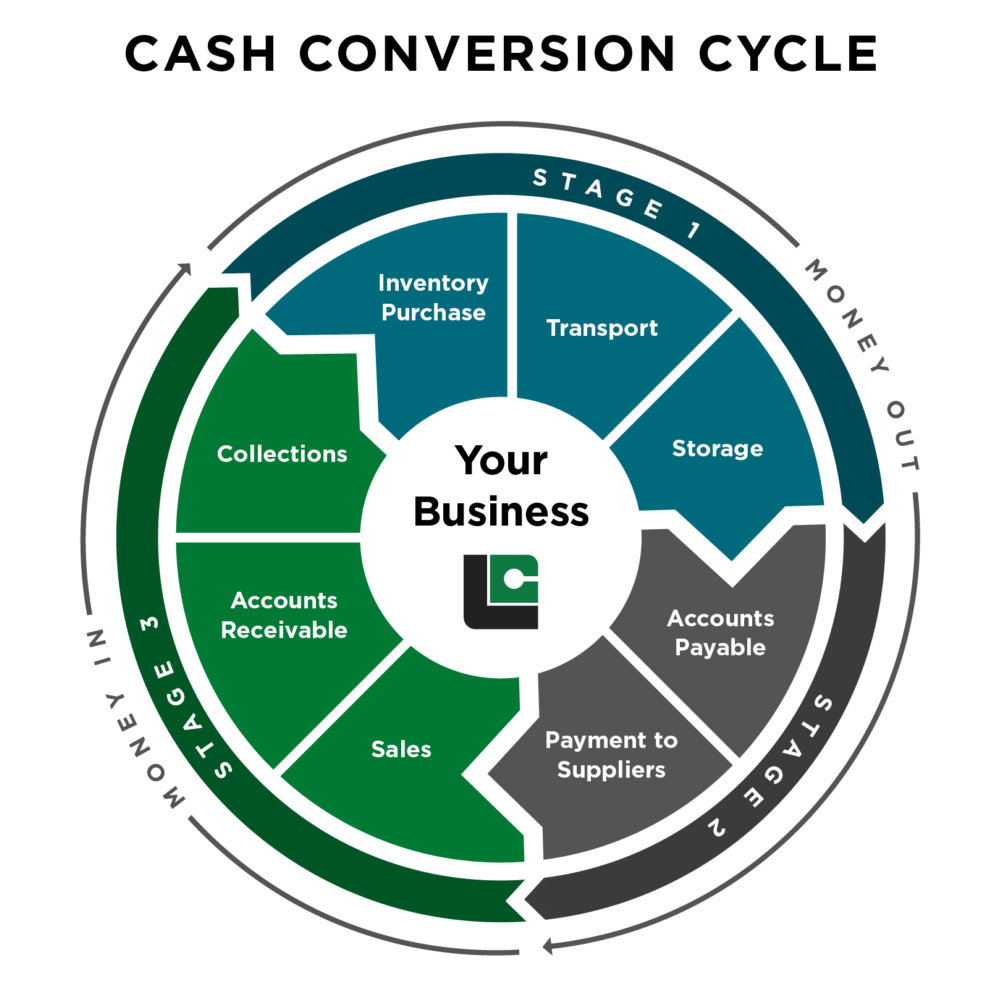
Understanding your cash conversion cycle (CCC) is key to ensuring you’re on top of your company’s working capital.

Know your company’s cash conversion cycle  

cash conversion cycle

Your company’s cash conversion cycle (CCC) tells you how many days it takes to turn your inventory purchases into cash. It’s a cycle that is all too familiar: you acquire inventory from a supplier, store that inventory, sell it to a customer on account, pay your suppliers and collect on your invoices — thus getting paid and putting cash back into the company.

The CCC is an important financial indicator of your company’s cash flow. It shows your ability to maintain highly liquid assets and is a metric that lenders and other finance providers will use to assess your potential risk level.


Follow all six steps to becoming «lender friendly» and get prepared to access funding from any lender.

Access the complete eBook.


It’s not magic, it’s just math

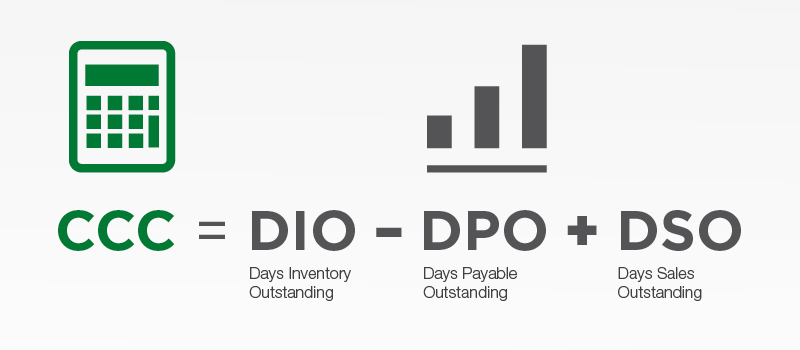
You don’t need to be a magician to unlock the power of the CCC formula for your business. All you need are three figures to complete the basic CCC formula, all of which you can find in your financial statements. 

cash conversion cycle formula

Let’s look at each component a little more closely.

  • DIO: Days Inventory Outstanding
    • This is the number of days on average that your company turns your inventory into sales. The smaller this number, the better.
  • DPO: Days Payable Outstanding
    • This is the number of days it takes you to pay your accounts payable. The higher this number, the longer you can hold onto cash, so a longer DPO is better.
  • DSO: Days Sales Outstanding
    • This is the number of days you’ll need to collect on the sales of that inventory after the sale has been made. Again, the lower the number, the better.

So the CCC is equal to the number of days it takes to sell your inventory, plus the number of days you need to collect on your sales, minus the days it takes you to pay your vendors.

Example: 
Keisha runs a PPE manufacturing company. Keisha always pays her suppliers within 30 days. She keeps enough inventory on hand to satisfy 60 days of sales and is good at managing this. It will take 52 days on average for her customers to pay their invoices.
This would be her CCC formula:
CCC = 60 days – 30 days + 52 days
CCC = 82 days
Keisha’s CCC is 82 days, meaning that she will need on average 82 days of working capital to convert purchased inventory into cash.

The above is a simplified example, and to get accurate results you must calculate and track your DIO, DPO and DSO on a monthly, quarterly or annual basis, along with the dollar values for inventory and sales.


“Our Liquid Capital Representative is more than just a lender — he’s a built in consultant.”
Nick Newman, Co-owner, Ridgeline Manufacturing


How the Cash Conversion Cycle reveals hidden potential  

Cash Conversion Cycle potential

Now that you have gathered the necessary numbers and ran them through the CCC formula, you will have a good indication of your cash liquidity position — and it can point your attention to what is helping or hindering your cash flow. Depending on the results, you may determine immediate areas that can be improved.

The longer the CCC, the more working capital you’ll need to manage your operations. And that can be an overwhelming challenge for many businesses. Generally speaking, companies want to shorten their CCC.

To shorten the CCC, you may be able to manage inventory levels better, get longer supplier payment terms, improve your collection process or adjust the payment terms you give your customers. However, this may not always be practical or something you’re wanting to change for a number of reasons.


“Liquid Capital allows me to operate without stress. If a company is offering early payment discounts, factoring is a cheaper option to gain access to money.”

Dave Kip, CEO of Best Broadcast


Making adjustments that fit your business

Choosing to use an alternative financing solution such as Invoice Factoring can help to lower your CCC by turning accounts receivable into cash faster.

Calculate cash conversion cycle

Factoring can help to lower your DSO which means that you will get paid on your sales faster and have quicker access to working capital. This cash can then be reinvested into your company faster than if you had to wait on outstanding invoices to be paid out according to the usual payment terms.

Or you could get extended payment terms from suppliers to reduce the DPO portion of the formula or use financing tools such as Purchase Order Financing to help you make up the gap where suppliers are not providing adequate or any terms. By extending the number of days you have to settle your accounts payable, you can keep cash in the company and effectively increase your working capital.

However, the CCC alone cannot be a complete indication of liquidity. You’ll need to look at calculating other liquidity metrics like the current ratio and quick ratio to paint a complete picture. You may already have these calculations in place, but if you haven’t yet calculated your cash conversion cycle, it’s time to start crunching the numbers and tracking changes over time to manage your business better.

Reducing your DSO and DIO or stretching your DPO are also useful tactics that can help your cash conversion cycle to grow your business. Do you work in an industry where “inventory” doesn’t apply? There are also other ways that you can use the CCC.


Keep reading our four-part cash conversion cycle series: 

Part 2: Learn about the 7 proven cash flow tactics every CFO and finance pro needs to know.

Part 3: Learn how to leverage your assets to grow your working capital

Part 4: Learn how to keep suppliers happy and cash in your pocket


Want to learn more about how invoice factoring and alternative funding solutions from Liquid Capital can help? Contact one of our Principals today

Cash flow crisis

Sail through a cash flow crisis — 5 places to batten down the hatches

Part 2 in our “cash flow through uncertainty” series. Missed part one? Read «How to manage cash flow through uncertainty

Cash flow crisis

When you’re in the thick of a full-blown crisis and know what you’re up against, what can you do to come out the other side intact? What strategies can you use and what resources can you lean on? 

Here are five places you can focus your attention:

1. Focus on your customers

Your best customers are a great resource in times of crisis. You could offer them hard-to-shift inventory at a discount and give favourable terms for paying invoices early. Now is also a good time to contact old customers: use your CRM software or run a report from your sales software and send them offers that can turn inventory into quick cash.  

2. Be proactive with your receivables process

Make sure your invoices are extremely clear, with a specific due date, purchase order number, details of the goods or services the bill is for and the name of the person who placed the order. Send out a reminder when the due date is close and another when it passes. Pick up the phone and call if you still don’t receive payment. Make it easy for customers to pay: offer e-transfer, credit and debit card and mobile payment options. 

3. Consider invoice factoring

This financing option allows you to sell your invoices to an invoice factoring company such as Liquid Capital for a small fee. You receive money owed much faster, and, because it’s not a loan, there is no interest to pay. This can be a really effective cash flow strategy for businesses during a crisis.

More questions about invoice factoring? Get the answers here:

4. Try and extend your payables

Talk to your key suppliers and try and improve your payment terms. Negotiate longer payment periods or ask for a discount if you pay sooner. 

5. Review your cash flow forecasts constantly

During a crisis, you need to keep on top of your cash. Look over your cash balances daily and reconcile them with a robust accounting software so you constantly know how much cash you’re holding at any given time. Review your forecasts more often than in normal times: at least every three months.


If you’re looking for some guidance to improve your cash flow during a crisis, get in touch with us and we’d be happy to chat. We’ll review your current cash flow along with options to improve your business situation so you can take the next step in your strategy with confidence.

Seasonal manufacturing - Workers in plant

Seasonal manufacturing can leverage factoring to weather any storm

Seasonal manufacturing - Workers in plant

Running a seasonal manufacturing business isn’t for everyone. You likely experience an overwhelming rush of demand one part of the year, and a sort of peace and quiet for the other times. In those times, it might get a little too quiet — especially when it comes to your bank account.

For the manufacturing industry, these seasonal differences require a lot of prep work, budget forecasting, and a clear understanding of when the cash is coming in and going out of the business. Invoice factoring can help prevent such extreme shifts. By selling your unpaid invoices and collecting the majority of that payment up front, you can gain predictable cash flow — even in the off-season. Need a quick refresher? Follow the invoice factoring essentials here.

No matter the season, here are four key ways that factoring can help your manufacturing business:

1. Opportunities blossom for seasonal manufacturing companies

Seasonal manufacturing - Training and development

When a new business starts to bud (pun intended), it may mean that you’re selling faster than you’re receiving payment. This may be okay for a little while, but when it comes to offering payment terms (like 30, 60, or 90 days), the manufacturer has to figure out how to continue production while awaiting income. And if that busy season is significantly shorter than the rest of the year when there are more expenses than sales, the cash inflow might not be able to keep up. Even successful businesses can then become cash strapped.

How does factoring help with seasonal manufacturing?

Factoring eliminates this by paying the majority of an invoice in ‘advance’ so that essential bills can be paid to keep production volume high. Instead of waiting for customers to pay based on the terms, you can get cash instantly and keep your operations moving forward.

2. Avoiding a cash flow drought

Seasonal business: Improve cash flow

As the busy season continues, it’s hard to imagine there will ever be a moment’s rest. But now’s the time to prepare for the end of summer when orders may start to drop off. To proactively combat that from happening, you can create motivating customer incentives to keep the cash coming in at regular intervals well into the off-season.

For example, instead of requiring 30 days to pay, you could offer clients 90-day payment terms, or the ability to pay in installments. This could be attractive to clients who want to take advantage now, rather than waiting for later in the year (or even next year) to make a purchase or a reorder.

How does factoring help?

Factoring can allow manufacturers to offer their customers more preferable terms. Even if you extend your payment terms to the customer, you could still factor that invoice and collect in advance. Both you and your customer benefit.

3. Watching the colors (and POs) change in seasonal manufacturing

Seasonal business: Improve cash flow

When a seasonal business scales down operations into the off-season, this can include making tough decisions such as laying off employees or offering deep discounts on valuable products — which most owners would like to avoid.

That’s why manufacturing business owners need to find ways of balancing cash flow across the whole year — with enough to sustain operations during the ‘down’ months so they’re ready with the right resources to deliver during peak times. Being able to maintain operations more steadily throughout the off-season means that any transitional periods are made much more manageable.

How does factoring help?

Factoring can help you pay fixed costs such as employee salaries and benefits during the slower times without having to make sacrifices to savings or other expenses. It can give you more predictable cash flow when you’re not sure if customers will come calling. And it provides you with the flexibility to factor invoices as needed, rather than having to commit to a longer-term business loan (which may not even get approved).

4. Surviving & thriving in slow times

Seasonal manufacturing - Manager

Now with more consistent cash flow in the off-season, it means that progress can be made even in these ‘slow’ times. Have a special project you’ve needed to tackle? Need to make equipment repairs or upgrade a piece of outdated machinery? Want to beef up your marketing and advertising?

All of these can be achieved during the off-season while you have a little more time on your hands. With an enhanced production line during a greater portion of the year — and subsequently improved cash flow — you’ll be better prepared to scale back up for a new year ahead.

How does factoring help?

Factoring can minimize the stress and uncertainty in the off-season, especially if your customers have also hibernated on payments. Unlike traditional loans that require a monthly payment over a set period of time, factoring can be applied for only certain parts of the year as needed. So whether a business needs a year of factoring, or just a season here and there to keep cash flowing in, the right arrangement can often be found.


Interested in seeing how one seasonal manufacturing company got the most out of invoice factoring? See the case study with Ridgeline Manufacturing and learn how they made the most of this financing solution.