
5 warning signs

5 Cash Flow Red Flags Worth Watching

A food services company in Florida was, by most appearances, running well. It supplied pre-made gourmet sandwiches to hotels, airlines, cafeterias, and institutional clients across the Southeast. They processed four to five hundred invoices every week. Revenue was steady and customer relationships were solid.

Then the corporate partner backstopping its line of credit restructured and walked away, taking that line of credit with him.

The immediate aftermath was not dramatic. Invoices kept going out. Customers kept paying, more or less. But no one had a clear view of which invoices were outstanding or aging. Nor was anyone tracking how quickly the gap between receivables and operating costs was growing. By the time the financial symptoms showed up, the company was weeks away from creditor protection.

There were warning signs. The ominous indicators that preceded the crisis were there for anyone to see. They just were not being watched.

That pattern, a business appearing stable then suddenly isn’t, is what makes cash flow monitoring worth treating as a regular discipline rather than an emergency response. The five early-warning metrics below are what that monitoring looks for.

5 warning signs

Red Flag #1: Rising Days Sales Outstanding

Days sales outstanding, or DSO, measures the average number of days a business takes to collect payment after a sale. A high DSO figure by itself may reflect nothing more than industry norms or a large seasonal order. The number worth tracking is the direction.

DSO that climbs steadily over three or more consecutive months is a reliable early indicator. It signals that collections are softening. Credit analysts and lending underwriters commonly treat a DSO running more than 20 percent above a company’s standard payment terms as a figure worth investigating. For a business operating on net-30 terms, that threshold falls around 36 days.

The concern isn’t the number itself, but what sits behind it. That could be customers stretching their own cash, invoices left in dispute or forgotten, or a collections process that hasn’t kept pace with volume.

In a business generating hundreds of invoices every week, a DSO trend can accelerate fast. Without someone tasked to watch it, no one notices.

Red Flag #2: Aging Receivables

A standard accounts receivable aging report sorts outstanding invoices into time brackets: current, 30 days past due, 60 days past due, and 90 days and beyond. A healthy AR profile keeps most of its balance in the current and 30-day columns. A shift of that weight toward the 60-plus-day column signals rising collection difficulty and declining recovery probability.

Customer concentration amplifies the risk. A business that depends on a small number of large accounts for most of its receivables has little room to absorb slow payment from any one of them.

Noble International, a Michigan-based auto parts manufacturer, entered bankruptcy in 2009 in part because its receivables were concentrated among a handful of large automakers that were themselves under severe financial pressure. Their payment timelines stretched. Noble had almost no buffer.

The aging report alone will not signal that a business is in trouble. Paired with a rising DSO trend and a look at which customers dominate the outstanding balance, it tells considerably more.

Red Flag #3: A Lengthening Cash Conversion Cycle

The cash conversion cycle, or CCC, measures how long it takes a business to turn its investments in inventory and operations into cash receipts. The calculation adds days inventory outstanding to days sales outstanding, then subtracts days payable outstanding (the time a business takes to pay its own suppliers). A rising CCC means cash is tied up longer before it returns.

This is the metric a cash flow audit identifies and we covered the process in a 2022 article. Gather your income statement and cash flow statement, analyze for shortfalls, and what you are looking at is precisely where the CCC is breaking down. The article describes how to run the audit. This article identifies what to look for once you do.

PwC’s annual Working Capital Study, which analyzes more than 17,000 companies worldwide, has documented a 5.7 percent rise in DSO over the past decade. Smaller businesses typically experience steeper deterioration than their larger counterparts because they carry fewer working capital reserves to absorb the pressure.

A CCC that has grown by 10 or more days over two to three quarters warrants a close look at which component is driving it: DSO, inventory, or payables.

Red Flag #4: Sliding Liquidity Ratios

The quick ratio (liquid assets divided by current liabilities) and the current ratio (current assets divided by current liabilities) are standard measures of short-term financial health. A quick ratio below 1.0 signals that a business cannot cover its immediate obligations with cash and receivables alone. Current ratio benchmarks vary by industry, with manufacturing and distribution businesses often running between 1.5 and 2.0.

What matters more than any single ratio reading is the trend over time. A quick ratio that drops from 1.4 to 1.1 over two quarters is a more meaningful signal than a ratio of 1.1 that has held steady for two years. Lenders and credit underwriters commonly review these figures on a trend basis, because the trajectory often reveals more than the number itself.

Tracking these ratios monthly requires only current financials and a basic spreadsheet. The value is in seeing the patterns over time, not any individual data point.

Red Flag #5: Growing Reliance on Short-Term Debt

Periodic use of a line of credit or short-term facility is normal for most businesses. The signal worth noting is when a company draws on short-term debt repeatedly to cover recurring operating expenses, or starts stretching its own supplier payments to conserve cash. Days payable outstanding that extends well beyond standard supplier terms often reflects cash pressure that has not yet exerted itself somewhere else in the financials.

That was the condition the Florida food services company from the opening of this article was quietly approaching. Its credit facility was gone. No one had a clear picture of which invoices were outstanding, which were aging, or how wide the gap between receivables and costs had grown.

An interim CFO put numbers to the problem fast. The solution was invoice factoring through Liquid Capital. Outstanding receivables converted to working capital within days through an initial $250,000 facility. Operations stabilized. Collections discipline returned. Within a year, the company was acquired by a multinational conglomerate with more than $14 billion in revenue.

The turnaround started with a clearer look at the numbers.

Your Early Warning Dashboard

The five metrics above, DSO trend, AR aging concentration, cash conversion cycle length, liquidity ratio movement, and growing reliance on short-term debt, are not individually alarming under ordinary circumstances. Their value is in tracking all five together, consistently, so that a pattern becomes visible before it becomes a crisis.

Research from the JPMorgan Chase Institute found that the median small business holds fewer than 27 days of cash on hand relative to its daily expenses. That margin leaves very little time between when a problem first appears in the numbers and when it begins affecting operations.

For businesses in manufacturing, trucking, staffing, and distribution, where payment terms routinely run 30 to 90 days, the gap between completing work and receiving payment is a structural feature of the business. A monthly review of these five metrics gives owners and finance leads an early-warning system that doesn’t require a full-time CFO to maintain.

Invoice factoring solves two problems in this context. Factoring companies typically advance 60 to 90 percent of outstanding invoice value, providing immediate working capital. A good factoring relationship also introduces ongoing receivables review as part of the process: knowing which customers pay consistently and which are drifting toward the 60-day aging bucket is information a business can act on.

Building that picture before a crisis forms is far easier than building it after one already has.

To learn more about how invoice factoring can help your business respond to emergencies and prepare for growth, visit our Learning Hub site for a library of helpful articles and handbooks.


supplier

Your Most Reliable Supplier Relationship May Be Costing You

The supplier you’ve worked with for a decade shows up on time, hits the mark, and has never given you a reason to look elsewhere. That consistency is genuinely valuable. It may also be your most under-appreciated business risk.

Long-term, reliable supplier relationships feel like assets, so they get treated like assets. Then something happens that exposes what that comfort actually costs. Supply chain disruptions are growing more frequent. McKinsey Global Institute research found that companies across major industries can expect disruptions lasting a month or longer once every 3.7 years on average, with expected losses modeled at roughly 45% of one year’s EBITDA over a decade. Resilinc’s 2024 monitoring data documented more than 10,600 supply chain disruptions in the first half of that year alone, a 30% increase over the same period in 2023. Tariff volatility through 2025 and 2026 has added further unpredictability to supplier relationships that many businesses assumed were safe and stable.

What determines whether a disruption becomes a brief inconvenience or a serious threat to your business is the supplier concentration you’ve built over time, and what you’ve done to address it.

supplier

What Got You Here

Single-supplier dependence rarely develops through carelessness. It develops through a series of reasonable decisions made over time.

A supplier proved reliable, so you gave them more volume. The higher volume unlocked better pricing, which made splitting orders between two vendors economically unattractive. Over years, proprietary tooling, custom specifications, or co-developed processes raised the cost of switching suppliers. The relationship itself became a strategic business asset: a vendor who knows your quality standards, your timelines, and your team is worth something.

None of that logic is wrong. The risk accumulates in the background, visible only when something goes wrong. In early 2022, a ransomware attack crippled Kojima Industries, a small but integral supplier of plastic interior parts to Toyota. The loss of that key supplier forced Toyota to suspend 28 production lines across 14 plants. Bloomberg estimated the cost at roughly $375 million, and Kojima spent months returning to normal operations.

Toyota is a massive, global operation that can weather storms like that. A custom manufacturer dependent on a single component source, a staffing agency running payroll through one processor, or a distributor whose entire catalog flows through one brand partner cannot.

The pattern holds across industries. Manufacturing businesses face six-to-24-week qualification timelines for regulated or proprietary components. Trucking operations concentrated around a single fuel supplier or parts vendor have no fallback when that vendor’s pricing shifts or supply tightens. Supplier concentration risk is a factor in all industries that has the power to take out the small businesses that operate in them.

The Nail in the Road

Consider two businesses that share the same suppliers, serve the same customers, and operate in the same market. On a given Tuesday, both learn that their primary supplier has been hit by a cyberattack (a regulatory shutdown, a factory fire, etc.). One has a second source ready to absorb the volume quickly. The other starts making calls to vendors it has never worked with, places emergency orders at premium prices, and calls customers to explain delays it cannot accurately forecast.

Both businesses drove over the same figurative nail. One had a spare tire.

Supply chain disruptions are like nails in the road: every business encounters them, and no single business can reliably prevent them. What determines the outcome is whether you’re carrying a spare. 

Resilinc found that 58% of the disruptions tracked in 2024 were severe enough to trigger emergency response protocols among affected customers. The practical timeline makes the math clear: in manufacturing, qualifying a replacement supplier for a regulated component typically takes six weeks to six months. No business operating on 30-to-90-day receivables can absorb a gap that wide by improvising.

Two Costs Worth Examining

Overreliance on one vendor can cost you in two ways: The occasional supply chain emergency (unpredictable, but costly when it happens) and your loss of negotiating power.

The obvious cost of supplier concentration risk is the crisis scenario: emergency sourcing at premium prices, production gaps, missed delivery commitments, and the customer-relationship damage that follows. A 2022 CFIB survey found 30% of Canadian small business owners saw costs rise more than 20% due to supply chain disruptions, with that figure reaching 42 to 45% in transportation, construction, and wholesale sectors.

The less obvious cost operates every day, whether anything goes wrong or not.

A supplier who knows they are your only viable source negotiates accordingly. Pricing discussions, payment terms, and contract renewals all shift in their favor when the cost of replacing them clearly outweighs the cost of accepting their terms. Procurement research consistently documents that introducing a qualified second source, even one receiving a minority share of volume, improves a buyer’s position in all three areas. The mechanism is straightforward: you don’t need to move significant volume to change the dynamic. The credible option to do so is what changes it.

Counting the Cost of Diversification

Most businesses wait until there’s a problem to act, usually because of the cost of adding a second supplier.

Qualifying a second supplier requires upfront spending: sample and pilot orders (often prepaid in full), third-party facility audits, first-article inspection fees, and the inventory buffer a business needs to carry while a new relationship ramps to full capability. For a manufacturer, that transition period may involve running dual supply chains simultaneously. For a distributor adding a new brand partner, it means purchasing opening inventory before any of it has moved.

Those costs arrive at the worst possible moment for businesses already operating on 30-to-90-day payment cycles. Receivables are in the pipeline, not yet collected. The cash needed to fund the transition is sitting in unpaid invoices.

Invoice factoring addresses that gap directly. It advances 60 to 90% of outstanding receivables within 24 to 48 hours, putting working capital in hand before customers pay. A business can use those funds to cover qualification costs, sample orders, and the inventory buffer a new supplier relationship requires during ramp-up. The strategy was sound from the start. The obstacle was cash flow timing, and invoice factoring resolves it.

Build the Spare (Before You Hit the Nail)

This may not be as difficult as you think. Supplier diversification doesn’t require a wholesale overhaul of procurement strategy. It requires identifying the relationships where concentration has become risk, and addressing them deliberately.

A useful starting point: M&A advisors and business lenders commonly flag supplier concentration as a concern when a single source accounts for more than 15 to 20% of cost of goods sold. It is also the threshold at which a disruption becomes large enough to threaten operational continuity rather than create a manageable inconvenience. If qualifying a credible replacement would take more than 60 days, the case for financing the transition rather than waiting for organic cash flow becomes hard to argue against. The carrying cost of a forced supplier crisis, measured in emergency premiums, lost revenue, and customer attrition, typically exceeds the cost of the financing that would have prevented it.

The supplier relationship you have protected most carefully may be the one most overdue for a second source alongside it. Building that redundancy is not disloyalty to a partner who has earned your trust. It is the condition that allows the partnership to continue, regardless of what happens on their end.

To learn more about how invoice factoring can help your business respond to emergencies and prepare for growth, visit our Learning Hub site for a library of helpful articles and handbooks.

Next door neighbor's mail deposit boxes at a bank.

Invoice Factoring: A Better Alternative to Merchant Cash Advances

Business owners lean on Merchant Cash Advances (MCAs) more and more to solve cash flow problems. MCAs offer quick access to cash based on future sales projections. But while MCAs can provide short-term relief, their high costs and rigid repayment terms make them an unsustainable solution. This may not seem like such a big deal when you need cash, but high costs and terms that might not be as aligned with long-term growth.

That’s why, in your search for sustainable and cost-effective financing solutions to facilitate growth, it’s good to look beyond the obvious options to alternatives that align with your business’s unique needs and goals. One alternative is invoice factoring, which immediately frees up cash tied up in your outstanding invoices. And it comes without some of MCA’s drawbacks.

In other words, there’s a time and a place for MCAs. But we’re here to talk about when invoice factoring might be a better long term solution, both for businesses and for brokers.


What is Invoice Factoring?

Invoice factoring allows you to leverage your outstanding invoices for immediate cash flow.

By selling your unpaid invoices to a factoring company at a discount, you get much of the invoice value upfront, typically 70% to 90%.

Unlike MCAs, which provide funding based on future sales projections, invoice factoring is tied directly to the value of your actual receivables. This means that the financing is based on work you’ve already completed and invoices you’ve already issued, providing a more stable and predictable source of funding.

And factoring doesn’t depend on your credit. So your company gets funding based on the credit of the companies that you invoice, giving you a much greater capacity to borrow, something no other financial tool can offer.

And with the right factoring relationship, you could truly accelerate your cash flow every month.

Is Invoice Factoring a Better Alternative to Merchant Cash Advances?

Cost-Effectiveness

MCAs are spendy. With interest rates and fees that can often reach triple digits (when annualized to compare apples to apples), MCAs can quickly eat into your profits and limit your growth potential. Invoice factoring, on the other hand, usually offers much lower rates, with fees ranging from 1% to 5% of the invoice value.

Read: You keep more of your money.

Better Cash Flow

Cash flow issues, like slow-paying customers, seasonal fluctuations, and unexpected expenses, can all put a strain on your finances, making it difficult to meet operational costs and invest in growth.

For some businesses, MCAs, with their quick repayment terms and high daily or weekly payments, can aggravate these cash flow issues, leaving you struggling to keep up.

Invoice factoring is more flexible and sustainable solution. By converting your unpaid invoices into immediate cash, you can smooth out your cash flow and ensure that you have the funds you need to meet your obligations and seize growth opportunities.

This is especially good for businesses with long payment cycles or in industries with extended payment terms, like construction or manufacturing.

Read: Payback isn’t a pain.

Flexible and Scalable

Unlike MCAs, which often come with fixed repayment terms and daily or weekly payments, factoring allows you to access funding on an as-needed basis. As your business grows and your invoicing volume increases, you can factor more invoices and receive more funding without the need for a new application or approval process.

This scalability makes invoice factoring an ideal solution for businesses that are experiencing growth or have fluctuating cash flow needs.

Whether you’re looking to hire new employees, purchase equipment, or expand into new markets, factoring can provide the financial support you need to achieve your goals.

Read: There’s no requirement to factor all of your invoices: just use it when you need it.

Choose the Right Factoring Partner

Look for track record and industry fit. Choose a factoring partner with a track record in your industry and an understanding of your unique needs and challenges.

In addition to good support and a dedicated team, a good factoring company will offer:

  • Transparent terms
  • Competitive rates
  • A streamlined application process

Whether you’re looking to improve your cash flow, invest in growth, or simply stabilize your finances, the right will be on your side, invested in your success.

Potential business partners discussing a deal overlooking a major city

Make the Switch from MCAs to Invoice Factoring

If you’ve been a little over-reliant on MCAs to meet cash flow needs, and want to switch to invoice factoring, compare some rates, terms, and services. Look for a partner that has experience in your industry and a good reputation.

Once you’ve found the right fit, the application process is typically pretty simple, with minimal paperwork and no long-term contracts.

Yeah, that’s a big one: make sure they don’t want you to sign a long-term contract.

Invoice Factoring Puts You on a Better Track than MCAs

MCAs can be a great quick fix, but for most business, invoice factoring can be a better long-term solution to put you on course to even better funding options.

Invoice factoring provides an alternative, unlocking the value of your receivables and improve your cash flow without the drawbacks of MCAs.

By partnering with a reputable factoring company and making the switch from MCAs to invoice factoring, you can take better control of your cash flow. With the flexibility, cost-effectiveness, and scalability of factoring, you’ll get the financial support you need to seize growth opportunities, navigate challenges, and achieve your goals. Learn more about working with Liquid Capital as a referral partner. Or if you’d like to see if factoring might be right for your situation, connect with us today.

Company values huddle at a community table

Company values rise above a major network outage

Even when disruptions happen out of our control, our clients still need to rely on funding to keep their business going. This is the story of how our team embraced our company values, came together with a shared purpose and worked together to find a way to keep things moving for our clients—despite enormous obstacles.

company values

Just another Friday…

On the morning of Friday, July 8, Nikita Silvestrov awoke to find that his Internet wasn’t working. He didn’t think much of it at the time and took his dog out for a morning walk. Then he checked his phone and realized that wasn’t working, either.

“I wondered, ‘What’s going on? This is a bit weird, right?’ When I got back and tried resetting my modem, I realized nothing was working,” he said. “And I couldn’t call anyone because my phone didn’t work.” So Nikita went to a nearby Starbucks where he saw about 100 people standing outside trying to access free Wi-Fi.

That’s when Silvestrov, a relationship manager with Garrington Group (the parent company of Liquid Capital), discovered there was a massive service outage at Rogers Communications—including Internet and cellular networks—affecting more than 12 million Canadians across the country. The outage also affected systems that relied on the Rogers network, including Interac debit payments and certain federal government services, as well as access to 911 emergency services.

Since his office also ran on the Rogers network, Nikita—whose job is focused on supporting long-term franchisee relationships—couldn’t work from there either. But rather than throw in the towel, call it a long weekend and take the day off, as so many other Canadians did that day, he and his colleagues banded together and found a way to make it work.


Nikita Silvestrov

“We work with so many people who need funds day to day. Just because there’s a network outage doesn’t mean the world stops. People have to make payroll and pay their suppliers. If we don’t send cash out the door at the end of the day, they’re not able to pay their employees and suppliers.”

— Nikita Silvestrov, Relationship Manager, Liquid Capital/Garrington Group


Getting creative to keep things moving

“I ended up running around the whole day between Starbucks, the library and a couple of restaurants that had free Wi-Fi,” Nikita explained.

He knew that there was a lot riding on it. Garrington Group provides alternative financing solutions to entrepreneurs and emerging businesses, allowing them to quickly access funding without the need for traditional bank financing. Liquid Capital is part of a wider group of companies that share the same funding source and underwriting resources that fall under the Garrington umbrella.

While many companies claim that customers are at the centre of everything they do, that messaging sometimes falls apart in a crisis. But Garrington’s values came to life that day in how the whole underwriting team responded during the massive outage to keep money flowing for clients.

banding together with company values

Banding together, through shared purpose

“Our teams knew the importance of getting money out to our clients and they did whatever had to be done, just to make sure everyone who needed money that day got their money,” said Robert Thompson-So, Managing Director and Chief Strategy Officer of Garrington Group.

Colleagues who were on the Rogers network teamed up with colleagues who were on a different network. By tethering to a network that was still in service, they were able to contact clients, submit paperwork and move money where it was needed.

“Senior management didn’t have to tell them to do that. Our people have consciously chosen to make their contribution in the world with our company. And that just speaks to the kind of company culture that we’ve tried to promote,” Robert proudly said of his team.

“We just focused on getting cash out the door, making sure that everyone got their funds that day,” said Nikita. “If you’re really passionate about your work and passionate about helping others, it shows. Everyone really banded together to get through the day.”


Read more about the Liquid Capital Difference

overcome cash flow challenges

Keep the business beat going with accelerated funding to overcome cash flow challenges

You don’t need to lose your groove when you hit a wrong note with your financing. Overcome cash flow challenges and keep the beat going with invoice factoring.

overcome cash flow challenges

For many business owners, growing a company can often feel like you’re improvising as part of a jazz ensemble – you and your team are trying to create beautiful music on the fly. And if you miss a note and hit a cash flow challenge, it can throw you off the beat of success.

However, just as any musician (and savvy business owner) knows, it’s not the notes that you’ve already played that matter; it’s the notes you play next that do. And often your inspiration for the next note comes from your fellow musicians.

So if you or your client need some inspiration for overcoming a wrong note, keep reading to learn how these entrepreneurs created their magnum opus, seized growth opportunities and created beautiful music (even after playing a wrong note or two).

Overcome long payment terms

Ray Bowman, Owner and President of Rayzor Edge Tree Service had plans to take his company, which provides professional, environmentally conscious tree services for commercial and residential properties in southern Ontario, to new heights. But his goals for growth initially outpaced his working capital. 

As a small firm, he was constrained by cash flow, as his need to pay subcontractors quickly was met head-to-head with invoice payment times of 30 to 120 days from commercial customers, limiting the number of jobs he could accept.


“Before working with Liquid Capital, we just didn’t have the cash flow to support our growth. We were confined to doing basically a job a month or so. Now with Liquid Capital behind us, we’ve freed up our cash flow to continue to grow — and there’s no ceiling on it.”

 Ray Bowman, Rayzor’s Edge


For Bowman, tapping into the power of his accounts receivable through invoice factoring was the solution. The extra working capital allowed him to double his sales, maintain positive relationships with valuable subcontractors, while also benefitting from the business support and advice of his Liquid Capital principal.

Overcome offering early payment discounts

Similarly, opportunities for further growth were abundant for thriving audiovisual company Best Broadcast — the business was booming after a successful launch set the stage for new business opportunities to work with major companies. 

At the same time, Best Broadcast was facing a cash flow crunch that was limiting the company’s ability to sustain its upward momentum. Customers were taking 45, 60 or 90 days to pay their invoices – often, hundreds of thousands of dollars were tied up in outstanding accounts receivables. While the company initially tried to remedy the situation by offering clients a five percent discount if they paid their bill in full within 15 days, the heavy discounts started to eat into the bottom line.

After taking the time to understand and evaluate the invoice factoring process, Dave Kip, CEO of Best Broadcast decided that the best way to access more reliable working capital was to put his accounts receivables to work with the help of Liquid Capital.


“Liquid Capital allows me to operate without stress. If a company is offering early payment discounts, factoring is a cheaper option to gain access to money.”

David Kip, Best Broadcast


With a reliable alternative financing solution in place, Best Broadcast immediately had access to the funds it needed, increasing cash flow and alleviating Kip’s worries around day-to-day operational costs so he could focus on his business strategy and successfully scale his company.

Overcome traditional funding solutions 

overcome cash flow challenges-traditional-funding-solutions

Having enough staff and enough materials to fill orders are the two most important factors for running a successful manufacturing business. They also require sufficient working capital – you need to pay your employees regularly, and you need to purchase materials to fill orders. 

For Summit Retail Solutions, invoice factoring was exactly what they needed to access regular cash to cover these two major operating expenses. They had purchase orders worth hundreds of thousands of dollars in the pipeline and business was booming for the two-year-old custom manufacturer of premium store display fixtures.

However, without an established credit history, the company did not qualify for traditional bank financing, and its small business line of credit wasn’t enough to help them continue growing. As their cash flow started to dry up, they struggled to fill large orders, while supply chain and payroll issues began to threaten operations.

After researching several factoring companies, Summit Retail chose Liquid Capital’s invoice factoring solution for its creativity in meeting the company’s specific needs and for its exceptional service and support.


“I honestly believe that we would not have had this success without Liquid Capital’s ability to cut through the red tape and factor our receivables. I would strongly recommend this course for other companies that require working capital to grow.”

– Ted Hope, Summit Retail Solutions


With the influx in working capital, Summit was able to draft larger contracts and drive more business. Almost immediately, they began to enjoy higher sales growth, and in just 18-months of working with Liquid Capital, sales more than doubled, going from $1.4 million to over $4 million. Now firmly established – and with the track record to prove it – Summit was soon able to secure traditional bank financing to fund its continued growth.

Overcome cash conversion cycles that can’t support growth

Overcome cash conversion cycles that can’t support growth

When the glove fits, it fits! And for many businesses, including Dig It Apparel Inc., invoice factoring fit their business needs just right.

When the co-founders came up with the idea for Dig It Handwear® —a line of utility/gardening gloves specifically targeted to women because they could protect hands and manicured nails—they knew it was a good one. What they weren’t prepared for was how good—and how in-demand—their product would be after an appearance on a Canadian TV Show, Dragon’s Den.


“We fell into the gap. A small business loan is usually about $50,000, which we qualified for, but we needed between $200,000 and $250,000—and weren’t even sure specifically how much. The bank needed more solid information to bump us up to a commercial loan, and we didn’t have it. So we were not able to get the loan secured in time for manufacturing. We needed to look at other options.”

– Claudia Harvey, Dig It Apparel


In need of financing—and fast—Dig It started exploring the options. They started talking to other banks, but didn’t yet have the relationships or track record needed. Next, they considered selling a portion of their company—fortunately, a trusted person in their business network introduced them to Liquid Capital before that became necessary.

Working with Liquid Capital enabled Dig It to expand, and offer banks the solid projections necessary to obtain traditional financing.

Overcome financial instability caused by seasonal demands

For any type of business that relies on seasonal buying cycles, finding sufficient cash flow to keep you going through the slow months can be challenging. 

For Ridgeline Manufacturing, this was the problem they faced specializing in summer recreational equipment. The winter months brought lean times, and owners Nick and Julie Newman knew that they couldn’t lay off their workforce and close production for half the year. However they also didn’t qualify for traditional funding options.

Though they had previously tried factoring with other providers, but were turned off by the experience. But when they were introduced to their Liquid Capital Principal, they knew working with Liquid Capital would be different.


“With a lot of other companies, you go through tons of different people—even just to get an approval. After you’re approved, you still don’t have a dedicated contact. At Liquid Capital, I know who I’m dealing with—and I know he’s looking out for my best interests, and trying to save us money whenever possible.” –  Nick Newman, Co-Owner, Ridgeline Manufacturing


With Liquid Capital there were no minimums or penalties for inconsistently factoring their invoices, and Nick liked that he wouldn’t be charged interest on money already collected. With the flexibility Liquid Capital gave them, Ridgeline was able to not only coast through the winter months, but also continue growing during the busy times.

Overcome unforeseen events

When traditional funding options just don’t cut it, invoice factoring can help businesses that find themselves in hard-to-finance situations. For Silani Cheese, they had a quality product and demand was high, however after a series of financial obstacles, they needed an influx of working capital.

Naturally the company turned to the banking facility it had in place for help. Unfortunately, certain margin criteria in the banking arrangement unexpectedly changed resulting in a reduced credit facility, forcing it to negotiate an insolvency/restructuring proposal with its creditors.

During the restructuring process, the company had repaid its bank debt using personal funds as well as financing from Farm Credit Canada, but in order to fully exit the proposal, it needed a broader financing solution—one that factoring could readily deliver.


“The other companies we dealt with just weren’t cutting it. Their financing approach made us nervous, and they made promises they couldn’t keep. When Liquid Capital came in and took over the deal, everything changed. We were three weeks into problematic negotiations with the other company—with an irreversible deadline looming—and Liquid Capital team jumped in, put everything together and closed the deal two days ahead of schedule.”

– Joe Lanzino, Silani Sweet Cheese Ltd.


Despite arriving rather late in the process, Liquid Capital impressed immediately with their face-to-face approach, deadline-driven commitment and upfront clarification of what was possible in terms of timing. 

In the end, Liquid Capital negotiated the deal, completed due diligence and funded Silani on the timeline it needed—all in less than three weeks—enabling Silani to exit the insolvency proposal and repay the Farm Credit loan as well.

Different industries, same cash flow challenges

overcome cash flow challenges in every industry

These businesses turned their accounts receivables from a daily headache into a tool to help them drive positive cash flow and ensure their companies continue to thrive. 

When you have the right funding partner, you can avoid those ‘wrong notes’ in your business orchestra.

If payment delays from your credit-worthy customers are resulting in missed growth opportunities for you or your clients, Liquid Capital can help you keep your business beat going.


“You want your business to be more than it is today. You’re facing the opportunities in front of you but you’re lacking in the cash or the capital… Let us help you by showing you a light at the end of the tunnel — and the best way to do that is to accelerate that cash cycle by replacing your near-current assets with cash.” – Liquid Capital Principal


Ready to learn more about invoice factoring? Contact your Liquid Capital Principal –  we’ll take the time to learn about your goals and challenges and will deliver accelerated funding solutions that hit the right note.

Growing food security with Liquid Capital

3 next-gen companies innovate to combat food insecurity

Here’s how three businesses are leading in sustainable, innovative business practices to help feed North America and combat food insecurity.

Growing next-gen initiatives to combat food insecurity

When an industry has operated and created products the same way for decades, it can be difficult for companies to break free from tradition and forge their own path forward.

While being innovative can be time-consuming, costly and bring on additional challenges, the long-term impacts can increase a company’s sustainability, profits and overall success. In the food and beverage industry, many companies are taking the initiative to implement better, more sustainable and more efficient business practices. 

Even if you aren’t operating in the food and beverage space (as are the following companies), you’ll find inspiration in their stories — and they may even spark an idea for how you can improve upon your own operations.

Next-level farming

Elevate with vertical farming to combat food insecurity

When you think of farming, the image of a red barn beside endless acres of crops blowing in the wind might come to mind. But what if that sprawling land was turned sideways? 

That’s the idea of vertical farming — growing crops upwards instead of across fields and completely altering the traditional approach to growing produce. And Elevate Farms is at the forefront of the industry as one of the first vertical farming facility manufacturers in North America, founded in 2018. 

Their state-of-the-art facilities can achieve impressive results in growing farm-fresh food while limiting water usage, all by combining proprietary LED light technology with photobiology and robotic automation. This has allowed Elevate Farms to redefine what a “traditional” farm not only looks like, but what they can produce. 

For example, while traditional farms take an average of 10 gallons of water to grow one head of romaine lettuce, Elevate Farms can do it with one gallon. This innovative technology allows for a higher crop yield per square foot of land. And this higher productivity can move us towards eliminating food insecurity in isolated areas such as northern communities in Alaska and the Yukon.

With 80% less labour needed compared to a traditional farm, 100% traceability due to blockchain technology and a 73% higher capacity than their competitors, it’s no wonder that Elevate Farms has made such a name for itself in the agricultural space.

Growing fresh food anywhere

Growcer is working to combat food insecurity

Isolated areas often don’t have the suitable soil or growing conditions for vibrant, sustainable farms. As a result, they often face issues of food insecurity — forcing people to ship food in from elsewhere. This leads to extremely high grocery bills, lack of access to fresh and nutritious food, degradation of health in remote communities and other negative spinoff effects.

Enter Growcer, an agri-tech company founded in 2015 with a mission to reduce the issue of food insecurity in isolated areas, regions with poor soil quality or locations experiencing droughts. As a manufacturer of hydroponic (soil-less) container farms, Growcer can grow local produce anytime and anywhere. Whether in the Arctic or the desert, these container farms can grow fresh produce in as quickly as six weeks. 

The company has also implemented an innovative new program with the goal of revitalizing gardening in remote Indigenous communities. This has given people access to fresh foods to which they wouldn’t have otherwise had access.

Turning food waste into profits

Loop Mission repurposes rejected food - Combat food insecurity

Every year, North Americans waste about 50% of all edible food produced. While some of it is unavoidable, the majority of the waste is due to stock management issues and consumer “pickiness.” 

So what can be done to mitigate the waste? 

That’s exactly what Loop Mission’s founders asked when they started the business in 2016 to repurpose rejected food. That journey started by turning unwanted fruits and vegetables — what they call the “outcasts of the food industry” — into delicious cold-pressed juices.

As a self-proclaimed “food waste fighting powerhouse,” Loop Mission has created a successful e-commerce business by selling their products direct to the consumer on their website. Meanwhile, they’ve also been gaining popularity in local brick-and-mortar stores, gaining another route into the competitive marketplace. 

On top of creating an innovative product for consumption, Loop Mission subsequently became a leader in food waste management, saving more than 6,872 tons of fruits and veggies, 446 million litres of water and avoiding the emission of 5,483 tons of GHGs.

Innovating to fuel business growth

For any company looking to evolve, innovate and compete, they have one thing in common regardless of industry: the need for working capital and healthy cash flow. 

All next-gen companies still need to meet the demands of payroll, R&D, manufacturing, supplier payments, promotion and distribution of their products. But if they don’t have incoming cash flow, stuck waiting for their customers to pay invoices, it can lead to cash cycle disruptions — holding them back from new ventures. 

If that sounds familiar, there are ways to improve cash flow and keep innovating. With alternative funding solutions such as invoice factoring, Liquid Capital can help you unlock the power of your outstanding accounts receivables and access the working capital you need to disrupt, innovate and grow stronger.


To learn more about invoice factoring, contact your Liquid Capital Principal today.

leading with innovation its Liquid Capital's drive.

Supercharge growth by leading with innovation

Only 18% of execs have the skills needed to lead. As markets, technology and workplaces evolve, leaders will meet significant challenges and will need to brush up on their foundational skills. Get ahead by leading with innovation in all areas of the business.

leading with innovation

As a business leader, it can be hard to know exactly where to focus when everyone and everything demands your attention. For those in charge, schedules are very tight, multiple problems can arise simultaneously and unforeseen challenges can derail even the most rock-solid plans. 

The most successful leaders rely on their foundational business skills to tackle these challenges—but the problem is that many leaders are missing these skills. In fact, 82% of leaders lack all the abilities to effectively steer their organization.

What skills do strong leaders need?

Today’s leaders must be able to build trust, be transparent and communicate clearly with their teams. Motivating and engaging employees is also important for driving outcomes and overcoming challenges or adversity. And they must be able to make productivity-based decisions.

Ultimately, the most successful executives have a strong mix of communication, interpersonal and executive-functioning skills.

To gain clarity and provide direction to your teams, start with the foundational basics. Successful business leaders should focus on three areas as their baseline:

  • Create a shared vision
  • Set strategic objectives to achieve specific performance outcomes
  • Offer strategic direction to create value in innovative ways

As challenges arise, these three areas can be your North Star, guiding you and your teams forward. If you start to feel lost or if new challenges arise that can sway you in a different direction, revisit your intended visions, objectives and strategic direction to recenter on the original priorities.

Ushering in a new era of leadership styles

“Traditional” leadership styles are becoming outdated and massive transformations are happening at breakneck speed. Consequently, leaders must pursue new management methods to better facilitate:

  • Employee engagement
  • Resolving internal disputes
  • Improving productivity and efficiency
  • Change management
  • Making better choices
  • Encouragement of ethics, inclusivity and respect
  • Promoting a goal-oriented culture

As industries evolve, business leaders can innovate in all areas of the business. It’s not just about technology alone, but as a leader, you can push forward new products and services, define innovative workflows to improve operational efficiency, revise and refine internal processes or completely evolve the business model.

For two well-known examples in the modern era, innovative leaders at Uber and Amazon modified processes at the very core of their operations. By doing so, they not only rose above their competition, but they redefined their industry and innovated completely new ways of doing business. 

By considering how to innovate across all departments and in every process, companies like this are shifting business—and the world at large.


Did you know?

Organizations with skillful leaders and higher employee engagement have a higher bottom line (as much as 147% higher earnings per share) than competitors.

organizational success - leading with innovation

You must be compelled to innovate

Naturally, leaders have an innate desire for growth, and many already see “innovation” as the way. To truly succeed, they must not only recognize it, but then implement it.

According to The Boston Consulting Group, 79% of executives rank innovation in their top three business initiatives. They also made a critical observation that the highest ranking companies have a shared focus on research, technology and development, which helps them stay one step ahead of competitors and fuel growth. 

Tesla is a perfect example of a company whose investment in innovation has led to unprecedented growth, having surpassed $206 billion in 2020. Through a carefully crafted and deliberate innovation strategy, the company has quickly risen to new heights of success and notoriety. In this instance, strong leadership, vision and innovation drove them forward.

Extinction of Fortune 500s? Innovate to stay relevant

Of course, businesses have to adapt to stay relevant and profitable. If they can’t (or won’t) adjust, they’ll eventually perish. This sounds obvious, but it could catch some of today’s “big fish” off guard. 

A recent study of C-suite executives in the US and Europe see digital disruption as one of the biggest threats, predicting that 40% of Fortune 500 companies will be “wiped out over the next decade.”

Leaders who embrace technology will make their businesses more agile, able to disrupt industries and compete against top-industry players. Likewise, leaders will need to adapt to social and cultural shifts—and leadership can’t just stay the course and operate the same way for decades on end. 

The oil and gas industry, as one example, has increasingly come under fire for the environmental repercussions of its practices. However, despite these criticisms, many of the top producers continue operating the way they always have. While there are many other factors at play, there will always be opportunities to innovate, adapt and improve a company’s social and environmental impact.

For Civitas Resources, Colorado’s first carbon neutral energy producer, leadership saw an opportunity to do things differently, and have done so with their orphaned well project. The company’s Chairman, Ben Dell, announced that Civitas would plug dozens of wells that were abandoned by other operators in and around Colorado. By making a commitment to do the right thing, they are improving their environmental footprint and taking responsibility for mitigating their lasting effects.

Innovate to differentiate

Innovation is about pushing into new territories—and when done effectively—can support your efforts to differentiate from your competitors. This can help you improve processes and products, which can help you stand out in an oversaturated market.

A great example in the notoriously competitive retail industry, Bombas has been shaking up the athletic apparel industry with its premium-made, cost-conscious socks. Their “sell one-donate one” mission dictates that the company donates one item for every item sold to homeless organizations across North America.

To date, Bombas has made $100 million in profit and has donated 35 million pairs of socks to those in need. This has allowed the online retailer to compete against big industry players while also making a difference in people’s lives.

working towards a future - leading with innovation

Working towards a brighter future

For long-term organizational success, leading with innovation is vital. But it takes time, persistence and investment. When done well, it can help build trust and fuel ‘innovation thinking’ that is adopted further down the organization.

Innovation can also require increased working capital to keep up with manufacturing, inventory, payroll, R&D, operational expenses and to launch new strategic initiatives.

If you or your client have an opportunity to take a step towards innovation, but need additional cash flow, alternative funding such as invoice factoring can help. By turning open invoices into positive cash flow, you can continue innovating while being assured you’ll have the funds to meet the demands of the business.


Get in touch if you’d like to learn more about funding options as you take the next steps in your business growth.


UP NEXT: Discover how these companies are leading with innovative business practices.

Facility management processing for business owners is a specialty of Liquid Capital

A business owner’s guide to facility management

Do you have a strong facility management strategy? Is it being overlooked? Do you need to invest in updating your current one? This guide will help you get started.

facility management

Facility management, also known as facilities management (or FM) is all about the details regarding buildings, facilities, assets, and even how employees work within a space. However, for many business owners, CFOs, and business advisors, this critical component of operations is often overlooked.

This guide to facility management will help you understand the importance of having a strong facility management strategy, as well as provide tips for creating and updating your company’s.

The fundamentals of facility management

According to the International Facility Management Association (IFMA), facility management is “a profession that encompasses multiple disciplines to ensure functionality, comfort, safety, and efficiency of the built environment by integrating people, place, process, and technology.”

It encompasses all the systems, tools, and services needed to ensure the proper functionality, safety, and integrity of the built environment, including its infrastructure, surrounding grounds, and allied physical assets.

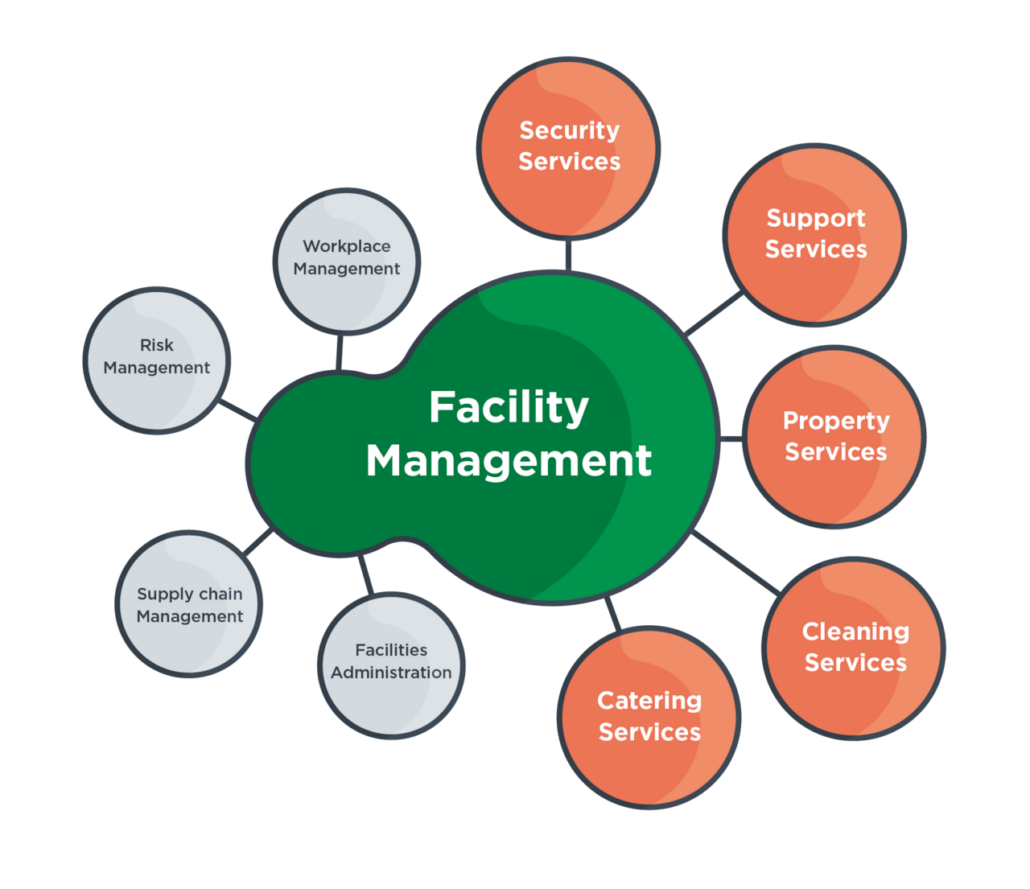
One of the unique aspects of  facility management is just how diverse and complex it is. FM typically encompasses everything from property management-related services, to risk management, cleaning, security and more. 

The sheer extent of the FM function can be seen in the diagram below:

FM management

Facility management is not only about assets and the physical or built environment. It’s also about the health, safety and productivity of employees and others within a given facility, be it a factory or commercial building.

The management of facilities is as much about the wellness and comfort of employees and occupants, and optimized space usage, as it is about the maintenance of heating and ventilation systems or landscaping of corporate gardens.


The importance of a management system focus in FM

Taking a management systems-based approach to your facility management strategy creates focus and a clear path forward. Since facility management can be multi-disciplinary and extend across an entire organization, it will typically interact with other systems in the company, such as finance, health and safety, logistics, or maintenance.

You may decide to formalize your facility management by aligning it to the international management system standard, ISO 41001, which was first introduced in 2018. It allows a company to benchmark its FM to an internationally-respected standard and, once audited by an external, ISO-accredited audit team, receive a formal certification.

FM management

Whether or not a company aligns to ISO 41001, a comprehensive management system will provide the formal structure needed to plan, implement, check and correct, and review facilities-related objectives and targets, action plans, policies, and procedures. 

Standard operating procedures (SOPs) should also be included as part of your company’s FM strategy. These management-mandated documents provide maintenance personnel with detailed instructions on how to perform specific (and often highly technical) maintenance tasks. These documents ensure that maintenance work is easily replicated, consistent, safe, and risk-appropriate.

Why invest in a facility management strategy?

So why is having a strong FM strategy important? Aside from strengthening operations, it can also have far reaching financial benefits. 

Here are the top reasons you should be investing in yours:

  1. Preserves the functionality and lifespan of physical assets, including buildings, machinery, equipment, and infrastructure
  2. Prevents malfunctions or breakdowns of physical assets and systems
  3. Allows management to attend to building-related and allied issues in a timely manner
  4. Allows for optimal, sustainable energy usage and utility management
  5. Optimizes the space usage and flexibility
  6. Ensures the health and safety of everyone within a facility
  7. Improves the productivity of employees in the workplace
  8. Facilitates the wellness and morale of employees
  9. Encourages smooth operations and processes
  10. Contributes to lower operating costs and can have a positive impact on your financial bottom line

Funding your facility management strategy

For many manufacturing and distribution companies, finding the funds to allocate to their FM strategy and execution can be challenging. When traditional funding options (bank loans and LOCs) are not available, an alternative is needed.

Invoice factoring can be an excellent way to leverage the power of your outstanding accounts receivables to access funding sooner.


Invoice Factoring guidebook

Learn the critical questions you should ask any invoice factoring provider in the Invoice Factoring Guidebook

Access the complete guide.


Facility management teams have a lot on their plates, as theirs is an ever-changing, complicated, and evolving world. Investment in proper FM strategic planning and execution can add significant business value for any business owner or CFO.


Do you (or your client) need access to accelerated cash flow to invest in your facility management strategy and execution?

Liquid Capital works with many manufacturing and distribution companies. Contact one of our Liquid Capital Principals to discuss how to accelerate funding for your business.

inspiring-quotes-for-entrepreneur

Inspirational quotes for entrepreneurs from unlikely sources

Everyone has moments of doubt and uncertainty in their professional lives. These inspirational quotes for entrepreneurs will give the boost you (or your client) need to achieve great things.

inspiring-quotes-for-entrepreneur


Whether you’re going at it solo or have a team behind you, it’s common to hit motivational slumps when trying to keep up with the demands of running a business. Turning to other successful business professionals can give a much-needed dose of inspiration that you and your team need to achieve great things, make big moves and outlast the competition.

However, sometimes the wisdom that resonates with us the most comes from the most unlikely of places. 

Keep reading to discover some nuggets of inspiration to give you (or your client) a boost of motivation.


rocky balboa

“Nobody is gonna hit as hard as life, but it ain’t how hard you can hit. It’s how hard you can get hit and keep moving forward…That’s how winning is done.”

— Rocky Balboa, Rocky Balboa

Can you hear Eye of the Tiger playing? The iconic boxing franchise Rocky gives us many moments of inspiration to carry with us throughout our professional and personal lives. 

In business, and life in general, things don’t always go according to plan. In fact, it rarely ever does. But hitting an obstacle (or getting hit by an obstacle) doesn’t define you. It’s how you respond to it and move forward that does. Having the agility to pivot when needed, the strength to endure adversity, and the confidence to believe in yourself will lead to success. 


braver than you think

«You are braver than you believe, stronger than you seem, and smarter than you think.»

— Christopher Robin, Winnie the Pooh

This may seem like an unlikely source of inspiration for business professionals. Still, in Winnie the Pooh, Christopher Robin reminds us of three important characteristics that lead to success: bravery, strength, and intellect. 

Often, we can get caught up in the routines of our daily work lives, making it harder to recognize the extraordinary things we do every day, and what we’re truly capable of. Yet, you can overcome internal struggles and achieve greatness — and it starts with celebrating your bravery, strength and wisdom.


do something great

“Take a step back… and say, ‘What can I do today that will make a difference?”

— Bruce Dickinson, Iron Maiden

Who would think that a heavy metal musician could shine a light on the importance of making a difference in the world? However, in his TED Talk, Bruce Dickinson reminds us to do something worthwhile, every day. 

Whether within your office, for a client, or in the community, taking the initiative to make the world a better place has wide-reaching benefits. Finding unique ways to show appreciation for employees and clients or providing support during challenging times can leave a lasting impression and set you apart from others.

Some of today’s most innovative businesses are using their companies to do more. They are using their products to help others and are investing in the environment, all while gaining a competitive edge and increasing sales.


just keep swimming

«When life gets overwhelming, remember to just keep on swimming»

— Dory, Finding Nemo

What could an animated blue tang fish teach us about perseverance? Well, if it’s Dory from Finding Nemo, quite a lot! 

No matter what happened to her (or what she forgot along her journey), being thrown off course didn’t deter Dory from pushing through and forward on her mission.

Having the perseverance to keep moving forward, even when things seem overwhelming or stressful, is an important trait for overcoming obstacles. So if tasks, obstacles or challenges are piling up, just remember — keep on swimming!


take it to the next level

«You’ve got to try and take things to the next level, or you’ll just get stuck in a rut.»

— Ozzy Osbourne, Black Sabbath

At this point in rocker Ozzy Osbourne’s career, chances are you can think of a situation or two where he definitely took things to the next level. And despite his wild antics, Ozzy has been able to remain relevant and create enduring music.

You don’t need to resort to some of the dangerous, bizarre or ridiculous acts that Ozzy has but you still have the opportunity to go outside of your comfort zone and break free from your operational ruts. Trying new things to help evolve your business can be scary, but if you don’t allow fear to take hold, you have the potential to achieve great things.


do or do not there is no try

“Do, or do not. There is no try.”

— Yoda

When training the next generation of Jedi, Yoda imparts that “trying” implies a chance of failure and leads to doubting one’s power. 

While you may not have Jedi powers, it’s important to remember this  when faced with a challenge. Success is a mindset, among other things. Therefore, putting yourself in the frame of mind to succeed from the onset is the most important first step you can take on the path to greatness.


Up next: Looking to set your business apart from the crowd? Read how these innovative businesses are making a difference.

funding for business growth

Use alternative funding for business growth and reach new heights

Finding funding for business growth isn’t always easy. With invoice factoring, you can use your outstanding A/R to accelerate your cash flow. 

funding for business growth


For every business, the path to achieving growth and success looks a little different. Whether you’re reaching new heights because you’ve branched out into a new market, increased sales, added a new service or you’ve acquired a new partner, odds are you have a common thread in your journey: the need for working capital.

At some point, you may need to secure funding for your business growth. Traditional funding options are one route, but you may not want to commit to the long terms — or may not meet the bank’s lending criteria.

Using invoice factoring can help accelerate your growth plans no matter how and why you’re expanding your business. Instead of a last resort funding option, it is an important tool for businesses that allows you to benefit from the strength of your customer credit and your accounts receivable.

Here’s a look at how invoice factoring can help you or your client achieve success at any stage of growth:

Organic growth

organic business growth

Many businesses choose to evolve in reaction to organic demand or as new opportunities arise.  Perhaps you’re ramping up production or expanding your physical footprint. Maybe you’re improving your internal capacity or processes. While organic growth is often a manageable way for businesses to expand, it often requires capital commitments.

If this is happening while customers aren’t paying their invoices on time (maybe even as late as 90 days), you may be feeling a cash crunch. Invoice factoring is one way to alleviate the strain, turning your near current assets (your invoices) into cash — allowing you to access capital quickly.

When you work with Liquid Capital, you gain more than cash, you gain a strategic partner. Your Liquid Capital Principal acts as a trusted business advisor, providing valuable support, information and advice as you navigate the opportunities and challenges of growing your business. 

Strategic growth

strategic growth

Strategic business growth happens when you’re targeting new opportunities for your business, often with your eye on the long-term — whether you’re launching a new product or moving into another market.

For broadcast systems engineering and consulting firm Best Broadcast, a successful launch set the stage for tremendous growth with new business opportunities to work with major companies. 

Best Broadcast was suffering a cash crunch and needed funding for its business growth after purchasing an integration company and pivoting into the audiovisual industry.

But this venture came with a number of cash flow challenges. The company struggled with hundreds of thousands of dollars tied up in accounts receivable — as clients often paid invoices at net 60 days. This delay significantly disrupted the cash flow cycle

Liquid Capital’s invoice factoring services allowed Best Broadcast to alleviate day-to-day working capital concerns. The solution proved to be a more economical option during this growth phase than offering early payment discounts to clients, and helped facilitate Best Broadcast’s strategic evolution.

Growth via merger

growth by merger

Your company might be considering acquiring or partnering with another firm in order to grow. But funding the acquisition may mean seeking a loan from a traditional financial institution or lender, which can be a challenge for some newer businesses. 

That’s where invoice factoring shines. Unlike loans, the factoring process doesn’t need to consider how long you’ve been in business, and firms are not required to have detailed financial statements or financial projections in place. Rather, your eligibility for funding depends on the credit-worthiness of your customers and current outstanding accounts receivables.

Accessing working capital via the invoice factoring process also means that as your company grows, your calculation around giving up equity to additional shareholders, looking for new investors or taking on loans from your personal network will change for the better.

Accelerated growth

accelerated growth

In some sectors, the timing is right for quick growth to occur because of favorable economic factors, unforeseen market conditions or sudden opportunities. However, you or your client may need to access additional working capital quickly to fund those opportunities.

Perhaps you operate a staffing company and suddenly are presented with the opportunity to take on a new contract, but need to hire new employees to service it. In this case, you may be paying subcontractors or staff biweekly, while waiting 30, 60 or 90 days for your invoices to be paid by your end customer.

Working with an invoice factoring company can give you access to the funds you need now to take on new contracts and increase your payroll. 

New opportunities. New heights.

Invoice factoring and alternative funding solutions can help companies that are on a growth trajectory to quickly secure a reliable source of working capital. When you accelerate your cash flow, you’re able to meet your financial obligations, take advantage of new business opportunities and alleviate the stress of ensuring access to working capital.


“Our clients value how we strive to be at the top of our game, giving them the opportunity to grow and prosper. We don’t lock our customers into long-term contracts or exit fees. When they no longer need our services, we simply ask for 30 days notice. We believe in helping our clients grow, wherever that takes them.”


We’re here to help you grow. Liquid Capital Principals provide funding when you need it, for as long as you need it. Best of all, you won’t be locked into a long-term commitment to factor your invoices, and you’ll have someone to talk to – and rely on – who understands your business.