
Invoice factoring mythbusters

Invoice Factoring Mythbusters: Part 1

Alternative funding options are often overlooked sources of financing, but they can help businesses grow exponentially. Here’s what you need to know about invoice factoring.

Invoice factoring mythbusters

Invoice factoring is probably the most unique — and misunderstood — of financing options available to businesses. It’s not a loan or a line of credit, and it’s one of the oldest funding solutions around. 

Invoice factoring (also known as factoring or accounts receivable factoring) is an efficient way for companies to accelerate their cash flow. Most businesses have regular expenses they need to pay while working capital is tied up in outstanding invoices. When you leverage invoice factoring services, you can convert those invoices into immediate cash, rather than having to wait several months to receive the money. 

So what’s true and what’s not?

We examine 5 common myths about invoice factoring and the truth behind this unique financing option.

1. The paperwork required can be time-consuming and overwhelming

This can be the case for some business loans, but invoice factoring is quite straightforward and easy to set up. Also, you could choose to only factor certain clients’ invoices, to make the process even more streamlined (such as only factoring your top 10 customers’ invoices).


“With financing, it’s important to shop around, do your research and make sure you understand the product. The solution must be transparent and deliver on its promise, and we honestly didn’t see anything that was as easy to understand as what Liquid Capital offered. There’s so much confusing—sometimes misleading—information out there; when you come across a company that’s telling the truth with no hidden items, it’s such a big help. It really gave us a comfort level we didn’t have with other providers.”Ken Fincher, President, Defense Product Services Group USA Inc.


2. Start-ups don’t qualify for invoice factoring

Many start-ups struggle to qualify for regular financing options, such as loans or lines of credit, and so might think they wouldn’t qualify for invoice factoring. However, because this financing option is an advance on outstanding invoices, rather than a loan, many start-ups can indeed qualify for it.

These are the qualifying factors that we focus on:

  • You sell products or services to other businesses, not consumers.
  • Your customers have good credit and consistently pay on time.
  • Your invoices have payment terms (such as net 30, 60 or 90 days).
  • Invoices are within specified credit terms and credit limits.

3. My customers might think my business is in financial trouble

While factoring can be helpful for companies with cash flow issues, it’s also a useful financial strategy used by many large and growing companies that want speedier cash flow so they can expand faster. 

Many B2B companies are now used to paying their invoices through a factoring company, especially in certain industries. They won’t think twice about it and certainly won’t assume you’re in financial trouble.

customer success

4. Invoice factoring is only for large companies

Smaller companies and start-ups may be under the misconception that factoring is only for big businesses with huge numbers of invoices, but this is simply not the case. In fact, Liquid Capital deals predominantly with small and medium-sized B2B companies. 

5. The advanced money can only be used for specific expenses

This can often be the case for term loans: banks will only lend for specific reasons, such as for buying equipment or machinery. Invoice factoring is not a loan, however, so it doesn’t come with restrictions on how the money can be used. You can use the money to make payroll, pay monthly expenses or finance expansion — anything you choose, in fact.

Selecting the right funding partner

When using alternative financing options such as invoice factoring, it’s  important that you select the right funding partner for your business (or your client’s business).

While there are many invoice factoring companies, not all of them are cut from the same cloth. It’s important that you and your funding partner share common values and a desire to work towards the same goal – accelerating your cash flow and keeping your business growing.

Contact us to find out more about how you can improve your cash flow by turning your invoices into immediate cash, with Liquid Capital’s invoice factoring.


 

how much does invoice factoring cost

How much does invoice factoring cost? The answer to this and other top asked questions

Invoice factoring is a powerful funding tool for growing businesses or companies that need an alternative source of funds. But how much does invoice factoring cost? Get the answer to this and other top asked questions.

how much does invoice factoring cost

Have you considered using invoice factoring to increase capital for your business – but aren’t quite sure how it works? Or perhaps you have a client who is struggling to find funding through traditional channels?

Below, we’ve answered the top questions we get asked about invoice factoring. You (or your client) may be asking some of these questions, and the answers will help determine if invoice factoring is the answer.

Many of these questions are about invoice factoring companies in general, since who you partner with is, in many ways, just as important as the funding itself. When you’re meeting and evaluating potential invoice factoring partners, they should be able to answer all of these questions to your satisfaction.

Invoice Factoring 101

Before we get started, let’s do a quick recap on what invoice factoring is (or, you can skip straight to the questions below). Factoring essentially means selling your open invoices to a factoring company, called a “factor.” It allows businesses to generate immediate cash flow and access capital that would otherwise be held up by slow-paying customers.

You’ll get paid most of your invoice upfront, while your factoring partner holds back a “reserve” as they wait to collect the full payment from the end client. Meanwhile, you can move forward with your business. It’s a powerful way to accelerate funding, and it’s not a loan.


“I used to hate doing invoicing because I would send off all my invoices and just cross my fingers that they’d get paid. Now, my invoices get paid the day I issue them—I’m in control of my cash flow and able to focus more on growing my business.”
Brett Haskill, President, Performance Repair Services


Now – let’s get to those questions…


Q1) How long have you been in business?

Before placing your trust in any factoring company or lender, it’s important to know if the company has proven and substantial experience working with businesses like yours. It’s also critical to work with a factoring company that understands your industry and has credibility with its clients. Take the time to probe a bit deeper – it’s well worth it. (Here’s a resource we created that can help you do that.)

Did you know?

At Liquid Capital, we’ve been in business since 1999 and have deployed over $3 Billion in working capital across North America. Our Principals have extensive experience in a variety of industries and are always happy to work with our clients to give them a clear, unbiased picture of their business funding options.  Read our Liquid Capital success stories to see how we help businesses.


Q2) What are your terms and cancellation policies?

A reputable factoring company will never lock you into a lengthy contract. When selecting a lender, ensure they offer you flexible terms and conditions and that there are no auto-renewals in place. They should also offer a 30-day cancellation policy, so if you are no longer in need of funding, you are free to end your contract with them.  

The best agreements are those that are structured like those at a bank. Look for factoring companies that offer agreements without clauses that lock you in.


Learn more on how invoice factoring works.


Q3) How much are the charges?

Understanding the fee structure is crucial, especially because many factoring providers entice customers with lower upfront costs. You need to be on the lookout for hidden fees and add-ons that can really rack up your borrowing costs. It becomes especially important to take the time and review everything before you sign on the dotted line.

A good factoring partner will give you a clear outline of the fees so there are no surprises and you are in a better financial position as a result. At Liquid Capital, we’ll discuss these details with you, walk through the numbers, and ensure you have confidence that this solution will work for your business.

how much does invoice factoring cost - and other FAQs


Q4) How are the reserves calculated?

A “reserve” is a percentage of the invoice the factor keeps until the end customer pays the invoice. Discuss these reserves, fees and associated timelines with your lending partner.

For example, let’s say you are selling a $10,000 invoice, and the factoring company holds a reserve of $1,000. Once the end customer pays the invoice in full, the factoring company will forward you the reserve fund of $1,000 minus their fees.


Q5) Do you outsource your operations?

Some factoring companies outsource payment collections to third-party vendors. These arbitrators may not give customer service the same level of attention and importance as you would when dealing with your clients. 

Because these vendors are more concerned about getting paid, they may be less dedicated to the customer experience during payment recovery.


“It helped to get an introduction to Liquid Capital from someone I trusted. Thousands of dollars were on the line. We had to basically bare our souls to a company that isn’t regulated like a bank. To move to a factoring company, you need trust and a solid introduction to a reputable provider.”

Claudia Harvey, CEO and Co-Founder, Dig It Apparel


Q6) When will a security be registered against my business?

A security is a form of asset that a lender uses to secure a loan. For businesses wanting to gain funding through invoice factoring, the most common form of security is accounts receivables or invoices. 

When you fill out an initial application form with an invoice company, they may register a security against your business. Some may do this even if you don’t do business with them, which is not a reputable practice and could impact your ability to secure funding elsewhere. (If you submit multiple applications to different factoring providers, there could be security registrations filed on your business that you are not aware of.)


Q7) Is there a ‘consent judgment’ in the legal documents?

This question is applicable only to companies in the United States. Some lenders that have predatory practices ask for a consent judgment in their legal documents. Upon signing, you’re giving consent that in case of disputes, future judgments will be ruled in favor of the factor. Avoid these clauses.

how much does invoice factoring cost, consent of judgment and other FAQs


Q8) What jurisdiction is your choice of law?

If you happen to get into a dispute with a lending partner, choice of law dictates what jurisdiction your case will be defended in. 

You might want to work with a company that has a choice of law closer to where your business is located, so you both have a fair chance in any dispute. You don’t want to travel all the way to Panama to defend yourself, if the other party chooses that jurisdiction.


Q9) Is there a charge for reporting?

Working with a factoring partner should be a relatively stress-free process. Part of this is being able to see reports on your accounts receivable, collections, credit limits, reserves and any timelines.

This information should be fully transparent and accessible so you’re always in the loop, and so you can hold your factoring partner accountable. It should always be included.


Q10) How are you funded?

The last thing you need to ensure is that the factoring company has adequate funding available so they can offer you capital when you need it. 

Have a conversation with the factor about their experience deploying large amounts of working capital, and ask for reviews from existing clients.


Learn more about how Liquid Capital accelerates business funding.

An individual overlooking a mountain valley from the top of crest.

Need unlimited cash flow funding? Invoice factoring can help

Your business is growing, and that means you need working capital. For high growth companies it’s possible to unlock nearly unlimited cash flow funding with smart financing strategies.

cash flow funding

Is your company, or your client’s, managing growth? If so, then you understand the need for working capital, and that traditional funding is sometimes not made available to you when you need it. 

If this sounds familiar then you do not want to overlook a fundamental financial tool that could offer you unlimited cash flow — invoice factoring.

Keep reading to learn how invoice factoring could be the ultimate growth tool you or your client have been searching for.

A strategic financing option

Have bank loans or equity investments fallen short of your expectations? Savvy business pros find strategic ways to navigate these challenges. 

During periods of development and successful operations, growing companies need to access large amounts of capital – quickly and with assurance. Invoice factoring does exactly that – it accelerates your cash flow and allows you to take on new business — catapulting your growth.


New to factoring? We’ll give you the 411 below. Already in the know? Skip ahead to learn how it can help growing companies.


What is invoice factoring?

Invoice factoring, also simply referred to as factoring, is the process of selling your accounts receivables (customer invoices) to a specialized company (‘factor’) who will give you the majority of that cash up front. You’ll be able to use that capital for whatever purpose you need — instead of waiting the 30, 60 or 90 days you’d usually be stuck with. 

Once the factoring company collects payment for the invoice, they’ll release the additional funds to your company minus an agreed upon reserve fee. That’s it – you can continue to factor new accounts receivables to keep your working capital topped up and your growth strategy on target.


Liquid-Capital-Ultimate-Factoring-Encyclopedia-eBook

Learn the terminology with the Ultimate Factoring Encyclopedia.

Access the complete eBook.


Unlocking cash flow funding for your growing business

These are the six key reasons growing businesses and high growth companies should take advantage of factoring.

1. The application process can be quick

Factoring applications are relatively quick to complete since they focus largely on the accounts receivable in your business. The biggest requirement of factoring is that you must be generating regular and consistent sales from credit-worthy clients. Once your application is approved, you can have working capital delivered within 24 hours.

2. It’s cost efficient

A common misconception is that invoice factoring is an expensive financing option. In reality it can be a cheaper route to financing.


“If a company is offering early payment discounts, factoring is a cheaper option to gain access to money.” — Dave Kip, CEO of Best Broadcast


For businesses with healthy gross profit margins, the benefit from new sales opportunities will outweigh any costs associated with accessing working capital.

Factoring can help you say ‘yes’ to new deals and dramatically increase revenue, which can also set you up for additional growth with expanded client relationships. But if you have to say ‘no’ to deals because the cash flow isn’t there, your bottom line will suffer.

3. It’s a solution tailor made for growing companies

For many growing companies, they hit a point where their financial needs can’t be met. Banks often cap their financing, especially when past results and financial history checks don’t match their criteria.  

Many banks will also be re-evaluating their lending criteria and reducing risk on their books, as shifting market conditions dictate a more conservative approach to business financing. 

However, since factoring companies are focused on the quality of your accounts receivable, a growing company with legitimate invoices can continue to expand even without that prior history. 

Factoring companies look forward and up, so there are no limits to your financing potential. That means unlimited cash flow.

Related: Does my business qualify for invoice factoring?


remain in control

4. You can remain in control of your business

When growing your company, you likely don’t want to give up your ownership. Where venture capital deals often require that you sacrifice some of that equity, factoring does not. Your growing company stays in your control and ownership – so the more successful you are, the more you’ll fully reap those monetary rewards.

5. You can combine it with traditional financing

Choosing between bank loans and factoring isn’t always necessary, as companies can often work with multiple financing partners at the same time. 

In fact, many businesses will have a traditional bank loan for their base financing and then use a factoring partner as the business grows. Other companies will work with their factoring partner first to grow their business at a faster rate, and eventually, graduate on to add traditional bank financing.

gain more than just cash

6. You gain more than just cash

Factoring experts have great connections to other finance and business pros. They are business professionals who know that their success is also tied to your company’s success. This mutually beneficial partnership means you’ve gained a valuable advisor as part of the deal. Your Liquid Capital Principal can provide your growing business with additional advice on improving payment terms, collections, areas for expansion and new sales opportunities.


Ready to fuel your (or your client’s) growing company? Contact one of our Principals today to learn more about how invoice factoring can help.

Will my business qualify for accounts receivable factoring?

Will my business qualify for accounts receivable factoring?

Using these quick checklists will help to make sure your company, sales and invoices are the right fit for accounts receivable factoring.

Will my business qualify for accounts receivable factoring?

When the bank denies your loan, you have options. If you need extra working capital and your bank loan application has been denied, you still have options. Invoice factoring (also called “accounts receivable factoring” or just “factoring”) could give you the funds you need in a very short time – sometimes as quick as within one day. But first, make sure this option is right for your business.

If you fit into this list of criteria, you could be approved for invoice factoring.


Your Company

You’re a B2B company, whether you are a small business or startup, a growing operation or an established enterprise.

Your company provides a service or sells a product to other businesses rather than private individuals.

Your company doesn’t meet the standard qualifications for a bank loan or traditional funding options.

Your company’s credit rating may not be very high, but your customers’ credit is,

You operate in an industry that has reliable customers that pay on invoicing. See a list of common industries below.

  • Agriculture
  • Apparel & Textile
  • Chemicals & Plastics
  • Computer Hardware
  • Consulting
  • Cosmetics
  • Electronics
  • Entertainment
  • Energy
  • Food & Beverage Distribution
  • Furniture & Housewares
  • Freight & Trucking
  • Government Contractors
  • Healthcare Centers
  • High-rise Window Cleaning
  • Import/Export
  • Janitorial & Building Maintenance
  • Landscaping
  • Limousine Services
  • Logistics
  • Machine Shops
  • Manufacturing
  • Media & Communication
  • Metals & Mining
  • Modeling Agencies
  • Oil & Gas
  • Personal Protective Equipment (PPE)

Your Sales

You have sales on the books with dependable customers who are credit-worthy.

You invoice your clients on credit terms.

You have strong sales opportunities in the pipeline.

You have credit-worthy accounts receivable that are very likely to be paid on their due date.

Qualify for Invoice Factoring - Financials


Related: Need a bank loan? 16 ways factoring is better.


Your Invoices

Your customer invoices tend to have longer terms such as 30 or 60 days from the invoice date.

Your invoices are free of liens and encumbrances.

Your invoices are within credit terms and credit limits.


Getting approved for invoice factoring

There are plenty of advantages to using invoice factoring, aside from the obvious need for working capital.


Liquid-Capital-Ultimate-Factoring-Encyclopedia-eBook

Ready to learn more? Get a headstart and learn all the factoring terminology in our free Ultimate Factoring Encyclopedia

Access the complete eBook.


Your factoring company can provide back-office support and take care of collections for those accounts receivable, freeing up time to focus on your company. You’ll also obtain more working capital that can be used to purchase additional supplies and fulfill new orders, helping grow your business at a faster pace. You can even save money by replacing early payment discounts with factoring to keep your cash flowing.


“Liquid Capital allows me to operate without stress. If a company is offering early payment discounts, factoring is a cheaper option to gain access to money.”
Dave Kip, CEO of Best Broadcast


By working with the right company, you’ll gain a business partner that can provide broader financial analysis and support – so the process can continue at a scalable pace to meet your business needs.


Read more: Should your business use invoice factoring services?


Want to learn more about how invoice factoring and alternative funding solutions from Liquid Capital can help? Contact one of our Principals today.

5 tips for accelerating business growth

5 tips for accelerating business growth

Accelerating business growth doesn’t need to remain out of reach. With these top tips, you or your clients can get the boost needed to reach the next level.  tips for accelerating business growth As the world rapidly changes, customer behavior is influenced by and can lead to new expectations placed on your business. If you can meet those expectations (maybe even before the customer starts searching), you’ll beat your competition to the punch. Satisfying this consumer desire is the name of the game. Today’s customer wants a personalized experience instead of irrelevant ads and offers. They want products and services designed specifically for them. Fortunately, companies can create personalized experiences through effective targeting and audience segmentation.  Here are some ways to keep things personal and start accelerating business growth:

Stay in touch…with the times

Customers will continue to change as the world changes, and staying out-of-touch with reality can deteriorate your market share over time. Just as Kodak refused to adapt to digital photography, not wanting to take a short-term hit in exchange for long-term sustainability, today’s businesses will also fail if they refuse to adapt. Trends will force change in every industry, so your organization will need to stay up-to-date with the latest innovations and customer demands. Look for these trends in industry publications, research reports and competitive activities — then adjust your strategy as needed. If your business needs extra funds to hire people, run new campaigns, increase manufacturing levels, change inventory or perform other essential functions to adjust, your cash flow will be critical. Leaders and CFOs will need to keep an eye on this working capital and ensure they have enough ready to make those changes. accelerating business growth

Create systems

Internal systems can improve any part of your business. For example, you can increase employee productivity with time tracking and project management tools, just as you can improve profits with suitable financial systems in place. Establish workflows for your team and ask them for suggestions. Everyone in the organization should have valuable input, since even some front-line workers know more about the day-to-day operations than executives who might be more focused on higher-level strategy. These employees can tell you about glaring problems and present systems or ideas to tackle issues. Systems ensure operations run smoother in your business so that everyone knows when to perform specific tasks and how to do them. This synergy will lead to strong teams.

Analyze customer data to fuel business growth 

Customers remain the focal point of accelerating business growth, and data helps us track how they engage with our brands and offers. It’s no wonder every scaling business analyzes data to make better decisions. You can analyze traffic growth and trends, but nothing beats customer data. Check your conversion rates across ads, landing pages and other assets. An opt-in page with a 20% conversion rate does more for your business than one with just 10%, since you’ll be building more business contacts and a larger funnel of opportunity. If the data tells you to spend more time promoting the most successful page, then do it. The data is almost always right. Overall, providing customers with more of what they want will make them loyal and lead to higher conversion rates. customer data to fuel business growth

Study your competition

Your competitors also want to grow, and they will implement strategies they believe will lead to more growth. Since your growth initiatives will have some overlap with competitors, learn from what they’re doing. For example, you might both use Facebook Ads or actively seek out specific skills, but each business has its differences and you can stand out compared to the other companies in your market. Look for nuances in your competitor’s strategies that differ from yours, which can reveal new opportunities to gain attention from your target market. For example, a top competitor may focus their efforts on large events. Similarly, but different, you can experiment with smaller local events and gain traction in that more niche market, not saturated by a flood of competition. Your competition also provides many business growth ideas. Subscribe to their email lists and follow them on social media. See how they interact with their audiences and which strategies they use often. Is a competitor running their 10th giveaway of the year? That level of consistency means giveaways work for your competitor. You can also abandon strategies that your competitors leave alone. Learn from their mistakes, so you avoid them for your company. Or fine-tune your approach to improve upon things that didn’t quite work in the past.

Double down on social media

While billions of people use social media to interact with their friends and brands, exploring clever hacks, fun videos and finding great product recommendations, most social networks don’t lead to direct sales. After all, few followers will see your Instagram post and feel compelled to immediately buy your product.  For many brands, social media is about establishing a presence, gaining awareness, earning valuable touchpoints with your audience and growing credibility. Social media’s primary role isn’t to get direct sales. Instead, its purpose is building trust. People buy from you after they gain trust in your brand.  A social media strategy helps you build relationships and show up more often, so the more often they see your brand, the more they recognize it and feel compelled to learn more. Companies seeking rapid growth should double down on their social media efforts. Marketers should review data to determine the most engaging posts, which in turn will help businesses produce content that generates high engagement. However, instead of becoming active on every social network, you should focus on your strengths, and let the data reveal the truth. The data may suggest you get most of your business from LinkedIn instead of Twitter, in which case you might consider doubling down on your LinkedIn model. Remember, you don’t have to create an account for every social network. Focus on your top platforms and optimize them for better results.  

Get your copy of The beginner’s guide to sales prospecting in the relationship economy  


Ready to take your business to the next level?

Rapid business growth takes time to build and maintain, and you’ll need enough working capital to fund your company’s initiatives. Luckily, there’s a smart funding solution for businesses feeling strapped for cash. Some businesses get extra proceeds through invoice factoring, which helps you collect the majority of the invoice amount right away, giving you more predictability in your cash flow. Instead of waiting a few months for the customer to finally pay the invoice, your invoice factoring partner provides the majority of the funds up front, then will work to collect payment at the agreed upon terms. That frees you up to move forward in your business. Liquid Capital is your trusted invoice factoring partner. We’ll provide the funds so you don’t have to wait months for customers to pay up. Learn about our invoice factoring services today.  


Up next: 4 ways to invest in people for rapid business growth

Learn from Liquid Capital the 4 ways to invest in people for rapid business growth

4 ways to invest in people for rapid business growth

Expanding your business creates new opportunities to invest in the right people to support rapid growth. Learn where to focus your efforts.

invest in people for business growth

You can help more customers, increase sales revenues and improve people’s lives when you invest in the right team members. It can also escalate into more rapid business growth and help you zoom past your income goals — since your people will be invested in the success of your business.

After all, as a business owner, you don’t want to settle for mediocrity. You want to grow not because you have to, but because you desire to move forward. That’s what makes every entrepreneurial-minded person special.

And for those who aren’t running a business directly, but working with business owners every day as your clients, colleagues, vendors and partners, you likely also want to see them achieve their growth goals.

Here are four ways that you and those around you can help build your business and support rapid scaling efforts:

1. Build new relationships 

Relationships introduce you to new opportunities and should be a top priority for business owners. Everyone knows a group of people you don’t — which is why business networking can help you find partners who will stick with you for years.

New relationships also make it easier to hire great talent and can snowball into expansive networks over time. When you post a job opening, for example, some colleagues will share referrals for people they think can help scale your operations.

Accelerate your networking further by participating in local events, social media groups and other places where both top talent and your customers gather.

Networking for business growth

2. Hire the right people

Successfully scaling a business depends on a wider team. As you likely know, executives can only achieve so much on their own. Savvy business owners hire people to help with specific responsibilities that support growth, but you must do so carefully.

Hiring the wrong people can actually slow down production and have a negative consequence on your most trustworthy employees. Their lack of productivity can frustrate hard workers and turn them into babysitters.

Keep in mind that businesses only benefit from great hires by retaining top talent. Hardworking employees help your business grow and you should do what you can to keep them. 

Further, many people are dropping out of the workforce during the Great Resignation. Woo your top talents, so they stick around for the long-term. Give them a great workplace with some perks such as….to compete with other top employers. 

When it comes to employee referrals, consider the referrer before accepting a new candidate, and understand how they know each other, the history of their experience and how that matches your organization. While you’ll naturally assess every referral as part of your hiring process, keep in mind that hardworking people often recommend other hardworking people — and the same principle holds for unproductive workers. 

3. Invest in yourself 

During rapid growth mode, business owners invest in their companies. They hire more people, buy new equipment and purchase other assets. You can also invest in education to learn more about your industry trends, new technology and other innovations to keep current.

Investing in yourself stretches to areas outside of your business. For example, exercise increases productivity and happiness, and some business owners that understand these benefits will even hire personal trainers to help keep them on schedule.

Improving yourself puts you in a better position to improve your company.

invest in yourself for business growth

4. Host events in your area 

Events bring people together, and when you’re the host, it puts your brand in the spotlight and offers benefits such as: 

  • Company executives can present new products and gather customer feedback in real-time. 
  • Your team can chat with colleagues and peers in other companies to learn about the latest and greatest in the industry. 
  • You get to talk with customers face-to-face and understand their pain points. 

These touchpoints build trust, provide insights and strengthen your credibility.

When people in the community hear about your event, they will hopefully also spread the word and tell their business acquaintances, growing your company’s local footprint. 

Some business owners do several pop-up events across multiple cities, then analyze results from each event to decide which cities to revisit next year. With each new event you host, that reach should expand. This is particularly beneficial when you do business across a wider territory, or if you have multiple offices or salespeople spread out remotely.

Businesses can also scale their impact with virtual events. Since these events don’t have the full in-person experience and location isn’t an issue, they can attract attendees who are short on time, budget for travel, or who are located further away.

You can also book more speakers for a virtual event. It costs them less to speak at the event, and some may even consider waiving their fee for the chance to promote their own company. In some cases, speakers may treat virtual stages like podcast appearances, so it’s a win-win.


Host events in your area bor business growth

Expand your cash flow to reach the next level 

Rapid business growth doesn’t always mean you’ll earn higher margins, especially when sacrificing profits for development. 

You may actually choose to reduce profit in the short term to achieve growth goals. For example, spending money on Google Ads can significantly cut into current earnings, but if it leads to prospects discovering your business and eventually becoming a customer, that long-term plan can pay off.  While an advertising budget often represents a healthy trade-off of expenses vs. ROI, there are other expenses that can be more problematic to a healthy level of ongoing working capital.

Review your business and look for opportunities to improve your cash flow. Keep a list of expenses and trim them down when necessary. Assess the ongoing sustainability of the financials, as unprofitable companies don’t stay in business for long.

When comparing year-over-year profit margins, you will then see the trajectory of your cash flow over time. Higher or stable profit margins combined with expansion indicate a healthy business. If your cash flow isn’t at the right level, get ahead of the problem as quickly as possible.


One funding solution that can provide the working capital for your growing needs is invoice factoring. For businesses who don’t qualify for traditional financing, or need to complement their current financing, this solution has proven to be helpful for many businesses.


Read some of our Success Stories:

Global Aviation invoice factoring

Global Aviation: Above and Beyond

Rayzor Edge Tree Services invoice factoring

Rayzor Edge: Clearing the way for reliable cash flow

Best Broadcast boosts sales with invoice factoring

Best Broadcast: AV company booms by adding invoice factoring

Learn about Cash Conversion Cycle potential from Liquid Capital

How to determine your company’s “cash conversion cycle”

Part 1 in the Cash Cycle series: Learn the basics of a “cash conversion cycle” and how you can use it to your company’s advantage. 

cash conversion cycle

Reaching success and growth in business requires a healthy cash flow. This allows your business to be prepared for the unexpected challenges and growth opportunities that will come your way. For example, if you buy and sell inventory on account, it’s critical that you know how long it takes to turn that inventory into cash.

As a business owner, you want to make sure you have the money you need when you need it, and the very last thing you want to experience is cash flow issues that restrict business operations. 

Understanding your cash conversion cycle (CCC) is key to ensuring you’re on top of your company’s working capital.

Know your company’s cash conversion cycle  

cash conversion cycle

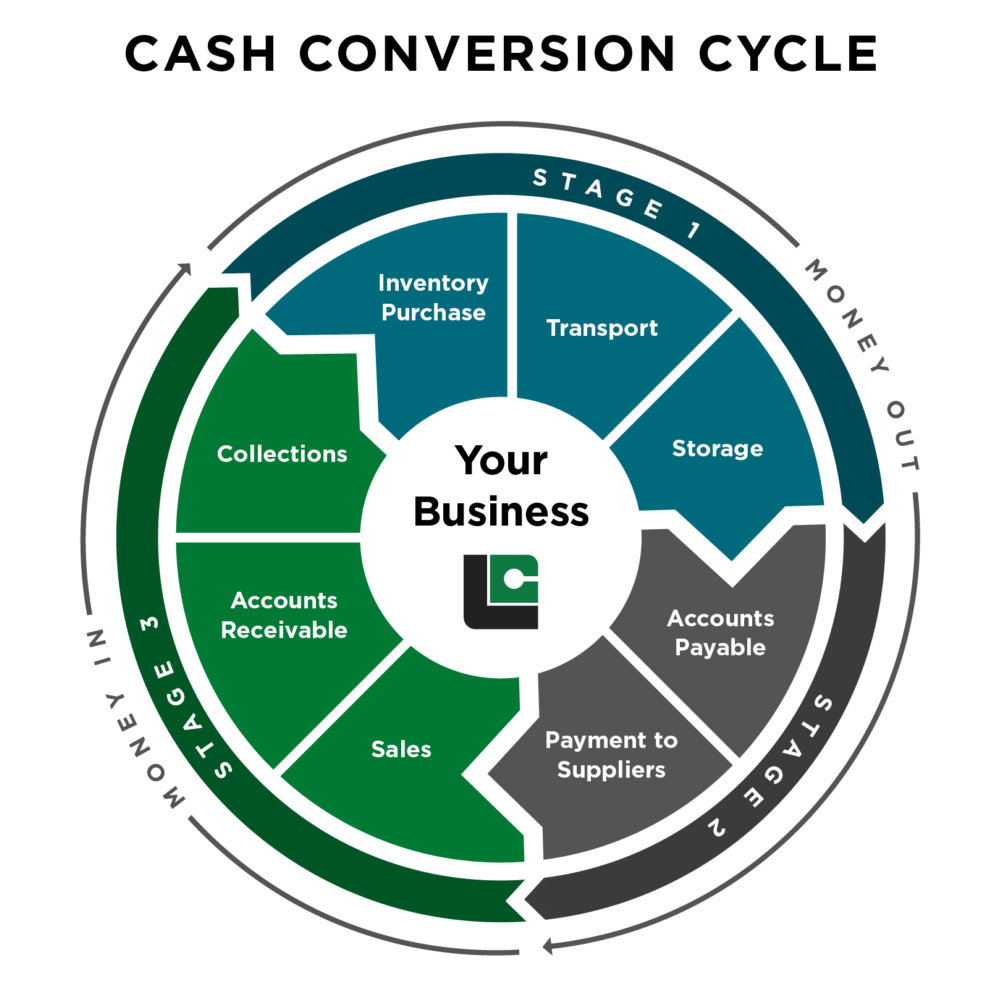
Your company’s cash conversion cycle (CCC) tells you how many days it takes to turn your inventory purchases into cash. It’s a cycle that is all too familiar: you acquire inventory from a supplier, store that inventory, sell it to a customer on account, pay your suppliers and collect on your invoices — thus getting paid and putting cash back into the company.

The CCC is an important financial indicator of your company’s cash flow. It shows your ability to maintain highly liquid assets and is a metric that lenders and other finance providers will use to assess your potential risk level.


Follow all six steps to becoming «lender friendly» and get prepared to access funding from any lender.

Access the complete eBook.


It’s not magic, it’s just math

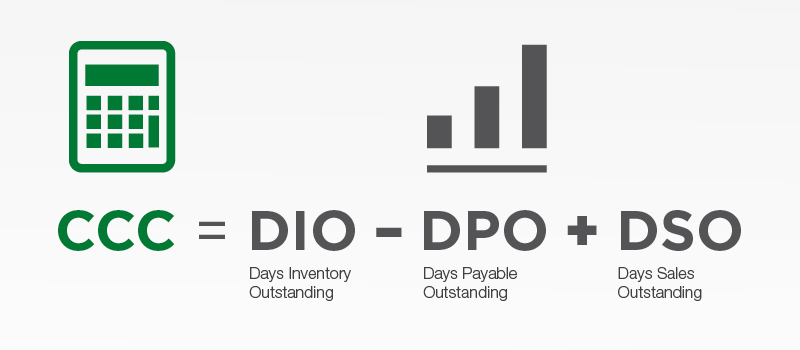
You don’t need to be a magician to unlock the power of the CCC formula for your business. All you need are three figures to complete the basic CCC formula, all of which you can find in your financial statements. 

cash conversion cycle formula

Let’s look at each component a little more closely.

  • DIO: Days Inventory Outstanding
    • This is the number of days on average that your company turns your inventory into sales. The smaller this number, the better.
  • DPO: Days Payable Outstanding
    • This is the number of days it takes you to pay your accounts payable. The higher this number, the longer you can hold onto cash, so a longer DPO is better.
  • DSO: Days Sales Outstanding
    • This is the number of days you’ll need to collect on the sales of that inventory after the sale has been made. Again, the lower the number, the better.

So the CCC is equal to the number of days it takes to sell your inventory, plus the number of days you need to collect on your sales, minus the days it takes you to pay your vendors.

Example: 
Keisha runs a PPE manufacturing company. Keisha always pays her suppliers within 30 days. She keeps enough inventory on hand to satisfy 60 days of sales and is good at managing this. It will take 52 days on average for her customers to pay their invoices.
This would be her CCC formula:
CCC = 60 days – 30 days + 52 days
CCC = 82 days
Keisha’s CCC is 82 days, meaning that she will need on average 82 days of working capital to convert purchased inventory into cash.

The above is a simplified example, and to get accurate results you must calculate and track your DIO, DPO and DSO on a monthly, quarterly or annual basis, along with the dollar values for inventory and sales.


“Our Liquid Capital Representative is more than just a lender — he’s a built in consultant.”
Nick Newman, Co-owner, Ridgeline Manufacturing


How the Cash Conversion Cycle reveals hidden potential  

Cash Conversion Cycle potential

Now that you have gathered the necessary numbers and ran them through the CCC formula, you will have a good indication of your cash liquidity position — and it can point your attention to what is helping or hindering your cash flow. Depending on the results, you may determine immediate areas that can be improved.

The longer the CCC, the more working capital you’ll need to manage your operations. And that can be an overwhelming challenge for many businesses. Generally speaking, companies want to shorten their CCC.

To shorten the CCC, you may be able to manage inventory levels better, get longer supplier payment terms, improve your collection process or adjust the payment terms you give your customers. However, this may not always be practical or something you’re wanting to change for a number of reasons.


“Liquid Capital allows me to operate without stress. If a company is offering early payment discounts, factoring is a cheaper option to gain access to money.”

Dave Kip, CEO of Best Broadcast


Making adjustments that fit your business

Choosing to use an alternative financing solution such as Invoice Factoring can help to lower your CCC by turning accounts receivable into cash faster.

Calculate cash conversion cycle

Factoring can help to lower your DSO which means that you will get paid on your sales faster and have quicker access to working capital. This cash can then be reinvested into your company faster than if you had to wait on outstanding invoices to be paid out according to the usual payment terms.

Or you could get extended payment terms from suppliers to reduce the DPO portion of the formula or use financing tools such as Purchase Order Financing to help you make up the gap where suppliers are not providing adequate or any terms. By extending the number of days you have to settle your accounts payable, you can keep cash in the company and effectively increase your working capital.

However, the CCC alone cannot be a complete indication of liquidity. You’ll need to look at calculating other liquidity metrics like the current ratio and quick ratio to paint a complete picture. You may already have these calculations in place, but if you haven’t yet calculated your cash conversion cycle, it’s time to start crunching the numbers and tracking changes over time to manage your business better.

Reducing your DSO and DIO or stretching your DPO are also useful tactics that can help your cash conversion cycle to grow your business. Do you work in an industry where “inventory” doesn’t apply? There are also other ways that you can use the CCC.


Keep reading our four-part cash conversion cycle series: 

Part 2: Learn about the 7 proven cash flow tactics every CFO and finance pro needs to know.

Part 3: Learn how to leverage your assets to grow your working capital

Part 4: Learn how to keep suppliers happy and cash in your pocket


Want to learn more about how invoice factoring and alternative funding solutions from Liquid Capital can help? Contact one of our Principals today

Learn about Cash Conversion Cycle potential from Liquid Capital

Should your business use invoice factoring services?

Leveraging invoice factoring services from a trusted funding partner can help support your growth. Find out if this alternative funding solution is right for your business.

invoice factoring services

The benefits of invoice factoring, as we’ve discussed, can provide business owners with the freedom to increase cash flow when needed. It can also free up time and resources (instead of worrying about receivables) and avoid disruptions in their business growth plans.

Deciding if invoice factoring is right for you depends on your cash flow budgeting. If you need to create a cash flow budget or need to update an existing one, use these seven easy steps to help you get started:

  1. Finding the right tools or software to prepare forecasts
  2. Setting a time frame for your budgets
  3. Preparing a sales forecast
  4. Projecting cash inflows
  5. Projecting cash outflows
  6. Calculating the ending cash balance
  7. Setting a minimum cash flow balance

These proactive steps give you a 30,000-foot view of your business’s cash flow situation and how much money you may need for future growth.

Finding the right lending partner

Once you’ve determined your budget and cash flow projections, it’s time to begin finding the right partner for your invoice factoring journey. 

It’s important to know:

  • The type of service being offered: recourse (when the customer will buy back invoices that are unpaid) or non-recourse (when the factor assumes the risk and guarantees the invoice)
  • The terms and rates of service: including cancellation clauses, fees and transparency of the transaction
  • Industry experience and knowledge
  • Service: speed, availability and flexibility

Beyond knowing the kind of partner you want to (or should) work with, it’s important to know the right questions to ask of your invoice factoring company. It could be anything from simply asking about their experience and contract terms, to the fees for service. 


Read what questions to ask with the Liquid Capital Invoice Factoring Guidebook


Who can benefit from invoice factoring services?

Invoice factoring can solve a variety of common problems that small and medium-sized businesses experience. However, it’s also important to consider why and when you would choose to use invoice factoring services. 

For example, invoice factoring is ideal for businesses that work with other businesses where transactions involve invoices. 

While some factoring companies will require a buy-back for the unpaid invoice or replace it with one of equal or greater value, Liquid Capital takes a different approach to factoring our clients’ invoices. 

Liquid Capital will never surprise you with hidden terms or fees, and there won’t’ be any constricted or complicated provisions. We believe in complete transparency.

benefits invoice factoring services

Control your cash flow

We want our clients to stay in control of their business and feel confident about the invoice factoring process as a strategic funding tool. We’re committed to making sure you understand how invoice factoring works and how you can use it to grow your company.

While the ups and downs of the current economic environment may make financing a difficult path to navigate, we make it easy with alternative options to traditional debt. When considering the future growth of your business, the benefits of invoice factoring may make a lot of sense when addressing your cash flow challenges. 

At the end of the day, you know your business best — including your customer relationships and your future cash flow needs. But we will do our best to help understand your needs, business goals and help you get there.


Want to learn more about invoice factoring? Contact us today!

Liquid Capital presents the "Invoice Factoring Guide for Trucking Companies"

How can invoice factoring companies help fund your growth?

Running a business is stressful. Funding your business growth shouldn’t be. Read how invoice factoring companies can help you achieve your goals!

invoice factoring companies help fund your growth

Being in business means having to wear many hats and juggle a variety of challenges. The very last thing a business owner wants to experience is a cash flow problem that curtails business operations.

Cash flow and funding issues can arise when outstanding receivables aren’t paid in a timely manner, inventory levels need replenishing, inflation affects costs and even sudden growth opportunities or shifting market conditions arise unexpectedly. In these cases, how can businesses reliably fund cash flow in a difficult economic environment?

With business getting back to normal, owners and leaders may also be faced with the “good problems” of increased sales, but with new or different cash flow issues. As accounts grow, so can outstanding receivables. Unfortunately, this limits a business’s working capital, as you pay out expenses before you’ve collected on your invoices.

The benefits of invoice factoring

First off, what is invoice factoring? Invoice factoring is a type of financing where you “sell” a portion of (or maybe all of) your company’s outstanding receivables to a third party. Why?

The benefits of invoice factoring are as follows:

  • A factoring company pays you most of the invoiced amount immediately – thereby creating revenue and cash flow stability.
  • Forecasting and planning can be more accurate because you now have a better sense of your assets.
  • The invoice factoring company takes on the responsibility of collecting payment from your customers directly. 
  • A struggling business may have a better chance of staying afloat due to better cash flow.
  • Businesses can use invoice factoring as part of their cash flow management toolkit to build inventory or pay for other immediate needs.
  • Often, invoice factoring is cheaper and easier to acquire than a traditional loan. This makes it better for short-term funding needs and reduces the headaches of debt management.
  • Increasing immediate cash flow allows you to maintain a better credit score by paying bills on time.
  • Invoice factoring companies can enhance your business success and your growth potential.


When opportunity knocks, be ready to answer the door

As a business owner, you need money when you need it. You can’t always anticipate growth opportunities or the direction your business will take despite your best efforts. 

Take the case of Global Aviation. The company, which provides airline staffing services such as aircraft detailing, baggage and load control services, needed additional financing as expansion grew more rapidly than anticipated. 

Traditional sources of capital were unavailable, and Liquid Capital was able to step in to help them access over $40 million of funding since 2016.


“Liquid Capital was instrumental in listening to us and coming up with a game plan on how we could repay our facility balance and right side the operations.”
Carm Borg, President and CEO of Global Aviation


A similar situation occurred for Rayzor Edge Tree Service as it expanded into commercial contracts. By helping the company better understand the benefits of invoice factoring, Rayzor Edge Tree Service has been able to double sales and strengthen its business relationships.


“As a small business owner, it’s helpful to know someone’s got your back because you’re so reliant on yourself for so many aspects of running the business. Having somebody that I can turn to for advice is worth a lot.”
Ray Bowman, Owner and President, Rayzor Edge Tree Service


Other benefits of invoice factoring

Did you know that Liquid Capital’s business model makes it even more advantageous for businesses considering this option?  

What makes Liquid Capital different from other invoice factoring companies:

  • We develop relationships with clients beyond a simple transaction. We’re business owners ourselves, so we understand the pain points owners experience running their companies.
  • Our business model allows clients to control how they engage with our business — and we can provide flexible funding when you need it.
  • Our clients do not get tied into long-term contracts, termination fees or minimums.
  • By joining our referral program, you can, in turn, help your clients access quick and flexible funding when traditional funding options aren’t available. If you’re a commercial lender, BDO or other funding professional, reach out to learn more.

Ultimately, all businesses want high-value service that meets their needs. Liquid Capital does that by taking the time to build a structure around the client’s individual needs – which leads to freedom and the ability to choose. 

By giving clients the control they desire, Liquid Capital can keep costs down for clients and provide a best-in-class service in a timely and efficient manner.


Up next: Are invoice factoring services right for your business?

Liquid Capital outlines the top 4 things to consider when choosing your invoice factoring partner

Top 4 things to consider when choosing your invoice factoring partner

If you’ve decided that invoice factoring is the solution for your cash flow needs, here are the first 4 things you should consider when choosing a factoring partner.

Invoice-Factoring-Partner

When your business is poised for a major growth opportunity or you’re about to make a significant operating decision (like purchasing new equipment), your cash flow is vital. But if capital is low, the numbers may not be there to support your next move. To avoid cash flow challenges and potential missed opportunities, many businesses turn to invoice factoring.

 Also called accounts receivable factoring, this is when you sell your unpaid invoices to a third party (called a factor), who pays you up front for the invoice minus a small fee. The factor will later collect the payment from your customer directly, which saves you the hassle while getting you cash now.

Once you’ve decided that invoice factoring is the solution to meet your cash flow needs, it’s time to choose the right partner for the task.

To help you in this effort, here are the top four things to consider when choosing an invoice factoring partner:

1. The type of factoring service offered

There are two major paths that factoring generally takes:

  • Recourse: Where the customer assumes the risk for and guarantees the invoices. If the client of the customer fails to pay, the customer is responsible for buying back the invoices.
  • Non-recourse: Where the factor assumes the risk and guarantees the invoice. This type of factoring is less common and is generally associated with a higher fee structure.

2. The terms and rates of their services

It’s ideal to find a partner that can create agreements similar to those structured at a bank, including features such as 30-day cancellation clauses, giving you a way out if needed.

In terms of fees, even if the upfront rate is low there can be a long list of add-ons that ultimately drive the price much higher; with charges for things like phone calls or ‘same day funding.’

No matter what the terms are, transparency should be the tone for the entire transaction. If a potential partner is not 100% clear with you about what will happen and how, it’s time to move on to the next candidate.

Industry expert

3. Industry experience and depth of knowledge

Given the intricacies and risks associated with different industries, it’s important to find a factoring partner that is experienced in your particular industry. In addition to this industry-specific knowledge, having a team that has been in business for many years can also help to avoid any pitfalls that a less practiced company may inadvertently encounter.

“Liquid Capital is more than just a source of money. My Principal calls regularly, gives me his perspective and shows me my financial trends so we can discuss what next steps make sense for my business.”

Dave Kip, CEO of Best Broadcast

4. Service: Speed, availability, flexibility

Factoring, above all else, is a customer-centric activity. So find a partner who is responsive to your needs and is able to deliver high-quality results quickly — within 24 hours of approval ideally.

Given the scalability of factoring, as long as you choose a partner with access to enough capital, you’ll have a funding solution that can grow as big as your goals. For one of our clients, Ray Bowman, using invoice factoring allowed him to grow his business faster than he could have with traditional financing.

 

Factoring is one of the best alternatives to traditional banking mechanisms, bringing cash flow to growing businesses when it is needed most. Choosing the right partner for invoice factoring means looking beyond the basic rates – which can be misleading. Ultimately, choosing the right invoice factoring partner for your business will have important consequences, so it’s worth taking the time to ask the right questions.




Invoice Factoring guide

Learn all the critical questions you should ask any invoice factoring provider in the Invoice Factoring Guidebook

Access the complete guide.