

Notebooks and group of business people shaking hands

Improve Your Financial Skills (With Free Premium Online Courses)

Improve financial skills

All business owners are finance experts, right? For some, yes. But for many, this is a lifelong learning experience. There is always more to learn, and everyone can agree that it’s a necessity to constantly improve your financial skills. After all, your competition is going to be doing just that.

However, you might also be laser-focused on other priorities, and financial education has been pushed lower on your list. How can you spend less time (and money) to improve your financial skills?

No problem.

Improve your financial skills by taking advantage of these five online resources and accreditations. Once you top up your skills, you should also show them off and update your LinkedIn profile and resume. And the best part…these courses are all inexpensive or free.

1. LinkedIn Learning – Finance & Accounting

LinkedIn Learning

LinkedIn recently purchased famous training site Lynda.com to beef up their LinkedIn Learning platform. Their “Finance and Accounting” section includes courses in corporate finance, small business finance and accounting, all designed for you to start with the basics and work your way up to more advanced topics. Learn about financial analysis, bootstrapping businesses, income tax planning, personal finance tips, managerial accounting and creating KPIs.

Cost:

  • One month free trial, then $20 – 30 per month to access 1000+ business courses.
  • Annual subscriptions available.
  • Bonus: If you’ve subscribed to LinkedIn’s Premium membership, you already get LinkedIn Learning access for free.

Benefits:

  • Stay on top of current trends in finance and a variety of other fields
  • Learn outside the box: Brush up on marketing, sales and operations.
  • Be more efficient in your job, whether that’s interviewing employees, building spreadsheets or persuasive selling.

Format:

Video content makes up the majority of this site.

Time commitment:

  • Courses range from 5 minutes to 20 hours.
  • Take it at your own pace: Start a course and LinkedIn Learning will hold your place until your next login.

2. MOOCs – University Level Finance
MOOCs

Yes, it’s a weird name, but it’s also incredibly valuable.

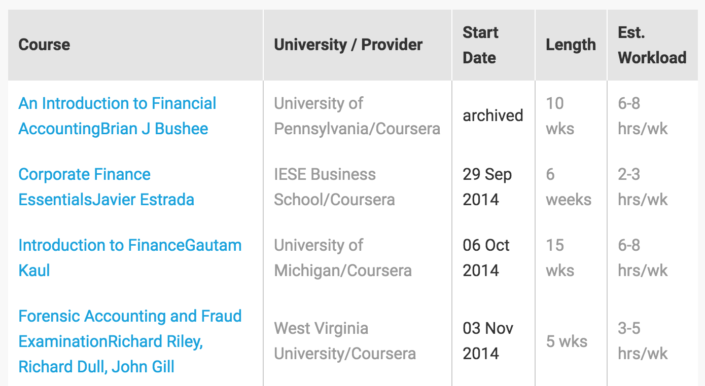
MOOCs are Massive Open Online Courses, and include university courses from reputable institutions that have been posted online, complete with lecture notes and quizzes. Outside of attending university in person, this is an incredible resource for learning.

Check out this list of finance courses from institutions like the Yale, Stanford, MIT and Caltech.

Cost:

Many courses are completely free, with a paid option for verified certification.

Benefits:

  • Get a university level education for free.
  • Stay ahead of the curve, and the new competition that will be hitting the job market.
  • Access educational resources in other cities and countries.

Format:

Downloadable course materials, streaming video, audio clips and resource pages.

Time commitment:

  • Aim for around 6 hours per week and 8 weeks on average per course.
  • Each course displays the number of weeks and hours per week needed to complete.

3. Hootsuite Academy – Social Selling & Networking

Hootsuite Academy

As a business pro, you’re likely already a great networker, but it never hurts to brush up on your social networking skills.

The Hootsuite Academy offers a variety of beginner and intermediate social media courses to get you up to speed and in the groove when it comes to online networking. Learn how to optimize your social media profile, grow your followers, publish the right content and use advertising to connect with new customers.

As an added level of education, you can enrol in the Hootsuite Social Selling and Certification to obtain your status as a “Certified Professional” in social selling. “Hootsuite’s course on Social Selling teaches Sales Professionals to leverage social media to save time, drive a larger number of better-qualified leads, and increase deal sizes.”

Cost:

  • Hootsuite platform and social marketing training are free.
  • The social selling course costs $299.

Benefits:

  • Improve your social networking skills.
  • Proactively find new clients with the right conversations.
  • Be discovered more easily by prospects.

Format:

Short videos, articles and interactive quizzes.

Time commitment: 

4 – 8 hours per course.

4. Google Analytics Academy – Digital Analytics
Google Analytics Academy

If you have a website or blog and want to learn more about who visits your site, why they visited and what they did on your site, then you need to know Google Analytics.

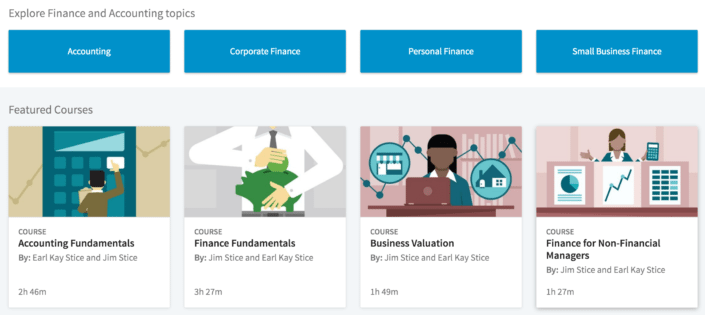
The simplest way to learn is through the Google Analytics Academy that offers training in every aspect of the platform. With four official courses to choose from, you can learn about the digital analytics fundamentals, the Google Analytics platform itself, e-commerce data decision-making and how to use Google Tags properly.

Google is about to launch revisions to their programs, offering even more incentive to get cutting-edge training. In the past, you could also obtain certifications for completion of your training, so keep an eye out for that to return.

Cost:

Free

Benefits:

  • Get advice and lessons directly from Google’s experts.
  • Improve your online discoverability.
  • Understand who your customers are and why they are (or aren’t) finding you online.

Format:

Videos, transcripts, quizzes and blog posts.

Time commitment:

Set aside 6-10 hours to properly complete each course.

5. Alison – Financial & Economic Literacy

Alison Finance

Alison offers a similar formula training to LinkedIn Learning, but all of their courses are offered free of charge. On the downside, you’ll have to watch brief ads before each course module, but they aren’t that obtrusive.

In return, you get access to a wide selection of course – in particular, check out the “Finance” section. The strength of these courses lies in their plain English approach so you can understand and retain the knowledge. They also offer study groups for those who like to learn alongside others.

To cap it off, they also offer certifications and Alison diploma courses.

Cost:

Free

Benefits:

  • Real-world terminology.
  • Join or create a group of like-minded learners to study together.
  • Community hub provides extra motivation & success stories from Alison students.

Format:

Videos, slides, animations, interactive quizzes and assessments.

Time commitment:

Courses can range from 1 – 10 hours.


Daily learning can be a challenge, faced with time constraints, high costs of continued education and difficulty finding great courses or expert trainers. By starting one of the above online courses, you will hopefully find the motivation and material to improve your financial skills without cutting too far into your schedule or budget.


 

Time management tips

Need more time? Get these 5 quick time management tips

Time management tips

Whether you own your own business, freelance or work for an employer, your productivity often carries significant weight in your career and income success. Learn to maximize your schedule each day, and achieve your goals with time management tips.

The following is a look at five of the most important time management strategies to reach your highest daily productivity levels.

1. Prioritize High-Value Tasks

Successful professionals are usually creative people with vision. If that’s you, it’s likely that you want to accomplish more each day than time and practicality allow. Sound familiar? There’s an easy escape, and it’s relatively simple.

Step one is to prioritize critical tasks in your calendar, which helps you achieve the greatest benefits from the time you do have. As you contemplate which tasks to rank at the top of your list, focus on the impact to your bottom line and your personal satisfaction. Ideally, spend more of your time on high-value tasks that you give you great personal satisfaction when you complete. Then delegate the smaller and less enjoyable activities, or figure out ways to eliminate them altogether.

2. Minimize Your To-Do List

A to-do list is an important time-management tool because it helps you identify tasks and create an order for their completion. To streamline your workday, complete the quick and easy tasks right away to avoid building up your list. As soon as you cross a couple lines off your list, you’ll be mentally in the groove to keep going. Then start to tackle the bigger items by aiming for at least one major task before lunch and one after.

But a word of warning – don’t get too carried away with the small tasks. From a psychological standpoint, piling little items on your day increases the likelihood that you will feel overwhelmed. If it takes almost as long to record the task than it does to do it right away, just cut to the chase and get it done immediately.

Related: Learn 21 ways to get more accomplished every day.

3. Plan Ahead

Know what you want to accomplish at the start of each workday. Depending on when your mind works best, you could start your morning early or prepare your to-do list at the end of each day.

If you try to think of things to do one at a time, you slow down your productivity because you aren’t able to ramp up to full speed. Instead, use a tasks list in your email software like Outlook tasks, or try an online task list that syncs with your phone and tablet, like Any.do or an even more robust platform such as ClickUp.

4. Include Your Breaks and Non-Work Activities

Finding balance in your daily schedule is an important, often overlooked factor in entrepreneurial efficiency. This point is especially true if you work from home. Integrate your work, individual and family responsibilities into your plan.

Specific to your work regimen, plan in time for breaks so you aren’t stuck at the desk all day. Taking periodic breaks to move around and refresh yourself helps you sustain adequate energy. Scheduling rests helps keep you fresh and mentally looking forward to breaks in the day, as opposed to developing a tendency to routinely distract yourself from work that needs to be completed.

5. Turn Off All the Notifications

Ever catch yourself reaching for your phone with no real purpose? Our phones have turned into the biggest distraction and time vampire of the modern age – and the constant notifications aren’t helping.

It’s time to cut them from our workday. That means turning off or muting any non-critical app notifications like Facebook, Instagram, games, weather and sports updates. Without the constant pings telling you about a friend’s status update, the latest scores and reminders to play your daily Lumosity game, you’ll be less inclined to check your phone and then waste more time staring at your screen without a purpose.

Business critical apps and functions like your email, calendar, Slack, text messages, phone calls and even What’s App (if you use it to collaborate with team members) can be left on so you don’t miss out on important events and conversations. But cutting the mental clutter of all the countless other notifications will help you break away from that phone addiction.

Bonus tip: Schedule your tasks and stick to the plan

If you’re a natural planner, you’ll find this tip very easy to stick to. However, if you’re struggling with time management, odds are you’re likely to benefit from having a predetermined schedule. You can start by writing down your tasks, block time to work on them, and get cracking.

These agenda and schedule templates from HubSpot will help you organize your commitments, meetings, employees’ schedules, and skyrocket your productivity.

Time Management Tips Take-Away

Take the time to implement these five primary time management tips into your daily routine and you’ll be amazed at the difference in what you can accomplish. New habits take as much as three weeks to become part of your natural routine and prove effective. But you will never regret working hard at improving your time management and productivity.

Grow your business, satisfy your clients or employer, reach your professional goals and earn optimum income.

Stairs

7 Important Steps That Will Improve My Business Credit

improve business credit steps

Capital is essential for any business, but sometimes our commercial credit becomes unhealthy. Unfortunately, when a commercial credit rating isn’t perfectly clean, sourcing a small business working capital loan or another form of finance isn’t always straightforward. You might be asking yourself, “So what exactly can I do to improve my business credit rating?”

Every savvy entrepreneur must smooth the peaks and troughs of revenue to keep up with payroll and inventory, while also financing growth toward future success. For most enterprises, this means accessing business funding from time to time rather than relying on reserves, whether this credit is taken through mainstream banks or alternative finance.

     Did you know? Factoring funding is NOT based on your credit rating. Learn now.    

To increase your chances of getting credit at an affordable rate, it pays to take steps to improve your business credit — and it’s simpler than you might think. Here’s what to do.

1. Get Your Books in Order

If you’re looking to obtain a new line of credit in the near future, it’s important to first assess your situation and then proceed with a little caution. Each credit application you make will be recorded on your file, and multiple rejections will count against your score.

If you’re looking to obtain funding in the near future, it’s important to first assess your situation and then proceed with a little caution. Each credit application you make will be recorded on your file, and multiple rejections will count against your score. Applying for a credit card can actually hurt your credit score, so it’s important to be strategic about it.

Before applying for any funding, spend some time getting your finances into good order, researching your options, and finding a credit source that’s likely to approve your application.

2. Separate Your Business Identity

When building your business credit rating, it’s essential to establish a business credit identity distinct from your personal rating.

If you’ve not already incorporated your business, then consider doing so, and also obtain a federal tax ID number (EIN in the U.S. or a BN in Canada) or equivalent registration. Make sure all your bank accounts and credit cards are in your business’s legal name, and that you don’t use any personal accounts for business purposes.

3. Build Your Profile

The three major business credit reference agencies keep their own files, and it’s important to ensure your profile with each is complete and accurate. Check that ExperianEquifax and Dun & Bradstreet all hold the correct details about your business, and that all your active trade lines are recorded on your file.

If you have any longstanding credit accounts with suppliers, add them as references on your profile. Even if they don’t actively report to the agencies, your good records with them will be taken into account. Going forward, regularly check your file for any errors, omissions or signs of unknown activity.

4. Arrange Credit With Suppliers

Each bill you pay on time will give a small boost to your business’s credit score, and you can increase this effect by paying bills early whenever possible. Even better, if you establish credit lines with your suppliers and stick to the terms, each transaction will add a positive to your credit profile.

5. Avoid Signals of Financial Distress

As well as being conscientious about paying bills promptly, you should avoid showing any signs of financial distress that could lessen your creditworthiness. Filing accounts and paying taxes on time will give your rating a boost, while paying down debts and avoiding using credit for routine expenses will send signals of stability.

Related: How to get start-up financing without a bank loan.

6. Cut Back on Credit Usage

Whenever you’re looking to obtain a major new line of finance, you should aim to present a picture of clean credit activity within your current circumstances. Ideally, your ongoing level of credit utilization should be no more than 30% on each account your business holds. Try and avoid unnecessary spending on credit or building up balances. You should also pay down what you can — and clear your borrowing each month when you do spend on an account.

7. Consolidate Accounts

If you have credit card accounts with zero balances, it may seem a logical choice to close them down and simplify your business’s financial situation. However, if you want to boost your credit rating, the smarter choice is to keep these accounts active so long as they’re in good standing.

Closing an established, zero-balance account will remove positive history from your file, worsening your rating. Instead, take the opportunity to balance any debts across multiple accounts, so that each has no more than the all-important 30% utilization of its credit limit.

Few businesses can be totally self-sufficient. However, accessing business funding doesn’t need to be expensive or complicated. Taking a little time to improve your business credit rating will make obtaining commercial credit easier and more cost-effective, leaving you free to concentrate on driving your business forward.

Group of businessmen on top of a mountain illustration

How to build one of the best sales teams in the world

teamwork

“Coming together is a beginning. Keeping together is progress. Working together is success.” –Henry Ford

Team building is an ongoing process for large and small businesses alike. The right team can be the difference between success and failure, or scalability and stagnation.

Sales people are empowered entrepreneurs, but they can also build a team around them to support their professional and personal goals — and that approach can help them strategically fast track their next moves. Let’s take a look at how the right approach to team building is just as important to growth as the right working capital.

Great leaders build great teams

“Rome wasn’t built in a day,” and it sure as heck wasn’t built by one person.

Great leaders are the lifeblood of great teams, but that doesn’t happen by accident. So it helps to understand the ways in which teamwork is literally wired into our brains.

There is a fundamental importance of rewarding your team’s ‘collective success’ versus just the ‘individual performance.’ Psychology Researchers and Neuroleadership experts Jay Van Bavel and Dominic Packer revealed in the Harvard Business Review why focusing on collective success makes all the difference.

“Although leaders are concerned with collective success, most organizations — from sports teams to universities to global companies — still focus on rewarding individual performance. The majority of Fortune 500 companies reward the most productive individuals, not the most effective groups or indispensable group members. We believe that leaders at these organizations are overlooking something fundamental about human nature — our tribalism.”

Buck your traditions

Van Bavel and Packer led their research with an example of a nearly 50-year old Ohio State Buckeyes football tradition — and it’s the reward system behind all those Buckeye stickers on players’ helmets (you know, the ones that look like little hemp leaves — both amusing and beneficial).

Buckeyes

So what’s the story behind this?

In 1968, the Buckeyes coaching staff wanted to reward exceptional plays and encourage their team to keep winning — and so a new tradition began. Individual players were rewarded with Buckeye stickers to place on their helmets — a visible reminder of their success. The system paid off in spades, and the team won the championship that year. They continued a dominating streak in the league, but it wasn’t ever lasting. Over the next few decades, the system was failing and the team was, too.

In 2001, a new head coach flipped the way players earn Buckeyes. Instead of their old system of rewarding a player for scoring a touchdown or other individual victory, every player on the offensive unit would get a sticker if the team scored more than 24 points.

The purpose? The idea of favoring teamwork over individual performance was the real goal. And it paid off almost immediately. The team not only won a national championship the following year, but the Buckeyes have been one of the most successful teams in the country ever since.

Your team members want to fit in

Belonging to a group is a deeply rooted aspect of who we are as individuals. Van Bavel and Packer further explained how managing this mentality is a major role that leaders will play.

“Great leaders are “entrepreneurs of identity.” They embrace our tribal nature and seek to shape the identity of fellow group members,” they elaborate. “Human beings evolved in groups, and most of us still work in groups every day. … This is why sports fans can show up to a stadium and immediately share a common purpose with 100,000 complete strangers.”

That might be the case at a sports stadium, but how about at the workplace? The researchers clarify that it is quite similar.

“When a person starts to identify with a group, it triggers a fundamental shift in their goals. Events and decisions that were once evaluated with reference to oneself (“what’s in it for me?”) are now evaluated in reference to the group (“what does this mean for us?”).”

That shift to a healthy team mentality is one of the most important psychological breakthroughs a company can have.

Does your team feel safe?

What’s more, business leadership expert Chee Tung Leong illuminated the fact that today’s average lifespan of an S&P 500 company has fallen from 67 years to just 15 years.

“The marketplace is much more unforgiving towards companies that take too long to learn their lessons,” Leong explained. Creating a culture of learning at your company is key to success.

As entrepreneurs, we talk a lot in business about the virtues of bold thinking and risk taking, but what Leong uncovered while studying team dynamics at Google, is that you must create an atmosphere where people feel comfortable taking those bold chances.

Chief among these key dynamics was this idea of ‘psychological safety.’ To build the best teams in the world, Leong explains that “team members needed to feel safe enough to take risks and be vulnerable in front of each other.”

“While self-preserving behavior is natural in the workplace, it can erode the foundation of effective teamwork.” This can damage the culture you are trying to build – where team members can learn from one another. “The safer team members feel with each other, the more likely they are to collaborate, admit mistakes, and take new opportunities.”

Leong advocates building the culture of psychological safety on your own teams through three fundamentals:

  1. Encourage failure
  2. Admit your own mistakes
  3. Hold “anxiety parties”

The latter, while admittedly unconventional, allows team members to openly share things that make them feel vulnerable and anxious, allowing for immediate 360-degree feedback with the team. Leaders can then address issues head-on and avoid wasting time on assumptions about the team’s feelings — instead, focusing on the real problems at hand.

Transform your clients into your teammates

Taking this strategy a step further, as a leader you can encourage your team to look outside the organization. Sales experts Barry Farber and Robert L. Shook argue that one of the most effective yet overlooked sales techniques involves teaming up with customers.

“Outsource your customer. Let the customer solve problems for you,” explains Shook and Farber. “A salesperson’s job is to create a vehicle that lets the customer solve his or her own problems.”

This out-of-the-box thinking can take your sales organization to a new level. “When a customer becomes involved in finding a solution to his problem, he or she takes ownership, which is the foundation of a solid salesperson-customer relationship.”

At the end of the day, a winning teamwork philosophy is one that encourages both parties to work together to solve a mutual problem. The best teams are as unique as you and your company, and making these proven team building concepts parts of your company’s direction will serve everyone well.

Chained computer illustration

Are Your Clients Safe from Hackers?

hackers and cybersecurity

When it comes to cyberattacks, the targets are typically the behemoth companies and organizations you read about in the news. But according to IBM, small and mid-sized businesses are the target of 62 per cent of all cyberattacks – which equals about 4,000 attacks per day. The reason? They are an easy target.

Can your company or clients be under attack?

We hear a new story about cyberattacks almost every day. A business gets hacked — allowing sensitive proprietary and customer data to be accessed and compromised. The list of the world’s biggest data breaches is littered with recognizable names, including Anthem, JP Morgan Chase, and Target.

But don’t think for a second that hackers only target large organizations. In fact, small businesses are often just what hackers are looking for. Why? The main reason is that small businesses often have inadequate online security, and with sensitive data housed in the cloud they become an easier victim.

A quick night’s work for a hacker can mean disaster for your business. According to a report by the U.S. National Cyber Security Alliance, 60 percent of small businesses that suffer a cyberattack are out of business within six months.

Nobody will protect your business except you

Banks and the government haven’t done much to assist small businesses with hackers and data breaches. The recently introduced MAIN STREET Cybersecurity Act in the United States will help small businesses protect their digital assets from cyber threats, but it’s far from a silver bullet. Businesses of all shapes and sizes need to start taking data security seriously — proactively and with full accountability.

Now is the time to put together a solid security plan.

Don’t just go with the first solution you find. Instead, take the time to find the approach that fits your business, customers and industry. There is no one-size-fits-all solution. More importantly, don’t leave data security to just the IT staff. Get everyone involved — including your managers and all levels of employees. Train each of them on protection measures and show them how to stay compliant. For example, teaching employees to avoid opening suspicious email attachments can be a safeguard against malware that could easily creep into your network.

If your workforce is highly mobile, you may want to consider the rules around any bring your own device (BYOD) program you may have in place. Security Magazine explains how a BYOD program, whether formally in place or not, could create unintentional risk within the organization — simply based on the lack of awareness of such programs. The publication states that, “17.7 percent of survey respondents who bring their own devices to work claim that their employer’s IT department has no idea about this behavior, and 28.4 percent of IT departments actively ignore BYOD behavior.”

Once you start protecting your company, you must take the next steps to stay safe.

Obtain cybersecurity insurance, create a strong password strategy for your users, and utilize virtual data rooms (VDR). For in-house IT departments and office managers, it’s important to upgrade your tech as well. Start with this list of five tools and services your small businesses can use to protect against cyberattacks.

Taking cybersecurity to the next level

web security and hackers

Want to dig deeper? Consider employing an ethical hacker — a cybersecurity expert who works within your company to locate weaknesses and vulnerabilities by duplicating the intent and actions of hackers.

Also talk to a company that specializes in cybersecurity protection. Many of these businesses will offer free vulnerability assessments to give you an idea of where your weaknesses may lie. They’ll also explain how they can help you manage those threats. If you don’t currently have an in-house IT team, outsourcing the work could be an efficient option.

As if all that wasn’t enough, here’s one more thing to consider. When crafting a data security policy, make sure you’re actually protecting data privacy by including the following nine elements in your policy, as detailed once again by Security Magazine. It’s crucial to consider your policy from all angles – after all, your data can make or break your business.

1 Ensure Data Security Accountability All IT staff, workforce and management must be aware of their responsibilities.
2 Create Policies that Govern Network Services How to handle remote access, IP addresses, routers and network intrusion detection.
3 Scan for Vulnerabilities Have a routine in place for checking your own networks regularly for hacking vulnerabilities.
4  Manage Patches Implement code to eliminate vulnerabilities that can help to protect against threats.
5  Create System Data Security Policies Rules around company servers, firewalls, databases and antivirus software.
6  Have a Response Plan for Incidents If a security breach occurs, have measures for handling the issue along with evaluation and reporting.
7  Educate Staff on Acceptable Use Employees should understand and sign an acceptable use policy, which includes disciplinary action.
8  Monitoring Compliance Regular audits to ensure staff and management are complying with the data security policy.
9  Account Monitoring and Control Designate someone to monitor and control users, and keep track of active and inactive user accounts.

It seems like a lot, but it can be done. More importantly, it must be done. When it comes to today’s advanced hackers, organizations must be prepared for when — not if — they will have a data breach. Taking small steps now will ensure you’re not facing bigger problems down the road.

ultimate entrepreneur mindset

Do You Have the Ultimate Entrepreneur Mindset?

ultimate entrepreneur mindset

How do your entrepreneurial skills, personality, motivation and drive stack up against your peers? Do you have the qualities of the best in the business?

Check out the highlights from our roundup below. Explore what 15 of the hottest entrepreneurs do every day to keep on schedule. Learn the five must-have skills for every top businessperson. Then see if you’ve adopted the entrepreneur mindset to take full control of your business – or if you’re actually thinking like an employee.

Are you starting your day off right?

From Medium

It’s fascinating to see how some of our favorite entrepreneurs, creatives, and thought leaders spend their time every day. What are their morning routines like? What time do they rise in the morning? When are they most productive? How do they relax? …

Some wake up by 4am; others don’t start the day until closer to 11am. Some exercise every single day; others write or meditate. … What’s clear, is that having a routine of some sort matters. Routines help us get into a flow state that unlocks our ability to be happy and effective every day. While there weren’t any across-the-board consistencies, there were some themes:

  • Get a decent amount of sleep
  • Read things that are interesting to you
  • Try to break a sweat daily
  • Spend time with people you love
  • And when you really need to kick into gear, there’s nothing that a good cup of coffee (or an ice plunge) can’t help with 😉

Read on for a glimpse into the daily routines that successful entrepreneurs, creatives, and thought leaders swear by.

Sam Altman, President of Y Combinator

I try to do the things that I think are important, and be ruthless about not doing things that I don’t think are important. This sounds easy in theory, but requires a lot of discipline in practice. I generally have about three big goals and 20 small to-do items for each day.

Steve Schlafman, VC at RRE Ventures

I’m up every morning at 6am. Hot yoga at 6:30am. Breakfast meeting by 8:30am. Back-to-back meetings from 9am–6pm. I might get 30–60 minutes for email in between. Go to a work-related event or dinner with a founder, executive, friend, etc. Spend time with my wife. Read a book from 10:30–11ish. Bed by 11pm. Rinse and repeat.

Joel Gascoigne, Co-founder & CEO of Buffer

These days, I generally have a lot of quick meetings with different people on my team. I’m mainly focused within product/engineering, customer service, hiring, and then on the higher level. My calendar is open to people on the team, and it generally gets quite booked up. I have quick 20-minute sessions to give advice on a specific challenge. I also have 1:1s with several people on the team, so I usually have one of those each day, too. Other than work, I try to exercise several times a week (either strength training at the gym, running, or doing a bodyweight workout at an outdoor gym).

Read full story & all routines…

The 5 skills of the most successful entrepreneurs

From Influencive

In today’s economy, workers cannot depend on having a stable, full-time job with benefits until they retire. Most people will go through times in their career when they work freelance or are considered an independent contractor. Many of us will also begin our own business at some point. In a gig economy, everyone needs to know how to create their own brand. We are all entrepreneurs. …

Most people who go into business have entrepreneurial figures they admire. … Look at what they do and figure out what works for them. You will notice how many entrepreneurs have similar skills.   Once you notice that, you can apply those skills to your own work.

Concentration

Concentration is an important skill for successful entrepreneurs. For our purposes, concentration has two meanings. The first is your ability to focus. Our digital world is full of distractions. We have all experienced the time suck of the internet. Moreover, we are constantly distracted by our phones and keeping in touch with family, friends and co-workers. …

Leadership

Leadership is a vital trait for entrepreneurs. After all, anyone who wants to succeed in building their own brand and/or business should expect to be in a position of authority and to have other people working for them at some point. That means that you need to be able to lead. … Most people need to work at developing leadership skills. Even people who are natural leaders can benefit from working on improving their leadership skills. …

Organization

Organization is a significant trait of successful entrepreneurs. You need to have your ducks in a row if you want to accomplish everything you need to do in a timely enough manner. Organization is another skill that you might have a natural aptitude for, or it might be something you struggle with. Either way, you should view organization as a skill you can learn and improve upon. …

Read the full story for all five skills…

Do you think like an Employee or an Entrepreneur?

From Eric Tippetts

While every human being is different, we do have certain similarities that can set us apart from other groups of people. One of the primary items that group people together are their mindsets.

Entrepreneurs must have mindsets that are quite different than an employee.

Herein lies a common problem I have recognized with new entrepreneurs… They jump into the entrepreneurial world with an employee mindset.

The Key Mindsets of the Entrepreneur:

  • Entrepreneurs focus on the important things: A large percentage of employees are focused on the job they have to do whether it is important or not. The mindset of the entrepreneur requires them to focus on what is the most important, profit making task.
  • Entrepreneurs do not procrastinate: While an employee may put off a task until tomorrow, the entrepreneur is all about doing it NOW! Procrastination is NOT in the entrepreneur dictionary.
  • Entrepreneurs rely on their “gut”: The entrepreneur has to make split-second decisions on a daily basis.
  • Entrepreneurs own their failures: Many employees tend to find excuses for failures, but successful entrepreneurs have learned the success only comes because of multiple failures. The entrepreneur mindset is to own the failure and not put the blame elsewhere.
  • Entrepreneurs set high, but reachable goals: Personally, I believe every person should set goals, but few do. Successful entrepreneurs understand that each day, week, month and year must be a series of high, but reachable goals.

See the full article & all 17 entrepreneur mindsets…


Entrepreneurs also need to have their sales pitch perfected and polished – ready to sell their products and win new customers. Learn how to craft the ultimate 60-second elevator pitch that will capture attention, generate interest and grow your client base.

Conference room

A Presentation That Pays Off with Future Sales

The success of a presentation begins with its very first sentence. Ask yourself what will be most interesting to your attendees. Is there new research or data within their industry that can help their businesses run more efficiently? Maybe there’s a recent success story that may impact their mindset about a new technology in the marketplace?

Not every presentation needs to be exactly like Steve Jobs would have done it, or in the style of a famous TED Talk, but there are some key points that will captivate your audience and keep their attention — helping you close deals. Follow the tips below to prep for your next presentation and stand out in front of the crowd.


What makes an amazing presentation?

Experts at CustomShow, a sales presentation platform, stress that capturing your audience’s attention with a strong opening will engage their minds, enabling the presenter to effectively convey his entire message. Their advice: “In general it is not a good idea to memorize your entire speech. It is, however, a good idea to memorize the beginning four to 10 sentences. This is critical because it allows you to feel confident and ride the wave of confidence as you continue your presentation.” For additional ideas, view How To Start A Presentation Tips And Tricks – 22 Powerful Strategies on their website.

The mechanics of speaking will in itself make a difference in the effectiveness of your presentation, too. Your voice speaks volumes about your confidence and will reflect, rightly or wrongly, on how you feel about the topic. Therefore, speaking clearly and confidently is important.

4 ways your speaking voice matters

You’ll find many useful tips for prepping your voice at SkillsYouNeed.com. Its primer on Aspects of Effective Speaking provides useful exercises on increasing your comfort in developing a speaking voice, using breath to improve your voice and the four important aspects of voice when making a presentation:

  1. Accents
  2. Finding your voice
  3. The effect of breath on voice and speech
  4. Vocal production

One example of how your voice matters is inflection. For example, when a person asks a question, the last word of the sentence typically goes up in tone at the end. Sometimes when speakers are uncomfortable with a subject or nervous about their situation they fall into a rhythm that ends every sentence on a high note, whether it’s a question or a statement. This leaves an impression of uncertainty. Practice your presentation, record it and listen for proper inflection. Strong statements should finish with a steady or lower tone. Make sure your voice varies appropriately.

Make the content memorable

Equally important, of course, is the content. You have earned a precious opportunity to stand in front of an audience that includes prospective clients. Show them how much you value their time and how you intend to make it pay off. Talk with knowledge about the audience’s industry or needs. Share important trends or information relevant to their needs.

While your talk may include a scripted explanation about your company’s services, make certain the bulk of your presentation offers in-depth information that makes for useful takeaways. When you do so you’ll build trust and that is the first step toward opening the door to business after the presentation.

Illustration - thinking about money

Think bigger & grow your business by 10 times

10 times thinking

What would you do differently if you had to grow your business revenue by 10 times?

Would you keep doing the same thing you’re doing now? Would you maintain the same strategy? Do you think 10 times growth could be possible?

Startups thrive on 10 times growth

That’s exactly what was requested of Jason Silver, Growth Lead for Airbnb Canada, when he began his career with the famous startup – as he explained at a recent conference to a packed audience.

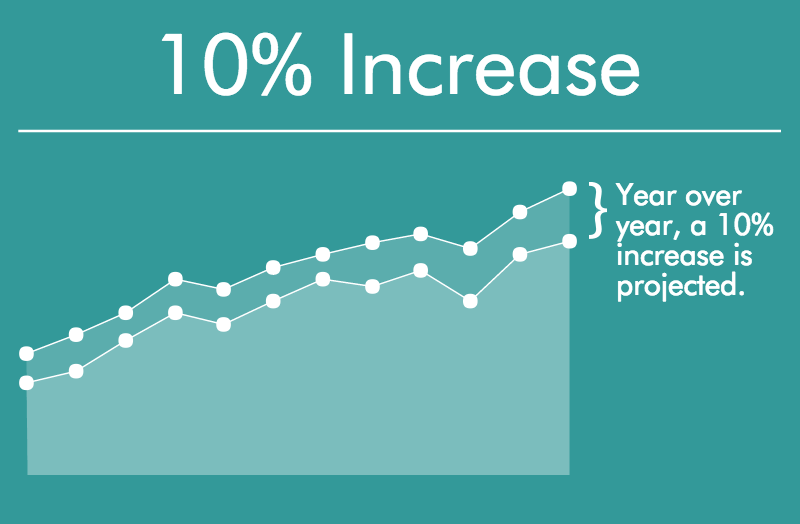
Silver was asked to fly to San Francisco to present his growth plans for the coming year to leadership. Being an enthusiastic new team lead, he set a bold vision for the year ahead and laid the strategic groundwork for 10% growth – what would be considered a remarkable achievement for most organizations.

In the boardroom that day, he explained how he and his team would achieve that growth, heads nodding around the room, and he was proud of what they had planned. But at the conclusion of his presentation, one of Airbnb’s most senior leaders questioned Silver.

‘What would you do differently if we asked you to achieve 10 times that growth?’

Silver was stumped. He stopped dead in his tracks and knew that this wasn’t just a question; it was a request.

Reimagining your entire business strategy

On the flight back home, Silver knew 10 times growth could never be achieved through a simple retooling of the existing strategy. He thought to himself, «If this seemingly impossible task was actually possible, what would my plan be?»

He had to scrap everything and start from the ground up.

Back home, he and his team began developing an entirely new plan in short order – this time focusing on an incredible growth trajectory over the same period of time.

His mantra during the ensuing year became one about the very idea of failure. «Failure is the tool I use to figure out if we’re being ambitious enough in the work we’re doing.»

The company’s vision for an aggressive approach to strategy and growth would teach him one of the biggest lessons of his career.

Can 10 times be achieved?

Skeptics would argue this would be an improbable achievement under most circumstances. And they might be right.

In Silver’s case, the team put their strategy into action and worked diligently throughout that year to achieve 10 times growth. And the result? They failed.

But failure was far from a bad thing. Although they didn’t achieve the ultimate goal, they did achieve nine times growth – and that amount to a near 800% improvement over where Silver’s original strategic plan would have put the division in the same timeframe.

By any account, that is a massive victory.

     Related: Using failure as a guidepost: Why growing companies should embrace failure.

Thinking bigger in your organization

The lesson is clear. Any individual, team or entire company can achieve exceptional results well beyond their original goals, but it may require a fresh approach to their strategy. Step outside the comfort zone of your original plans and ask yourself what it would take to achieve 10 times your results.

Silver recommends thinking about the ‘what if’ questions in your own company. What if our market was bigger? What if we developed a completely new product? What if we attracted a sought-after demographic of customers?

By reimagining the possibilities of your company boundaries, you can put down the preconceived roadblocks and find alternate avenues to your strategy. The possibilities are infinite, and brainstorming ideas is one route to uncovering a potentially lucrative new direction.

Can your company achieve 10 times revenue? That is to be determined – the starting point is challenging yourself to come up with a new way of approaching your business that breaks out of the mold.

Are you capable of 10 times thinking? Absolutely.

Airbnb business lessons illustration

Why Airbnb recommends you should fail often

And how to use failure as a guidepost.

Airbnb business lessons

At a recent business conference, a young professional walked on stage to deliver the final keynote. With confidence, he stated:

«Failure is the tool I use to figure out if we are really being ambitious enough.»

Jason Silver was speaking about his experience working with Airbnb as the Growth Lead for their newly expanding Canadian market. To launch his Airbnb career three years prior, he was flown out to the San Francisco headquarters to present his strategy in front of senior leadership (all of whom were also young professionals).

Jason Silver AirbnbSilver was sure he had blown them away with his incredible plan to increase revenue by 10% in the next year. But those brash young execs turned him back and said he needed to think bigger, bolder and reimagine his strategy. His presentation had failed, but Silver was just getting started.


“If you fail and it’s not crippling to your business, then you’ll be improving and getting better at what your do. You’re trying something new and progressing.”

Airbnb wanted Silver to fail. They wanted him to feel the sting of defeat so that he could completely change his approach.

On his flight back home that same day, Silver scrapped everything he had been working on. He reinvented a completely new strategy from the ground up, and in that first year as Growth Lead their team proudly accomplished 9 times the growth they originally forecast. It was an unbelievable accomplishment. Silver had quickly learned that failing at Airbnb wasn’t the end – it was a tool to get to a better strategy.

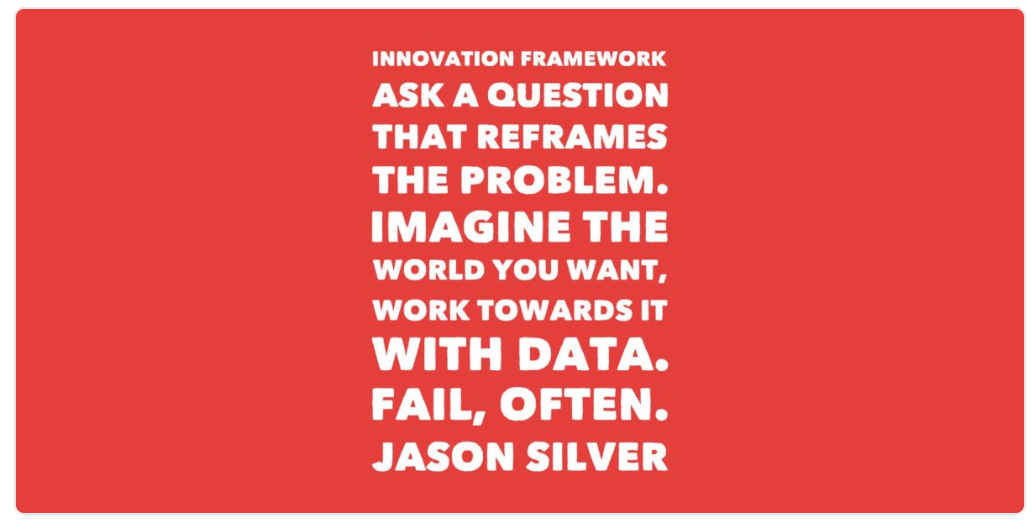
Now, Silver advocates three steps to change the framework for failure – and it all revolves around being innovative.

1. Ask new questions.

“The right questions will lead you down a path that can change your business, industry or even the world.”

So what are the right questions?

These are not the conventional ones that everyone else is asking. Ask a question that reframes the problem, so you attack it from a completely different angle.

Twitter lit up with Jason’s quotes and advice, including user @ColleenMCole who tweeted the above.

When creating smartphones, Silver suggests that the questions may have taken a successful company like Apple down roads less traveled. A conventional question would ask, “How can we make a better mobile phone?” This would constrain the company to the status quo and make an incremental improvement. They would likely end up with a version 2.0 of the same phone.

But with innovative questioning, another company could ask, “How can I carry around the power of a computer in my pocket?” This forces the company into new territory, raising new and innovative questions, and ending up with a brand new product like the iPhone when no other devices on the market compare.

2. Imagine a vision, realize it with data. 

Imagine the world or your business as you want it to be, and then use data to realize that vision.

This can be seen as a form of goal setting – forcing you to dream and think beyond your standard goals. Be bold and envision what you’ve always wanted to achieve with your business. Don’t let real or imaginary roadblocks get in your way. Remember that your strategic creativity is capable of getting around any roadblock as long as you truly want to realize your vision.

Silver recommends using supporting data that can help you answer the innovative questions and realize the vision. Starting with a clear path that you believe in and using real world data points to find a solution will create a more successful reality. The reverse – starting with data points at hand and then developing your vision around those – will restrict your growth and put limits on what you can achieve.

3. Fail often.

“Business grows by learning from what doesn’t work,” Silver stated. “Embracing failure is incredibly difficult. The key is making mistakes and then always learning from that.”

Airbnb operates in over 34,000 cities and 19 countries, constantly adding more locations and dealing with incredibly challenging rental environments. With 100 million total travelers in Airbnb’s system, Silver explained that the company needed to fail to grow to that level. If the company was afraid to fail, they would absolutely fail.

“Don’t turn a blind eye to negative results,” Silver cautioned, going on to explain that the entire team from top to bottom needs to be on board with the culture to learn from failure. “Shareholders don’t like failure because they want to see ROI. Everyone has to be bought into this because the worst thing you can do is start down the path and then want to go back.

If you fail, and you should, go back to step one.

Ask more new questions. Use data and analytics to prove and disprove your theories, and to support your strong vision. Then never forget to fail again.

Creative Profit illustration

Get Creative For More Profit

increase profit

At some stage the product or service that launched a company will need to be enhanced or supplemented with other solutions to keep customers engaged. This is where creativity can help entrepreneurs go above and beyond their initial vision.

«Creative thinking is a huge part of good business acumen, without which your business could just go into the stagnation mode,» say experts from eonetwork.org in their blog post, “Reasons Why it is Important for Entrepreneurs to be Creative.”

Fresh Eyes

Look at your business and products or services with fresh eyes. For example, creativity may be about doing more with less. Can you streamline processes? What additional markets would welcome your product or service?

How can the product evolve? Do your employees have additional talents that haven’t yet been tapped? Get staff involved in new activities. Perhaps cross-train them to handle other responsibilities. Give employees time to brainstorm together, free of any structured meeting time.

In its September 2015 post, “Why Creativity is so Crucial for Entrepreneurs,”  cleverest.com says there’s always room for improvement in the deliverables of an enterprise, and creativity is how you can access it. The author urges you to find similar patterns in different areas:

«Creativity enables people to connect dissimilar and unrelated subjects and make successful entrepreneurial ideas. Merging different fields creates interesting intersections that creates new niches. Most people are afraid of bringing different disciplines together, but most interesting ideas come from colliding different fields.»

Cheryl Conner, a contributor to Forbes, outlines in her post, “4 Ways to Increase Creativity As An Entrepreneur,” a method for breakthrough thinking:

1. Ditch your comfort zone.

2. Discover your thinking profile.

3. Remember that great minds don’t actually think alike.

4. Play to your creative strength.

What are those strengths?

Conner describes a clarifier digging into facts for insights; an ideatorthinking big to open up possibilities; a developer crafting complex solutions; or an implementor who loves to get things done and willingly takes risks. The commonality is that these creative types are each doers and they each lead to new pathways.

Try This Creative Exercise

Business leaders need to schedule time in their daily or weekly agenda for creative thinking.

Start by writing the name of your most successful product or service in the middle of a blank sheet of paper. Then freestyle every word that comes to mind, either written or drawn around the center of the paper. It can be numbers, letters, sketches – whatever.

After you fill the paper put it away. Look at it fresh tomorrow. Have a colleague look at it, too. You might just find the next successful evolution of your company.