
Cellphone and social media icons

90% of Top Salespeople are Social Selling. Are You?

social selling

It’s a fact: 90% of top salespeople are using social selling tools to close deals.

What is social selling?

Social selling is a trendy way to describe using social media as a sales channel. Rather than connecting at events, seminars are in person meetings, you are now able to find customers and prospects on social networks like LinkedIn, Twitter and Facebook.

The whole goal is to build and expand your relationships with clients, and to be accessible on their preferred channels. You can’t have a conversation if you’re not in the room.

And at the end of the day, the final victory is to win opportunities and grow your revenue.

Koka Sexton
Senior Social Marketing Manager, LinkedIn
World’s foremost expert on social selling

We know social selling is important, but where do you start? Here are three actionable ways for you to step up your sales game using social networking.

1. Update your profiles to meet your client expectations

A great profile demonstrates:

  1. Who you are
  2. What you have done
  3. What you can do

Read your own profile objectively and ask, “Why should I care?”Demonstrate the value you offer so every customer will care.

  • Speak your customer’s language. Review your existing customer and prospect profiles to find challenges they face and vocabulary they use.
  • Customize your LinkedIn URL. Embed that link in your email signature and put it on your business card.
  • Update your headshot. Smile, wear professional attire, have a non-distracting background and make sure it’s just you. No cropped out images from group shots.


Michael de Groot
Social Selling Expert

     Related: How do I improve my LinkedIn posts?      

 2. Join 50 LinkedIn Groups

LinkedIn Groups are not just a place to follow who YOU like, but they are a resource for you to connect with prospects and distant connections.

Here’s the secret most people don’t know. When you are in the same group as someone, you can message them for FREE! No premium account required.

And you can join up to 50 groups on LinkedIn, so take advantage and connect with groups where your clients are members. Aim for:

  • 5 within the industry
  • 10 within your territory
  • 35 with the right buyer persona

Make sure the groups you join have lots of members (over 5000) and are wide enough in interest so you can broaden your potential reach and connect with more people.

Gary Kissell
Social Selling Coach

3. Don’t go in cold.
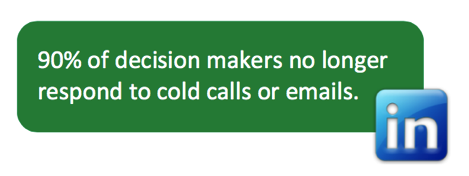
With a stat like that, you’ll need to stand out to get anyone’s attention. The best way is to show you care about your client’s interests, concerns and the success of their business.

Top sales people always go into client meetings having done their research, and now you can make use of a bounty of online information as part of your pre-call routine.

On LinkedIn:

Learn about work history, experience, skills, causes and passions. See which connections you have in common and then follow any links to external sites and learn more about their business online.

On Twitter:

Investigate their profile, past tweets, photos shared, likes and dislikes, connections and the lists they’ve created. That will show what they deem valuable.

On Facebook:

You don’t have to be too invasive with your search. Skim through their public profile to learn about their hobbies and general interests that will give you a good feel for their personality. Check to see which events or locations they’ve checked into recently as well as the friends you have in common. Any connections could be helpful insights or common ground to start your conversation.


 

Banner

7 Amazing Networking Tips For Every Entrepreneur

7-networking-tips-1

Where do you turn to when you need business advice?

Every entrepreneur knows the value of speaking to their peers, especially when they operate a home-based business or small enterprise and rely on a close network of trusted advisors.

We recently held our annual conference in beautiful Montreal, Canada, where our franchisees came together to discuss trends in the market and business best practices. These are some of the most successful franchisees in all of North America, and the conference gave everyone a chance to learn what works, what doesn’t, how to offer a better customer experience and most importantly, how to grow a profitable business the right way.

We gathered some of the best advice from franchisees throughout the conference to share with you as fellow business pros.

Tip 1: Build your referral network

Everyone has their traditional network of contacts, but not everyone has built a true referral network out of those contacts.

To start, create a list of all your contacts, personal and professional. Gather these from every possible source – and we mean every source – family, friends, business cards, old Rolodex files, every person you’ve ever emailed and all your LinkedIn contacts. Create a spreadsheet of all these contacts and this will be your master list.

Rank those contacts from 1 – 4 based on their potential to generate referrals. This is your starting point for finding the right contacts at the right time and building an incredible referral program.

In future posts, we’ll discuss how to use this referral list to connect with the right people via social networks, email campaigns, in-person meetings and special events.

Tip 2: Build an email list using social media

A regular e-newsletter to your contacts is a fantastic way to turbo-charge your business relationships and reach out for referrals.

As a starting point, use LinkedIn to build out your email list. If you have an existing email list, you can match it to your LinkedIn contacts and add to your list with online connections. One business owner increased his list from 300 to 1100 using primarily this tactic.

Once your list is ready, send out a monthly newsletter that provides valuable content to your readers, and ensure that you include a call-to-action asking for referrals. You can use software like MailChimp to easily manage your list and emails.

Even with a straightforward monthly e-newsletter you can get 500 views relatively quickly and make use of those valuable connections.

Tip 3: Join local business associations

Local Chambers of Commerce are a fantastic way to reach out to your business community. Every business owner should visit their local Chamber as a starting point, and then ask about related associations relevant to your industry.

Many Chambers run workshops, special events and networking groups and sessions that can include one-on-ones between business owners. This is a great way to meet peers in your community and get to know each other face-to-face, making it easier to give and receive referrals from one another.

Tip 4: Hold events in the local community

Speaking of Chambers of Commerce, you can often take advantage of their space for minimal or no charge. If you are setting up a special client event, see if you can hold it at the Chamber, which is generally a centrally located and well-maintained space.

And make those local events memorable. Use food, drink and entertainment to make your guests happy they attended. Most importantly, they’ll associate positive sentiment with you and your business brand.

Tip 5: Convenience is key when it comes to client meetings

Consider the location and timing of any events, meetings and mixers you hold for your clients. Make it convenient, as they are doing you a favour by being there.

If you’re meeting for a quick coffee, find a unique space close to their office. Or if time is tight, bring them coffee and snacks to their office and your meeting will be much more welcome. If you’re holding a special event, make sure you define specific start and end times, and stick to them. Your clients’ schedules are just as important as the event itself.

Tip 6: Show some love in return

If your clients attended your events, return the favour and support them at any functions they run. It could be a monthly mixer or a fundraising event, but they’ll notice and appreciate the support.

Get bonus points by following them on social media and then retweeting or posting something about their events to help spread the word.

Tip 7: Consider your “Return on Time”

We all focus on ROI, but do you look at your ROT – return on time?

What networking activities are you doing on a regular basis and how much time does it take to complete those tasks? You can do a quick analysis of your daily, weekly and monthly networking activities and determine what’s really paying off. If there’s something that gives you a high ROT, then continue and potentially expand that activity. Conversely, if sometimes is a massive time drain and “bad ROT,” then consider putting a hold on that activity.

Bonus: Chat to your business partners

All the vendors and partners you work with have likely gone through similar business issues and growing pains. And they are likely always looking for good advice and improving their contacts as well. If you’re looking for advice from peers, why not chat with one of your trusted partners? At Liquid Capital, we are always happy to chat with our clients and help businesses grow.

Success concept

Think Like a Successful Entrepreneur

successful entrepreneur

We have all heard and read stories of businesses that fail and businesses that take off. Learning from the experiences of other entrepreneurs increases your likelihood of success. Here are four key takeaways to fuel business growth.

Stay Confident.

Richard Feloni, a senior reporter for www.BusinessInsider.com, interviewed 20 successful entrepreneurs about the most important lesson they learned in their 20s. One-quarter of the lessons had something to do with having confidence. For example:

«Any limitations on personal growth are self-imposed.»

«Don’t take business personally.»

«Don’t sell yourself short.»

«The first step to becoming an entrepreneur is gaining self-confidence.»

«The importance of being decisive.»

Strip away layers of bureaucracy.

Canadianbusiness.com highlights the concept in an article by Alexandra Bosanac, How Flat Hierarchies Help Companies Stay Nimble And Grow Faster. Referencing the success of Corporate Travel Management Solutions (CTMS), which has eliminated middlemanagement altogether, Bosanac explains that the result is a fluid business «with senior executives taking a hands-on approach in day-to-day operations» and better customer relations. Her advice: «For firms not ready to make such a radical leap, simply organizing staff into strategic self-contained pods that each use a flat hierarchy is an easy first step.»

Bounce back from failure.

Jodi Goldstein, Managing Director at Harvard Innovation Labs, writes for entrepreneur.com in «How Startups Can Bounce Back After A Failed First Launch.» The article highlights four steps:

1. Collect Customer Feedback

2. Consider Bringing in New Advisors

3. Look at How Your Competition Is Faring

4. Don’t Let Your Pride Prevent You from Pivoting

She encourages business owners: «Great entrepreneurs balance the conviction in their ideas with the humility to take action when their original ideas aren’t translating into the desired business results. If your customers, advisors and competitors are telling you that it’s time to change directions, I’d strongly encourage you to take this advice to heart.»

Be ready for success.

You’ve likely heard of the Pokémon GO game, which has attracted millions of users. The maker, Niantic, hasn’t been able to keep up with demand, however, resulting in server problems and insufficient tech support. (Though people still love it!) It’s an apt example of not being prepared to handle an influx of more customers than expected. Whether a software company, transportation provider, manufacturer or service provider, planning matters. Think ahead to the investments required to manage demand. You want to make a positive impression on every first-time customer.

Successful entrepreneurs pour their heart and cash into their vision; they also envision what it will take if their idea exceeds expectation.


Icon

How Do I Improve My LinkedIn Posts?

This is a great question. You’ve been posting updates from your LinkedIn company page or personal profile, but are they being seen? And are they working?

How to see your results

The first indicator of performance is to look at the likes, comments and shares of each of your posts.

Click on “Profile” and then “Your Updates” from the drop-down menu.

This will show you a list of your recent activity including all the posts you’ve shared. At the bottom of each post you’ll see if people are engaging with your content.

If there aren’t a lot of engagements then it means the audience isn’t finding the posts relevant. Everyone’s audience is a little different, so it may take some time to improve your performance, but even a little adjustment can go a long way.

Here are five immediate things you can do to improve your LinkedIn performance.

1. Share your opinion

When sharing someone else’s blog article or post, try adding your own opinions or personal thoughts to the beginning of your post. For example, «This is the best explanation of small business financing I’ve ever seen.» followed by the post. This gives your followers insight into why you’re sharing the post and should encourage them to click and engage.

2. Change or add an image

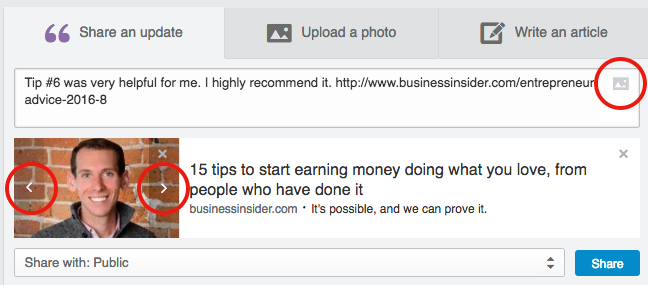
Make sure your posts contain image that resonates more with your personal audience. Use a vibrant image with colour and interest that will cut through the clutter on people’s newsfeeds. If you’re sharing a webpage or blog article, you can flip through various images from that page by clicking on the directional arrows once you enter the website URL. Or upload your own image by clicking the image icon on the top right of the update box.

3. Post at a different time or day

Switch it up a bit by posting at different times of day. Often, LinkedIn users will be more responsive early in the morning or later in the day, outside of their regular work hours. So try to post at different times when your audience may be more receptive. Don’t forget to post on Saturday and Sunday as well. You’ll have less competition on the news feed, and users are still checking in on weekends.

4. Engage with more LinkedIn users

Usually by increasing how often you like, comment and share posts from others, the more likely they’ll be to reciprocate. Make it a habit to like at least one or two posts every day on your news feed. And commenting on posts from your connections can go a long way. Even to say «Thanks Denise, that was a great post!»

5. Post new types of content

Try to post different types of content than normal. If you always post content from the same source like your company website or favourite news outlet, it will make your page a «one-trick pony.» Instead, find interesting content from industry websites and blogs, news sites and LinkedIn Pulse, then share those on your page along with your own brief commentary. At least 50% of your posts should be fresh content from sources other than your own company sites. This will make your feed valuable to your connections.


interns

Profit From The Power Of Interns

interns

Finding and hiring effective employees is an ongoing challenge for growing companies. Running an internship program may help develop your team. However, before you establish one, keep in mind the realities and commitment for both the interns and the employer.

For an intern program to be worthwhile, you need to first decide what legitimate tasks an intern can perform. Be clear from the beginning what you expect. In turn, ask what the intern expects to gain. Experience in a specific industry? Skills in their craft? Interns typically look for tangible assets such as letters of recommendation or introductions to key industry contacts, too.

Right out of the gate an intern can be an asset. Millennials, for example, have grown up with social media and quickly evolving technology. They bring skills and insights your staff might not have. For skills specific to your industry, hiring interns while they’re still in college gives you time to groom them so that they’ll be a good match for permanent employment after they graduate. An advantage to that approach is displacing the cost of hiring as well as a training period. The newly hired previous intern will be ready to go right from the beginning of employment. Internships are an ideal way to ensure that you develop what you ultimately need in a competent employee.

ManpowerGroup has nearly 3,900 offices across 80 countries with 400,000 clients from small organizations to globally-renowned corporations. Its tenth annual Talent Shortage Survey shows that about one in five (19%) employers struggle to find candidates with applicable experience. Its infographic «The Talent Shortage Persists» highlights opportunities for both job seekers and needy employers. The deficit comes down to experience: the lack of technical competencies (hard skills) and workplace competencies (soft skills).

Vault is a resource for 2.5 million subscribers worldwide, matching thousands of employers (70 of the Fortune 100) to 6 million students and constituents. Interviewing 6,000 current and former students for its Top Internship Rankings for 2016, Vault found that approximately three-quarters of interns on average receive a full-time job offer from the employer after interning.

Lastly, understand your responsibility as a company recruiting interns. SkilledUp reports that the average hourly wage rate for a paid intern with a bachelor’s degree ranges from $15.05 to $17.94, depending on the applicant’s major. Unpaid internships are an option but you need to understand the law. SkilledUp’s blog post Recruiting For (And Through) Your Company Internship Program explains the «six prong test» as per the Fair Labor Standards Act. A key requirement is that an internship will not displace a regular employee.
Bottom line: Do your homework. The right intern program can save your company money while grooming an apprentice to be your ideal employee.
Image via NASA Goddard
Student illustration

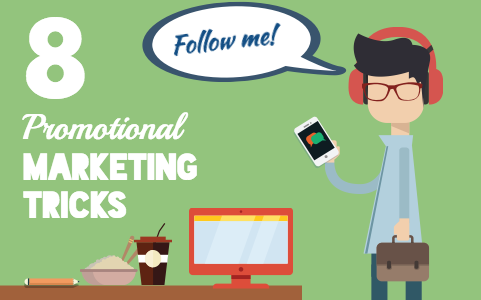
8 Ways to Promote Your SMB Like a Boss

promotion-tricks

We help businesses grow by accessing much-needed capital they can use for activities like equipment purchases, operational support and fulfilling product orders.

But how do you promote your business to get the word out to your customers and prospects?

That’s just as important, and finding the right tactics that are cost-effective and don’t consume all your time is the key. So let’s take a look at eight actionable ways to promote your SMB like a pro and get connected to new customers that will become long-term clients.

1. Special for First-Time Customers

Nothing entices new customers more than getting a special deal, like a trial version of your product or service at a discounted rate. This kind of offer might lead to a longer-term business relationship.

2. Reward Loyalty

Loyalty breeds more loyalty, so reward your committed customers. Give them a discount or upgrade their service for staying with you or for bringing you new customers through a referral.

3. Do Something for Charity

It’s good to be good, and donating your product or service to a charity will allow you to raise your profile, network and meet potential new customers. Promote your good deeds and achievements via social media and your website. Your customers will love hearing about your involvement.

4. Survey your Customers

People love competitions and the chance to give their opinion. Create a simple survey using SurveyMonkey (free options available) and promote it via your company newsletter, a special mailing list, email directly to the client, social media promotions, blog posts, websites and anywhere your customers will look. You can then create a newsworthy press release with your results, and use the data to improve your business strategy.

Related: 7 Old-School SMB Marketing Tricks to Put Up Your Sleeve

Related: 7 New-School Digital Marketing Tricks For Your SMB

5. Sponsor Something Magnificent

Look around for incredible and unique sponsorship opportunities. There are some hidden gems out there that deliver a big bang for surprisingly small price tags. Depending on your business, you can consider everything from industry events to local teams.

6. Customer Service

Good customer service is critical for customer retention and positive word of mouth. And you can use your great customer service scores to promote your company, especially if you’ve received industry or internal ratings. Add your high-quality scores to the homepage of your website, in email signatures, and create a blog post about your service. Your customers may already be providing free advertising – touting the amazing service they’ve received from you. So check sites like Yelp for your reviews, and capture positive quotes from those sites to potentially leverage in future advertising.

7. Go Green

Showing people that you care about the world is a great way to get them to care about your business. So why not go green and trumpet your environmental credentials? You’ll target a market that cares about the environment, and show a more personal and caring side that customers can relate to, rather than a corporate brand that sometimes gets lost in the noise.

8. Meetups

Networking is the lifeblood of business. Make sure you find the right events – avoid the stuffy, boring and irrelevant ones. Go online, ask around and book yourself into a couple new meetups. These can be invaluable places to learn about other people’s businesses and to promote your own in a genuine way. There’s no easy way about this though, as meetups are all about building high-quality relationships with real people. Arm yourself with business cards, a warm smile and no expectations – you’ll be happy you went.

Do you have a tip to share about how your business has effectively done promotions? Tell us in the comments section.

A magician illustration

7 Old-School SMB Marketing Tricks To Put Up Your Sleeve

old school marketing

Running a small or medium-sized business isn’t easy. One of the hardest parts is figuring out how to market and promote your company. You’re not alone.

There are traditional methods like newspapers, radio and TV, along with newer media tactics including digital advertising, search marketing and social media. How will you figure out which tactics to invest your time and energy into, and what will give you the most bang for your buck?

There’s no doubt that new-school digital marketing methods are effective, but you might be neglecting traditional tried, tested and true methods that are still valuable. And with everybody rushing to the new strategies, there could be less competition back in old-school marketing.

Here are seven useful tips and tricks you can use to build a successful marketing campaign using those traditional methods of marketing.


1. Get Your Story Published in the Local Newspaper

Newspapers might seem outdated, but there are great opportunities that still exist in your local paper – especially since most papers also have a supporting website where stories are published.

Contact the Editor of the business section and show how your startup is different from all the others out there. Create a compelling story about your history, what you offer the community and how you are raising the bar in the business world. Every publication is interested in intriguing stories, and by offering a cost-effective pitch (aka free), you may be able to persuade them to write a profile-raising piece on you.


2. Talk to Magazine Editors

You may be thinking, “What? First outdated newspapers and now outdated magazines?” It’s true – magazines can be a great way to get exposure for your business, and there are plenty around looking to publish your story.

Local exposure is the best, so start with the most local publication possible. It may be a small town or niche business magazine that you target. And make sure you get links to your website included in the online version of the story so that the readers can quickly click to your business site.

Bonus: Ask the magazine if you can contribute to an ‘Ask the Expert’ column. Then provide ongoing expert pieces for them to publish, either in the print version or online.


3. Make Effective Business Cards, and Don’t Forget to Hand Them Out

Business cards are low tech but remain important for networking. Don’t leave home without them, as you never know who you’ll bump into.

Make sure your business card contains all relevant contact information, like your website address and any social media accounts – especially LinkedIn if you’re a B2B professional.

And make use of any blank space on your cards to provide details about your products, services and a reason for people to connect with you. For example, you could include a special discount only to people with your business card. That gives them a reason to hold onto your card.

Bonus: Get their business card as well, and then connect with them on LinkedIn or other social media accounts that same day. Make sure to follow-up with a message to add a personal touch to your new business relationship.


4. Set Up a Referral Program

If you have a large number of suppliers you regularly work with, set up a referral program to get your customers rewards. Imagine being able to offer your customers exclusive discounts on additional products and services? That would be reason enough to keep coming back to you.

And if you take this traditional program into the new-school, you can offer your referral program as part of your company e-newsletter. By signing up for these emails, your customers will have handy access to all the promotions at your business and other partner stores.


5. Offer Seasonal Discounts and Sales

Everyone likes a summer saving or a winter deal! It doesn’t really matter the season, just give your customers a discount for shopping at a particular time of year. Or create a theme around a seasonal holiday like Halloween, to offer Spooky Savings and Frighteningly Low Prices. There’s a certain charm to having specials around holidays, and it shows your customers that you can have a little fun with your business as well.


6. Send Good Old Fashioned Snail Mail

Mail drops are definitely old-school, but don’t underestimate them. Dropping leaflets through people’s mailboxes still has a measurable effect as long as you do this strategically. Keep your radius tight if you have a physical store location, so people will have a better chance of popping into your store.

Make sure your mailer has a clear call-to-action on it as well. Better yet, give them an incentive to hold on to that piece of mail. For example, include a code they need to enter for a website promotion or tell them to present that mailer in your store to receive a free piece of swag.

Bonus: Create a hard copy flyer, then take advantage of the message boards available at other local businesses. A flyer can be a quick, cheap and easy promotion of your company. Make sure you get permission first, and don’t forget your strong calls-to-action.


7. Connect with Your Local Chamber of Commerce

Your local Chamber of Commerce can always offer some valuable help. Make sure you join up so that you can network with other local business owners. It’s surprisingly effective to chat with other business owners in your area and learn the tactics they use to market to their customers and prospects.

Then follow the Chamber of Commerce online and make sure you attend events throughout the year. You may be able to get ongoing support and assistance that would cost thousands of dollars from third-party sources.

content marketing

Cash In With Content Marketing

content marketing

Whatever term you use — content marketing, sponsored content, or content strategy — it all comes down to giving buying audiences substantive, relevant, useful information in an easy-to-access format, enabling them to consider doing business with you.

Doing content marketing well can help you connect with the right prospects, nurture existing customer relationships and eventually grow your revenue.

How does content marketing improve my business?

Here’s how Content Marketing Institute (CMI) explains this strategic marketing approach: «Instead of pitching your products or services, you are delivering information that makes your buyer more intelligent. The essence of this content strategy is the belief that if we, as businesses, deliver consistent, ongoing valuable information to buyers, they ultimately reward us with their business and loyalty.»

Isn’t content marketing just a fancy form of advertising?

CMI was founded by Joe Pulizzi, a leader in the content marketing movement. His weekly blog, This Week In Content Marketing, recently explored one of the most frequently asked questions about the practice: How does content marketing differ from advertising? Think of content marketing as an invitation vs. advertising, which is unsolicited information and oftentimes an unwanted interruption.

Understanding the difference between advertising and content marketing is half the battle of implementing a content marketing program. The bigger hurdle for many companies is thinking they don’t have meaningful content to share. Every business does!

For example, a golf equipment supplier can create a blog with posts on golf trends, the difference in clubs, or how to choose apparel to ensure a comfortable playing experience in extreme heat. A security company could provide prospects with a whitepaper featuring tips for avoiding burglaries. A staffing firm’s e-newsletters can feature articles on how to develop an employee manual or the difference between independent contractors and employees.

Promoting long-term business relationships

PRNewswire explains how to distribute and drive content in its whitepaper «Why Content Marketing’s Really a Question of Marketing Your Content.» A key takeaway from the report: «Developing and executing a content distribution strategy is important because it can help you from both a search and social sharing perspective. After all, people are more likely to share content that you have actively distributed socially yourself. …

«That sharing generates positive signals that search engines not only detect but could also reward with better rankings, which in turn can lead to more organic search traffic and even more social sharing.»

Take time to brainstorm what content would be interesting and valuable to your target audience. Then build messages and delivery methods from there.

The bonus: Metrics. The data from website visits, email campaigns, and social media activities will influence your content strategy and efforts as you work toward maintaining long-term relationships with your audiences.

Image via Joe the Goat Farmer

wifi icon

Embrace The Internet Of Things

Is your business ready for the Internet of Things (IoT)?

In your everyday life you may already be a part of the IoT, e.g. thermostats, home alarms and entertainment centers joined together digitally and managed from a computer or mobile device. Businesses also can, and increasingly are, bringing together sensors and cloud-computing with office equipment, factory machinery and order fulfillment/inventory systems, streamlining sales and production processes wirelessly. This improves customer relations, productivity and on-time delivery.

There’s no time like the present to get involved. Knowledge@Wharton is an online business analysis journal of The Wharton School at the University of Pennsylvania. In March its experts in collaboration with Dell posted an article to guide businesses through the ever-expanding digital landscape. Leveraging the Internet of Things for Competitive Advantage describes IoT as an «ecosystem» that «consists of data sensors, networks, cloud storage, applications and devices all working together to help companies and consumers manage their digital lives…»

How hot is the topic? What are the trends? International Data Corporation (IDC) is a premier global provider of market intelligence for IT professionals and business executives. Its infographic Connecting the IoT describes what is and forecasts what lies ahead through connectivity. A few insights from IDC:

  • There are currently 13 billion connected things worldwide, expected to grow to 30 billion by 2020.
  • By 2018 60% of IT solutions will become open-sourced allowing vertically-driven IoT markets to form.
  • Millennials, representing 16% of population, will accelerate IoT adoption.

Now is the time to embrace IoT. Consider what devices you frequently use and what data you would like to leverage. Is there client information you want to capture and share with your sales team? What operational systems could be integrated and managed remotely?

Of course there is cost. eMarketer.com cites an Accenture study showing that Internet users worldwide (62%) have concerns that purchasing IoT devices and services would be too expensive. Many (47%) are concerned about privacy and security issues. Businesses might require a cloud-based platform to serve as a data center or eCommerce solution. They might need technical support to set up the network and train employees. Plus, what devices should each employee have: a tablet, a smartphone, a laptop?

When you’re ready to look at IoT capabilities for your business, seek the guidance of an IT expert. Though the upfront investment may seem steep, the savings gained from a connected workforce and improved customer relations quickly prove the value of IoT.

scramble letters

Mentorship Grows Business

mentorship

What if someone told you that doing one thing – at no cost – would increase your company’s revenue by 83%? It might sound too good to be true but that’s what micromentor.org found in its 2014 Business Outcomes Survey. Whether you’re a mentee in need of a mentor or a company grooming mentees to build your business, there is great value in mentorship.

Luis Velasquez is a leadership coach, employee engagement expert, and management trainer. He says in his mentorcloud.com blog post «7 Trends In Employee Engagement and What Role Mentoring Plays» that employers must mentor their workforce to be competitive in today’s marketplace. And the benefits are astounding…

1. Higher job satisfaction

The benefits include higher job satisfaction, but also increased retention and improved productivity. Velasquez explains that, «Acquiring knowledge through mentoring and applying that knowledge to their current job will not only increase employee output, but will also increase their level of discretionary effort.»

2. Lower turnover

Creating maximum efficiency among your workers means that you’ll need fewer employees to get the job done as your company grows. You’ll avoid the reoccurring expense of searching for and replacing employees. Experts at ZaneBenefits estimate losing a salaried employee can cost as much as two times their annual salary, especially to replace a higher level executive.

3. Free up time and money

Not only will mentoring increase productivity, it will allow you to expand your business without adding more employees. This, of course, leaves you more money for growing your business via strategic planning, marketing analytics, technology, acquisition, or structural/office space, etc.

4. Increase sales

As an owner of an expanding business you too can tap into the value of mentors. Perhaps you want to grow sales in a new market. A mentor with experience in that arena can shed light on what strategies would be effective and who the «players» are in the industry.

Where to find a mentor

There are many useful resources ready to pair mentors with mentees and visa versa. One helpful organization that matches those in need of mentorship with mentors is SCORE. Its volunteer mentors bring real-world business experience. They are working and retired business owners, executives and managers who have been through the same challenges and decisions that many entrepreneurs face. In addition, SCORE business mentors offer valuable expertise in specific industries.

Engaging pays off. SCORE reports more than 100,000 businesses increased their revenue in 2014 thanks to its mentoring efforts. Those businesspeople with three-plus hours of mentoring not only achieved higher revenue, they experienced an increase in business growth.


Image by The Blue Diamond Gallery