Business illusration

Learn This Quick Way to Take Advantage of Supplier Discounts

cash cycle

Sometimes you’ll come across a business deal that’s too good to pass up, but the payment terms are too short, or worse yet…there are no terms.

That’s the time when working capital is crucial, and there’s a quick solution to get you the necessary capital.

For instance, if your supplier network offers a limited-time bulk sale, you can take advantage of that deal with the Purchase Financing Program (PFP). This doesn’t tie up any working capital to finance the cost of the payment, so you can keep your day-to-day operations intact.

Who is the Purchase Financing Program made for?

PFP is a very attractive solution for companies that already have a strong credit rating but may have maxed out their bank loan options, or need a faster solution.

No matter where your supplier is located, your in-transit inventory can be financed. That inventory can be goods for resale, inventory or consumption. You receive the goods, then pay the PFP invoices as agreed. It’s that simple.

The Purchase Financing Program can effectively reduce your CCC by extending your purchase terms. If you have the ability to pay in regular terms, but not the short or no terms set out by the supplier, this program can help you.

Example: How PFP can lock in a great supplier deal

Jacksons Preserves, run by Meg Jackson, is a 30-year family-run business with excellent sales, suppliers, a dedicated customer base and a strong credit rating. It is currently quarter-end when Jacksons pays out many expense and payroll bonuses, and their main supplier has just offered a deep discount on an overstock of canning supplies. The catch? Payment is required on delivery (COD), and it’s first come, first served.

Jacksons holds inventory for an average of 14 days before shipment, has a standard net-30 day payable terms, and gets paid on average after 60 days. If they take the discount, they’ll be left tight on capital after also paying the bills.

Cash Cycle Reminder:

With this bit of information, we can calculate the “cash cycle” for Jacksons Preserves, which tells you how many days it takes them to turn their inventory purchases into cash. That number (known as the CCC) is one key indicator that lenders and other financial providers use to assess your potential risk level. Want to learn more? Get all the details and figures in part one of our cash cycle series.

How PFP works in this case

Jacksons calls up their Liquid Capital partner to use the Purchase Financing Program and snag this supplier deal while it lasts. Liquid Capital pays the supplier directly, deferring Jacksons’ payables outstanding for this transaction to 30 extra days, giving them time to gain working capital from other sales.

Here’s how the cash cycle calculations would look when comparing PFP to an ordinary situation. It’s quite a dramatic improvement.

ORIGINAL CCC USING THE PURCHASE FINANCING PROGRAM
CCC = DIO – DPO + DSO CCC = DIO – DPO + DSO
CCC = 14 – 0 + 60 CCC = 14 – 30 + 60
CCC = 74 days CCC = 44 days

Improved CCC by 30 days


In this instance, Jacksons Preserve will have an extra 30 days of breathing room to pay the expense on their supply deal. By taking advantage of the discount, their production expenses will decrease and profits will likely increase. This more than pays for their short-term financing solution.


More in the Cash Cycle Series:

Part 1: How to Determine Your Company’s “Cash Conversion Cycle” 

Part 2: 7 proven cash flow tactics every CFO needs to know          

Part 3: Leverage your assets to grow your working capital

Part 4: Keep suppliers happy and the cash in your pocket

workplace expectations mix of images from past to now

See how our workplace expectations have changed since 1946

workplace expectations

What motivates you at the office? How do you approach meetings and group work? Do you challenge authority or look up to them? All of your answers are probably quite different than other generations in the workforce, and unlocking the answers for each generation you deal with can be a solved mystery that will make you more effective in business.

Think how your first boss would have answered those questions. It’s probably quite different. What about that new up-and-comer entering the office this year? They will have an entirely transformed approach.

Unlocking the mysteries: How other generations think

Workplace expectations in business are very different than they were even 20 years ago, and they have hugely changed from those of 50 years past. Six key factors have all contributed to a massive upheaval of what leaders and employees feel they have a right to expect in their work life:

  1. The Rise of Woman Power
  2. Right-brain/Left Brain Thinking
  3. Education
  4. Technology
  5. Confidence
  6. Values

When considered individually, each of these factors have played a role in changing conditions within the business workplace. Together, they have created the perfect environment for the rights and expectations of individuals to become as important as the vision of the leaders and where employers need to keep their staff happy in order to keep them at all.

Taken from Confident Leadership in 21st Century Business: Bridging the Generation Gaps, the following chart offers a comparison of changing workplace expectations in business since 1946. Notice how each generation has their own shift in the way they approach the business world.


Category Boomers I Boomers II Gen X Gen Y Gen Z
Birth Year 1946-1954 1955-1965 1963-1980 1980-2000 1995-
Coming of Age 1967-1975 1976-1986 1984-2001 2001-2021 2008-
Meeting Style Value meetings and opportunities to brainstorm. Value the invitation to participate, and eager to show themselves capable. Like meetings with a purpose. Don’t like to waste time. Prefer independent time. Prefer short, casual meetings with team activities. Want to be entertained. Eager to participate. Little patience for repetition or delays.
Attitude

Toward Authority

Honor, respect Disillusioned and untrusting Skeptical, suspicious Need to be respected by leaders Need to be valued by leaders
Technology Master it Improve it Enjoy it Employ it Adapt it
Interactive Style Self-absorbed Self-sufficient Self-starting free agents Team player Collaborative
Work is… An exciting adventure An arduous adventure A necessary challenge Meant to be meaningful A means to a better world
Characteristics Driven, optimistic, competitive, think people should pay their dues The “in-it-for-me” group, struggling to compete with Boomers I Latch-key kids, survivors, skeptical, self-reliant Ask why, prefers teamwork and supportive structure, craves feedback and instant gratification Analytical information processors, world-wide collaborators, ready to tackle global issues
Message that Motivates You are important to success You matter We need your ideas You and your co-workers can turn this place around The world needs you


One career for life? Not anymore.

Choosing a career for life is no longer the norm. Today, multiple and highly divergent careers are increasingly common.

As little as five years ago, career life expectancies averaged about 10 years. Today we are much closer to half that amount. Job changes happen even more frequently — in fact, two years between companies is the norm. If you last three years in the same job now, you will either be considered the “superstar” or complacent.

Twenty years ago, business people expected to work in an office building, Monday to Friday, and with set hours. Today, workdays and hours are flexible and individuals that can work remotely are considered an asset.

Rather than choosing the corner office with a view, we would rather avoid the stress of commuting and office conflicts by working from home or even from another country. Yet we still value teamwork over individual projects. To make this working style a reality, we can now use new technology to stay connected and productive from anywhere. Ah, technology — that wonderful and ceaselessly advancing opportunity for so much more than conversation at the water cooler.

Do employees have more rights?

In essence, we have gone from employee rights rising from minimal to maximum importance. Employees that once valued security above all else, now “vote with their feet” if they are not satisfied that their psychological needs are being met.

We have moved from predominantly individual work to fully collaborative teams, and our pyramidal hierarchy of business organization is slowly, but surely, morphing into a circular design. Today, employees and leaders alike are looking to be happy, fulfilled, engaged and productive in the workplace. Individual voices, as well as collaborative teams, expect and demand to be heard.

The business that can provide this ultimate workplace culture and fulfill workplace expectations is the one that will attract and retain the best people, at least for today.


Business author and speaker, Rosemarie Barnes, highlights the challenges that leaders may face when dealing with multiple generations in one workplace. Learn more about how the generation gaps in business are affecting company health and profits in her book, Confident Leadership in 21st Century Business: Bridging the Generation Gaps, now available on Amazon (US and Canada). Rosemarie can be booked for presentations via rbarnes@confidentstages.com. For more information, visit confidentstages.com.


About Liquid Capital

At Liquid Capital, we understand what it takes for small, medium, and emerging mid-market businesses to succeed – because we’re business people ourselves. Our company is built on a network of locally owned and operated Principal Offices, so whenever you’re talking to Liquid Capital you’re talking directly to your funding source and a fellow business person.


Featured image via Daniel X. O’Neil 

Mix vies of NYC and graphs

Is that “angel investor” actually a demon in disguise?

angel investor

You’ve seen them on TV — those sharp-dressed, smooth-talking angel investors with big personalities and even bigger wallets. Sure, they’re charming and have the business chops to prove their success. But are the sharks and dragons of the world actually the right people to partner with in your next business venture?

Yes, due in part to the smash hits Shark Tank and Dragons’ Den, angel investors can be a consideration when startups and small businesses look for funding. In fact, the typical angel investment can provide $25,000 to $100,000 of funding — a significant stake in your business. Is that investment worth its value, and are there hidden costs or risks associated with this new business relationship?

There’s no doubt that many angel investors can bring incredible experience to the table. They know how to grow a company, have savvy business minds, never fear the unknown and have a wonderful ability to take on what others may see as a risk. Compound all those traits with their deep pockets and you’ve got a recipe for huge returns.

However, not all angels are watching out for your best interest. Keep your eyes peeled for these six types of angel investors that may actually be demons in disguise.

The Tire Kickers

You likely need fast funding and don’t have time to waste with investors who aren’t serious about committing funds. This isn’t a used car lot, so watch out for “The Tire Kickers.”

“As a founder, the last thing you need is to have your chain yanked. A firm “no” is far better than “we’ll think about it” or “we’ll take it under advisement.” If you feel like an angel is stringing you along, trust your gut,” advises Jenny Q. Ta in Fast Company. “Chances are pretty good they are afraid of making a commitment until they know who else is joining the round. Beware of the sheep in angel’s clothing.”

The Sharks

You’ve undoubtedly seen this personality shine on the reality shows. A would-be entrepreneur pitches their product, but can’t recall every financial figure and stat to back their claims. That’s when “The Sharks” see their prey — and they attack.

According to Martin Zwilling in Business Insider,“This is the ultimate bad guy whose sole intention of getting involved in early-stage investing is to take advantage of what they believe is the entrepreneur’s lack of financial and deal-making experience. If the term sheet process turns to pure torture, it may be time to respectfully bow out.”

The Overachievers

Angel investors are naturally more risk tolerant, and they may expect you to be as well. With high risk comes the potential for higher returns, and “The Overachievers” are going to want to see the money. Be prepared for these angels to expect bigger payouts than the average investor.

“It isn’t unusual for an angel investor to expect a rate of return that equals 10 times their original investment inside the first 5 – 7 years,” states Murray Newlands with Startup Grind. “When you are being held to this type of standard, the pressure to generate may be intense. If you are considering angel investors, you must determine whether the startup is within a position to expand at the rate the investor expects.”

The Archangels

Every good angel has a mentor, and these higher-ups are called “The Archangels.” They can bring other investors together and make deals happen fast. The Archangels can shape any idea, organize creative funding agreements and turnaround entire companies. These angels are the key contacts that everyone wants to be in touch with, and for good reason — since their influence can attract would-be investors from other industries and geographies. But be warned, as certain Archangels aren’t so trustworthy…

“There are a lot of people that pretend to be «Archangels» and offer to connect you with people that have money, sometimes for a fee,” says Todd Vernon in a recent Inc. article. “If your «Archangel» Investor is not actually investing his or her money, but simply acting as a proxy for others, take note; that is a warning sign.”

The Know-it-alls

Experienced angels have often been in the game for years, and many of them have grown their own companies by completely disrupting their industries with innovative products and methodologies. But in some cases, this is a breeding ground for “The Know-it-alls.” Because these people have been uber-successful by forging their own paths, they may now believe that their way is the right one. And it can be hard for The Know-it-alls to let go and allow you to chart your own territory.

The trick is dealing with this type of angel in a particular way, as Jonathan Moules explained in a Financial Times article. “Be diplomatic about how you receive an angel’s advice, adopting the tips on more “timeless” matters – such as how to find a good salesperson or how to launch a product – and politely ignoring the advice on matters specific to the investor’s previous forays into business.”

The Control Freaks

Although you might be looking for a hands-off investor, be assured that most angels still need to be involved in certain parts of how your company is run. “The Control Freaks” take this to a whole other level though, looking at every detail of how you run your business with a microscope, and then micromanaging to ‘tell’ you how to move the business forward.

“Angel investors aren’t going to shell out big bucks without taking an interest in how the money is used. If you’re expecting them to take a completely hands-off approach, you may be in for a rude awakening,” cautions Rebecca Lake at Quickbooks. “It’s more likely that your angel will want to take an active role in making decisions that affect the outcome of your business.” Lake warns that even with “The Control Freak” making decisions on your behalf, you are still accountable. “Even if they leave the reins in your hands, you’ll still be accountable for explaining the reasoning behind your choices.”


If you’re looking for investors and enhanced business funding, angel investors can still be an option. Do your homework and due diligence to know exactly who you’re working with, understand their expectations and make the right funding partnership. And if the agreement isn’t sitting well with you, don’t sign on the dotted line until you’ve looked at all your options.

There are always alternatives to secure funding for your business, like with Liquid Capital Factoring or Asset-Based Lending. Feel free to reach out and we can discuss your options.

millennials gen y

Generation Gaps in Business: The Abyss of the Millenniums

millennials gen y

Being a business owner, employer or leader in today’s business world requires an awareness of the needs of all the generations in the workforce: the Baby Boomers, Generation X, Y and Z. Whether engaging with staff, clients or stakeholders, understanding the differences in generational values and motivations will lead your business to run more effectively and ultimately improve those bottom-line profits.

Change is inevitable…and it’s happening faster than ever before

Where previous generations were fearful of change and determined to hold onto the status quo, Millennials and the new Generation Z view it as exciting and normal.

Some generations have caused more of a ruckus than others. Today, it’s Millennials (also called Generation Y) that are getting a lot of bad press. Entitled, self-absorbed, and unfocused are typical adjectives swimming in the ocean of negativity that describe our workforce’s majority generation. They cannot survive without their cell phones, have grown up playing video games and expect instant gratification. Many argue that this generation cannot make a decision without consulting everyone they know. Others say they are downright lazy and expect respect just for showing up.

Does all this sound familiar?

It should, because similarly harsh criticisms of each new generation have rung through the rafters since the end of WWII. Think back to the panicked parents when Chubby Checker became popular. Remember the «rebels» created by The Beatles? What about the sacrilegious burning of draft cards? Young upstarts have created chaos with every passing generation, and for that we should be completely grateful.

Each generation brings innovation that shapes our future, and your leadership can make all the difference.

Strategic leadership can tame any circus

confident leadershipAs described in Confident Leadership in 21st Century Business: Bridging the Generation Gaps, taking a leadership role in today’s business world is akin to being a ringleader in a circus. With so many different performers and acts on stage, the ringleader must recognize everyone’s talents and provide them with the tools they need to put on a successful performance.

Likewise, a business leader must recognize the different generations within their team and modify the tools and tactics to work with each of them. A leader’s role is also about uncovering what makes each generation tick, and using that information to direct their abilities.

In business, the good leader is aware that Generation X prefers carefully funneled information, Generation Y feeds on mentorship and praise, and the upcoming Generation Z needs to understand how their tasks fit in with the whole.

We created the qualities of Gen Y

Nevertheless, while some people may see the Millennial generation as entitled and demanding, let us remember, they were raised differently than generations before them.

We awarded them trophies even when they lost, and we lauded them for every activity they undertook. By buying this new generation multitudes of electronics, we taught them to understand the world of quick responses, and have instant information at their fingertips. They took advantage of every opportunity to learn the complex world of computers, and we praised them for their ingenuity in solving problems in a flash.

Communication styles changed, and as Gen Y began to grow into their teens, the world shifted toward a dramatically new direction – with unprecedented changes equal to those of the Industrial Revolution. We provided cell phones so we could keep in touch with them, smartphones with instant Internet access and computers virtually anywhere they went. They took advantage of that technology to learn how to adapt quickly, keep in touch with the world and with each other at every moment.

Gen Z: A newer generation impacting business

Gen Z has never known a world without smartphones, wearables, and a world of Internet-connected devices. They are being raised amid institutional and economic instability, are heavily influenced by depleting resources and climate change, and are globally connected via social media. They have always had information at their fingertips, are masters of technology and analytics, and are going to further change the way the world does business. Not even the Millennials will be able to easily understand this new shift.

Young people push boundaries. It is what each generation before them has done – and it is right to do so. We have taught them to fearlessly try new things. We’ve encouraged them to uncover innovative ways to accomplish their goals. This generation is brilliant. Business leaders will find that leading Gen Z to find their fit in the organization will help harness their knowledge and enthusiasm, ultimately driving results and improving profits.

Yes, it is difficult to manage people who know more than we do – and yes, they do things differently than we did. Although memories of life without cell phones and personal computers surface from time to time, it is hard to imagine conducting business today without them. There are fantastic possibilities still to come, the ideas for which will undoubtedly be created by the younger generations of the workforce.

Mentor them, guide them, studiously avoid micromanaging them, and be grateful for the courage of the generations of change.


Business author and speaker, Rosemarie Barnes, highlights the challenges that leaders may face when dealing with multiple generations in one workplace. Learn more about how the generation gaps in business are affecting company health and profits in her book, Confident Leadership in 21st Century Business: Bridging the Generation Gaps, now available on Amazon (US and Canada). Rosemarie can be booked for presentations via rbarnes@confidentstages.com. For more information, visit confidentstages.com.

soical selling

What are the world’s best sales reps doing right?

soical selling

The world’s top sales pros are uncovering hotter leads, winning bigger deals and earning more revenue than their peers – all because of awesome new sales tactics. So what is their secret? The key is adjusting your playbook the right way — and adding three key sales techniques.

According to Jonathan Lister, Vice President of Sales with LinkedIn Sales Solutions and Country Manager of the Canadian division, social selling has become the new norm – at least, for those top sales pros. And they’re using these techniques to beat their competition.

Lister also revealed the old-school sales tactics you need to swipe left from your playbook immediately while presenting at a “State of Sales” workshop at the LinkedIn Toronto headquarters. His information is based on hard facts, as discovered through LinkedIn’s “Global State of Sales Survey” that researched exactly why top sales reps were performing so well. So there’s no doubt that following this advice could produce major rewards.

Curious what isn’t working? Take a look at part one of our story, then keep reading to learn the three tactics you need to add to your playbook today.

1. Target the full buying committee

Remember those six to eight decision-makers from part one? Those are the exact people you need to target. Thanks to online networking, you now have immediate access to social websites filled with valuable data on all of these people – most notably across the three main networks; LinkedIn, Twitter and Facebook.

Lister explained how your prospects are checking in every day on these networks, learning new skills, and connecting with colleagues. In many cases, they are also raising their hands to ask for help when they have a business issue. “The top sales pros are learning exactly what their prospects are doing online.”

The key is to target the full buying committee on social media by connecting with each of those people individually – first on LinkedIn and Twitter, as these are the more common networks for business relationships. Connect with them on LinkedIn, join the same groups as them, follow them on Twitter, and even add them to one of your Twitter lists, which will show you’re taking a more active interest and value their profile. Get to know what they’re posting and what they value. When you eventually reach out with your ‘ask,’ the information you’ve gathered will better prepare you to customize your pitch.

2. Understand before you ask

It’s critical to learn how certain activities and social news can signal a potential sales opportunity. Understanding this timing is a modern top sales skill.

Lister highlighted five social selling signals, but pointed to one that is the most powerful for top sales pros. “Job changes are one of the most powerful signals of intent,” noting that most job changes are publicly highlighted on networks like LinkedIn. Being aware of these updates and acting on them can get you a step ahead of your competition. “When someone changes jobs, maybe they want to take products they used at their old jobs or find new ones,» he explained. That’s a perfect opportunity to connect and highlight what you can offer.

Similarly, when people make new connections or connect with new groups on LinkedIn, that may signal they’re working on a project or building a team. Content shares and social comments also tell more personal commentary on what someone is interested in. Social comments, in particular, are very powerful indicators of buyer’s intent.

Lister went on to explain how new social selling tools like sales filters and lead bots can be a major benefit when making those connections and learning about sales prospects. “A lead bot will go out and find leads at scale, like the LinkedIn Sales Navigator. It can deliver leads along with a contact’s profile.” And that information can be invaluable since it’s often accurate and up-to-date. Goodbye dirty lead lists.

3. Engage from first contact to final contract

How do you engage with people across multiple accounts and conversations? With so much digital noise, it’s important to cut through that clutter.

First, find prospects from mutually trusted connections. In LinkedIn, that means connecting with people from shared groups and connections. Finding those connections via the Sales Navigator TeamLink feature can also show you how to break the ice with mutually shared connections on your sales team.

Connecting can then include something as simple as a follow request or an introductory message on the platform – called an InMail. Lister explained how every top sales pro cited ‘trust’ as incredibly important in their sales process. “If you can find that at scale, then the open rates can be incredibly high,” speaking about InMail. “But for most sales pros, that’s where it will stop. They’ll make the connection, send a message and get them to open. Then stop. But it’s not good enough. You need them to give you more information and connect meaningfully to create an ongoing relationship and dialogue.”

Top modern sales pros will make those connection paths and then create a “feedback loop.” In Sales Navigator, that can also include using their new PointDrive tool that lets you send a sales package URL that tells you if the prospect opened and consumed any follow-up info. Using the tool allows Lister and his sales teams more insight into their customer’s actions. “Now I have a way to communicate with my prospect, what they’re reading, what’s important to them and how to communication follow up further.”

Whether you have these tools or not, the important part is continuing the conversation with the prospect, answering their questions, solving problems and building a trusting relationship. If you can do that online even before talking in person, you’re well on your way to winning more opportunities and becoming a top sales pro.

social selling

3 sales tactics that no longer work (Plus 3 new ones that do!)

social selling

The state of sales has completely evolved. Old sales strategies no longer work, and any salesperson using traditional tactics likely can’t compete with the modern sales leaders who’ve adopted new methods. Exactly what sales tactics aren’t working anymore, and what should we replace them with?

Jonathan Lister knows a thing or two about social selling. As Vice President of Sales with LinkedIn Sales Solutions and Country Manger of the Canadian division, he recently addressed a workshop audience to explain this shifting trend in sales. Technology has obviously brought forward new ways of engaging with brands, while customers are also interacting differently with their company contacts – resulting in conventional sales teams losing deals.

What can sales teams do to catch up?

As expected, Lister points to the pivotal role of social media for part of the answer. But there is more to the story, as LinkedIn analyzed the results of their “Global State of Sales Survey” and found out exactly why top sales reps were performing so well.

What isn’t working:

These three traditional sales tactics are no longer working. Here’s why you should stop doing them right now to improve your sales playbook.

1. Call high up the ladder

You’ve likely learned that it’s important to talk to a C-suite contact and build a relationship with the top person in a company. Not anymore.

Lister explained that most sales people have to make contact with six to eight decision-makers per deal. Further, 58% decisions are made outside the C-suite.

«If you’re just talking to the C-suite, you’re eliminating at least five people from that sales cycle,» Lister explained. Nowadays, the C-suite isn’t as influential in the sales process. They’re letting their teams take a more active role in the decision-making, and if you’re only focusing on the top dogs, you’re putting too much attention into the wrong relationship building.

2. Lead with great questions

The discovery process, including probing with thoughtful questions, has always been an important sales tactic. Many sales pros have been taught to reach out to a prospect and make a compelling statement to capture their interest.

The problem is that buyers and decision-makers have also been sharpening their skills, including how to recognize sales tactics and then avoid them altogether. So if you’re calling to ask someone to move services or buy a new product, chances are that this savvy prospect will have a rebuttal ready.

«Most buyers think that sales reps aren’t credible anyway,» Lister explains. And simply asking probing questions may only reinforce the idea that sales reps aren’t in touch with the way to connect with prospects.

3. Touch 7 times

Sales pros know that one touch point isn’t enough. That’s where the seven touch point rule stepped in – the theory being that you’ll need at least seven points of contact to close a deal. But that could waste time, resources and shift focus to the wrong part of the sale.

If sales pros are reaching out to their prospects just to get the touch points in, they’re wasting their time. «Reaching out without something meaningful to say is detrimental to the sales cycle,» cautions Lister, who added that a genuine point of contact has been a key component of relationship building with top sales pros.

Unfortunately, the focus for many sales teams has been about hitting the seven touch points — no matter how beneficial those activities were in pushing the sales opportunity to the next level.

What is working:

The good news – the traditional strategy can now be replaced by a set of more modern set of sales tactics.

Read part two to learn the three tactics all top sales pros should be using to connect with new customers.

A magician illustration

7 New-School Digital Marketing Tricks For Your SMB

new school marketing tricks

We’ve shown you how you can leverage seven old-school marketing tricks for your small and medium-sized business. Of course, old-school isn’t the only way, and you can always teach a dog new tricks.

Our business is all about helping other businesses get access to funding and grow. But aside from finances, part of business growth is understanding how to take advantage of trends—in this case, digital marketing tactics that help you connect with your customers.

Here are seven new-school and actionable ways to take advantage of digital marketing tactics for your SMB.

1. Help people take action on your website

Your website should be the center of your online strategy to build trust and describe your products, services and business values. So make sure your customers keep reading. How do you do that?

Put calls-to-action, known as CTAs, on every page. Make them clear, concise and obvious. What action do you want your readers to take? If you want them to subscribe to your newsletter, then include a sign-up form directly on that page. If you want them to call a rep, then make that number front and center (and clickable on mobile devices). And if you want them to read more content, then include widgets with catchy headlines to the next pages and blog articles.

In addition to that, make sure you have the ideal icons for your CTAs. For example, if your customers should call a rep then use the phone icon; but if they want to learn more about your product or service—use magnifying glass. Flaticon is a great resource for finding the right icons. The best part is that you can use their free service to find and download the icons you need.

Review your site and list the pages that are missing a CTA and ones that can be improved. Then make a plan to fix that.

2. Blog once a week

There are so many advantages to building a thought-leadership section to your website. And it doesn’t have to be hard.

Use this list of blog headline starters from Co-Schedule to come up with some initial ideas. Then create a quick and easy publishing calendar on Excel that shows the topics you’ll publish each week. Voila! You’re blogging. Start with articles around 500 words long, and always answer the question, “How will my customer benefit from this?”

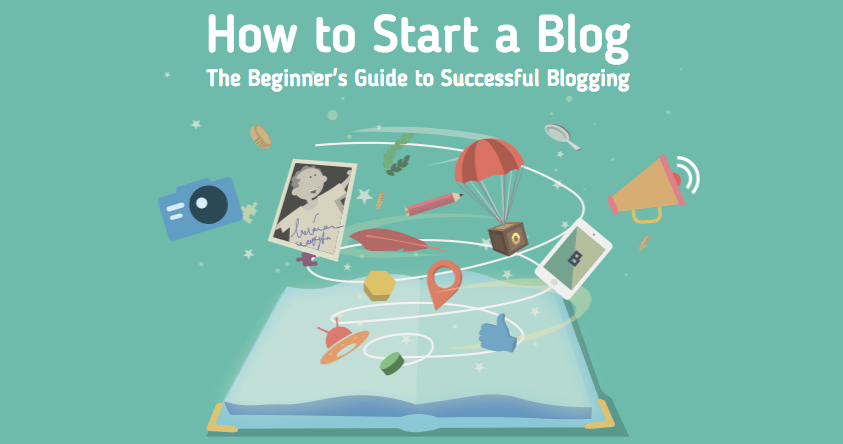
Blogs keep your website up to date with new content, which will improve your Google ranking. By updating your blog at least once a week, Google will have new material to scan and your customers will have a reason to return. Not sure where to start? For starters, check out How to Start a Blog from First Site Guide, which details exactly what it takes to turn your blog from concept to reality.
how to start a blog

The team at First Site Guide walks you through their «five easy steps to starting a blog» including:

  1. Choose a blogging platform
  2. Pick a domain name
  3. Get a web hosting account
  4. Install blogging software and set up a blog
  5. Select a blog design and layout

Once you’ve got a blog up and running, it’s important to share every article—not once or twice, but multiple times on Twitter, Facebook, LinkedIn, Pinterest, YouTube and more. If you have evergreen content (it doesn’t go out of date), then you can continue to share it over the next quarter and year.

3. Find the right keywords to improve your SEO

SEO (Search Engine Optimization) is extremely important for the growth of your digital marketing. By adding the right keywords on your website, customers will be able to find you when they search for certain topics on Google. For example, if you make incredible birthday cakes you should be found when someone searches “best cake for kid’s birthday party” and similar terms.

It’s all about making sure that people can find your business website. Make this a priority – whether you learn more out about it yourself or hire an SEO expert to help out. Start with these steps:

  • Use your blog to add even more of the right keywords, which allows you to stay up-to-date with current trends in your market.
  • Check what your competition is talking about on their website, blog and social media sites, then include those topics in your blog so you can be found by prospects.
  • If there’s a new innovation in your industry, blog about it and make use of those strategic keywords so people will find you when they’re searching for info about that hot topic.

How do you find the right search keywords? One of the most trusted resources is the Google AdWords Keyword Planner Tool, but it can get complicated. If you’re just starting out, try Wordtracker to get a sense of the type of keywords searched around specific topics.

For a crash course in SEO, check out this page from Moz.

4. Find the right followers on Twitter

We all know the potential value in Twitter as a business-friendly social media platform. But how do you grow your following and find the right demographics that meet your target market. Enter a host of free tools (yes, free!) that can help you do that in a somewhat automated way.

  • ManageFlitter: A great tool to find active Twitter users who are in your target geography and industry. Make use of the “refine search” function to find the right Twitter users. Then follow people using the automated feature (some paid options) to set it and forget it. Come back a couple days later and see who followed you, then unfollow the ones that didn’t. You’ll maintain a symbiotic Twitter relationship that way.
  • Tweepi: Another similar tool, but check out their “Follow List” feature that allows you to easily follow Twitter users from someone’s list – an often overlooked tactic.
  • Followcheck: Although the search options aren’t as robust as ManageFlitter, this tool gives you two great features. One is their “Sleepers” list that shows your inactive followers (ditch them!) and the other is their F/F ratio in the Search function. Follow users with 70 – 100% F/F ration for a better chance of them following you back.

5. Update your website with a “responsive design”

Over 50% of web traffic is now reported to come from smartphones and tablets these days. So your website better look great and perform even better on mobile devices.

Many sites have what is called a “responsive design,” meaning the layout of the site will adjust to fit any screen or device. Companies like Womp Mobile can help turn your existing site into a responsive design.

If you’re not sure how your site looks on mobile devices, it’s time you find out. Go to MobileTest.me, select a mobile test, enter your website URL and presto – you’ll see what it looks like. Take a test drive and see if it’s a positive experience. If you’re having problems with your own site, you know your customers won’t be too happy either.

6. Narrow in on your target marketing with Facebook Advertising

Your online advertising should also target mobile users. Facebook claims that two-thirds of its customers access their sites via mobile devices, so advertising there can be a potential boon for your business.

Facebook allows you to easily set up your own ads and adjust your campaigns at the click of a mouse. Select demographics like the age, gender, region and even relationship status of the people you want to reach. Its analytics let you measure and evaluate your investment, so you’ve got a lot of control.

The best advice here is to test, test, test. Because you have so much control of your ads, you can A/B test your ad copy and images, but you can go further and test your actual market. Find out if millennials like your brand more than Gen X. Discover if Texas outperforms California. Or see if people who make $50K a year click more than those who make $100K.

When using Facebook, remember that it’s more consumer focused than Twitter and LinkedIn, so make sure your posts are friendly and provide a real benefit to the market to keep your fans hooked.

7. Show off your work on LinkedIn

If you’re in a visual business like web design, graphic design or photography, there’s obvious reason to show off your work. But it’s also important for industries like manufacturing, transportation, oil and gas, or even for staffing companies.

How do you do this? On your personal LinkedIn profile, click on the “Add Media” icons within your work experience sections. You’ll have the ability to add documents you’re proud of, presentations you have created or given at conferences and events, websites you may have launched or blog articles you’ve penned. This is very important for your current work experience, as your customers and prospects will find you online. You need a well-rounded profile that shows off your talents and expertise in your current position. That builds trust.

If you run your Company Page on LinkedIn, start to do the same thing. But use your updates as a way of showing off your company assets like websites, blog posts, whitepapers, eBooks, events and other social media profiles. Pepper all of these amazing assets into your social publishing calendar to show your followers a better view of your business.

One last tip—make sure you include your contact info so you can be easily reached. You may not want to publicly display a direct phone number or email address, but including your general company phone number, a general inbox address for inquiries or even your Twitter handle is a great way to stay connected.

Do you have a new-school digital marketing tip that your business has used effectively? Tell us in the comments section.


Touch screen mobile phone

Amplify Your Business With Mobile Apps

mobile app growth

Are you up-to-date on the best apps for business?

Important hallmarks of successful entrepreneurs include the ability to maximize personal productivity and to find streamlined ways to manage both your tasks and employees. Fortunately, technology aptly zeros in on these qualities, offering an ever-changing array of mobile app solutions.

Top rated marketing apps

Aaron Strout, president of global integrated marketing and communication agency WCG, blogs monthly for Marketing Land, a daily online publication that covers all aspects of the digital marketing industry. His focus is to highlight the best apps for marketers.

Strout’s Top 20 Most Useful Business Apps feature both newer and tried-and-true recommendations covering everything from self-management to travel, social media, enterprise productivity and collaboration apps. Three examples:

  1. Expensify – scan and categorize receipts to manage expenses on the go
  2. Confluence – create documents, organize plans and collaborate with others digitally
  3. LinkedIn – still a leader in business network apps, recently upgraded to be faster and more useful

Cloudwards 30 apps for business efficiency

Cloudwards has prepared their own list of trend setting apps for business, which focuses on ways to take your office efficiency to whole new level. «Small businesses usually have limited budgets as well as only a handful of staff. The idea behind using the apps below is that of maximizing productivity and so save you time and money.»

Cloudwords 30 app ideas for business

The list includes favorites for accounting, scheduling, cloud storage, data backup and productivity, but our three highlights include:

  1. Quickbooks Online – a cloud-based accounting app that helps you keep on top of your accounting and invoicing
  2. Doodle – a brilliant solution for scheduling meetings based on team member availability. Do yourself a favor and check it out asap.
  3. Google Drive – part of the Google family of products, Drive is touted as the «holy grail of cloud storage» and a must-have app for any business

Security and mobility top the list of app concerns

The website tech.co, featuring startup news, events and mobile resources, shares even further app advice in their article, Prepare For These Mobile App Predictions. The list counsels businesses to use apps to create «more personal engagement with consumers.»

It also hails enterprise mobility (basically handling business infrastructure and connection to staff, consumers, etc. via apps) as a key trend for this year. As you might guess, app security is also a hot topic.

Develop your own app like a pro

There are apps for building apps as well. One handy tool is BuildFire, a leading global mobile application development platform choice for businesses, organizations, professionals, and resellers. The intuitive system and US-based customer support helps thousands of users build mobile apps every week. In fact, more than 50,000 businesses have already used the «click and edit» platform to create custom mobile apps for smartphones, tablets and mobile websites – no technical skills are necessary. It’s free to build your app, followed by reasonable monthly fees once published. 

Getting on board with mobile technology is definitely worthwhile. Recently Gartner Inc., a world leader in IT research and advisory, announced by 2018, 50 percent of consumers in mature markets will use smartphones or wearables for mobile payments. «Innovation in apps, mobile devices and mobile services are impacting traditional business models, particularly in the way people use personal technology for productivity and pleasure,» said Amanda Sabia, principal research analyst at Gartner. «Product managers must understand who their customers are for these new devices and services, and how the products are being used. Knowing your customer is imperative in order to capture a fair share of spending opportunities in this dynamic marketplace.»

This article originally appeared on Liquid Capital on February 5, 2016, with new updates added in April, 2017.

Playing cards

4 Core Business Principles You Might be Overlooking

Growing your business is possible for every industry, but if your company has hit a plateau you could benefit from a refresh in your corporate strategy.

In Scaling Up, Verne Harnish gives guidance on the four simple principles that can help you become part of the four percent of top earners in the business world. These are patterned after the habits that the famous John D. Rockefeller, widely considered the richest man in modern history, used to successfully execute his growth strategies.

  1. People
  2. Strategy
  3. Execution
  4. Cash

1. People: Creating the right team to execute your growth strategy

The people you hire to lead your company must be capable of doing so. Scaling up your business begins with putting the best leaders in positions so they can do what is needed to move your growth strategy forward while staying true to the core principles of your company.

When you add people to your leadership team, the complexity of your company can increase dramatically, according to Harnish. That is why picking great leaders to fill key positions and providing them with team members with similar abilities will save time and energy. Your leadership will be set up to work with teams who are up to performing the tasks assigned to them.

Harnish also emphasizes paying people what they are worth instead of adhering to an industry pay scale or some other artificial method of compensation. Putting the best people in leadership roles and delegating responsibilities to them means paying them what they deserve – based on the value they provide to the business.

2. Strategy: Stick with what you know

Understand your company’s core values and stay true to them when creating a strategy to scale up your business.

For example, if you’ve had success with one location or franchise unit, you can grow that business by opening additional locations or territories. Since you’ve already invested in learning what it takes to be successful, you can apply those same principles in new growth. And once you open additional locations, it doesn’t require that you personally take on the management responsibilities. If you’ve set up the business efficiently, your management team from the first location can be given more responsibility for the second location.

By staying true to your company’s core values that made it a success in the first place, and by training your leadership team to implement and adhere to those values, multiple locations can be established with the same opportunities for success. Reward managers with generous bonuses and other incentives for meeting performance goals at the new locations, which will help ensure your growth strategies are implemented according to plan.

3. Execution: Keeping your leadership team on track

Every member of your leadership team who is involved in executing the strategy to scale up your company must have a quantitatively defined goal.

Quantifying your company’s objectives provides you with a means of measuring performance, and it makes your entire team accountable for performance. Harnish stresses that it’s impossible to determine if you’re on the right track unless there is some way to measure your results.

Next, these measurable goals must be clearly communicated to the teams responsible to meeting them. Scale Up emphasizes the importance of giving your team members a standard they must achieve, and a sense of accountability that can be instilled and maintained by your managers.

4. Cash: Success may depend upon how quickly your money returns to you

The final core principle in Scale Up deals with something Harnish refers to as the “cash acceleration strategies.” Making improvements in your operations to shorten the time between when you dispense money until the cash returns to you after delivery of the product and payment by the customer is critical.

The “cash conversion cycle” or CCC is an invaluable metric to calculate as part of this process. Since you don’t make money waiting to get paid, streamlining the process by which goods or services are created and delivered to the customer will help improve your cash flow more quickly.

Learn more about the cash cycle and how you can calculate this powerful business metric – your CCC.


Elevators

Developing Your Perfect Elevator Pitch

Selling your business in 60 seconds can be a daunting task, but it’s possible.

You have a short window to capture attention, generate interest and find new clients. Armed with exactly what to say and how to say it, you can go from a quick chat on the ground floor to a meeting in the executive suites.

At a recent conference in Toronto, networking coach Mark Greenspan ran an interactive session called The Perfect Pitch: Win New Business Everywhere You Go. Having worked with major brands like Salesforce, Deloitte and Google News Lab, his training programs help business pro get ahead in a competitive landscape.

We highlight what it takes to perfect your elevator pitch and turn a new contact into a lead.

Craft your elevator pitch

«A good elevator pitch should be no more than 60 seconds,» Mark states boldly. Even shorter, around 45 seconds, can make sure you pack a punch.

Come up with your one-liner elevator pitch before you go to a meeting, conference or just stepping out into the world. A top-notch elevator pitch should include your benefit statement – not just what you do, but what service you provide that differentiates you and makes you stand out. Within your pitch you can independently verify your expertise by saying who you’ve worked with and attached someone else’s credibility.

For example, a medical sales pro may have a pitch that goes something like,

“I provide North American enterprise companies cutting edge medical devices that have literally just come out onto the market. My focus is on medical imaging and skin grafting, and recently I’ve been helping the VPs of GE and Siemens access new product lines targeting their key verticals.”

Describe what you do and how you can help them in a succinct way. Then ask questions…

Be interested before being interesting

This was a common theme Mark highlighted, as “you have to be interested in what the person is saying and who they are before talking about yourself.”

Genuinely listen to what the other person says without thinking about what you’re going to say next. This active listening will help you connect with them, which will also make you memorable. Don’t worry about what to say next, as they’ll prompt you for information.

Act like you’re a journalist

Ask plenty of questions. It’s a little bit like being a reporter and finding the story.

In fact, Mark goes a step further to recommend not talking about yourself at all until you are asked a direct question. You’ll notice how challenging it is at first to hold back providing any information about yourself. Instead, you’re forced to ask additional questions and spur on conversation from the other person.

     Related: 7 amazing networking tips for every entrepreneur      

Find common ground

“Remember, networking is about making connections to see if there’s potential for a business opportunity there,” Mark advised the audience as they were practicing their elevator pitches with each other.

Start with conversation around something relatable like golf, football, the last place you vacationed, your alma mater or your family. Then move on to common ground like business pain points and what you’re trying to achieve over the next year.

This brings the pitch back to the benefit statement, making sure that what you say truly can offer assistance to your contacts. Commonalities can be the foundation for a trusted business partnership.

Connect on LinkedIn right then and there

Now this doesn’t work in every instance, but in the session, many people grabbed their smartphones and were connecting with each other on LinkedIn. When you have the time, this is a brilliant way to stay connected.

Offer to exchange business cards, but say, “Hey why don’t I add you on LinkedIn?” Make sure you have the right profile displayed and by connecting with each other in person, they’ll have a better chance of remembering who you are and what your elevator pitch promises.

End on an ‘ask’

Without an ‘ask,’ you’ve networked without any promise for future follow-up, Mark cautions. But the ask doesn’t have to be direct, and that’s the beauty of this tip.

In one example, Mark worked on the elevator pitch with an entrepreneur who owned a wedding videography company. The man’s original ask was, “Are you getting married anytime soon?” The audience chuckled, but many couldn’t offer a better question.

Instead, Mark suggested taking a different approach that’s more relatable. “What’s the worst wedding you’ve been to? It’s not a direct ask, but it gets you thinking. As a wedding videographer, this is the lead generation portion of your pitch.”

Asking a thought-provoking question that is related to your business offerings can be the perfect ask. It opens up the conversation and shows how you can help and be different.